


















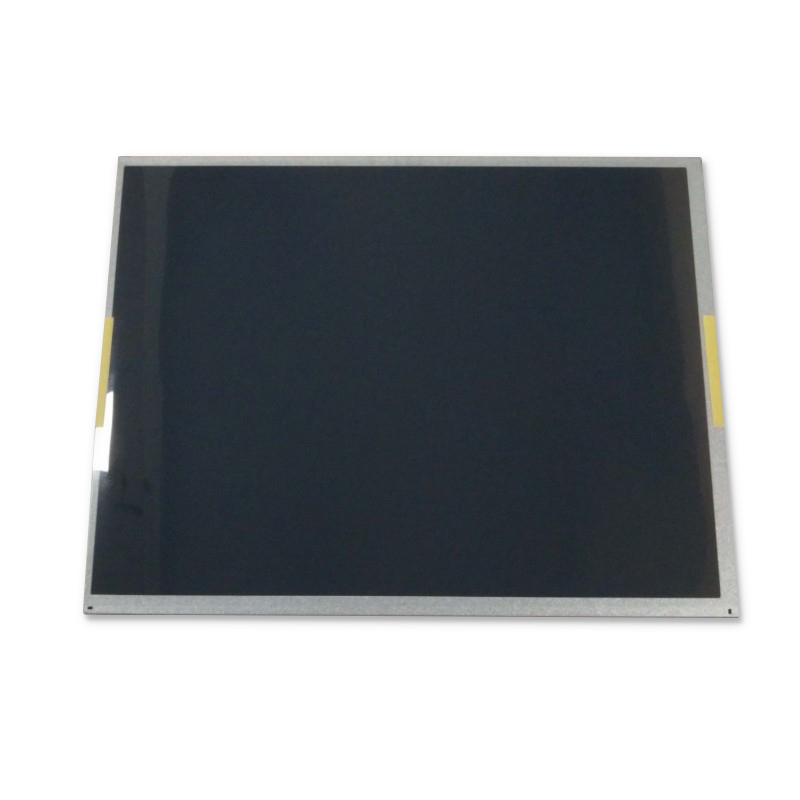
The landscape of industrial human-machine interfaces (HMIs) demands displays that can endure harsh environments while delivering consistent, high-quality visuals. In this context, the AUO G150XVN01.0 emerges not merely as a screen, but as a critical component engineered for longevity. This 15-inch panel represents a specific intersection of legacy technology and robust design, optimized for applications where failure is not an option—from factory floor automation to medical diagnostic equipment. While the market rushes toward higher resolutions and flexible form factors, the G150XVN01.0 persists as a stalwart solution. Its value proposition lies not in chasing trends, but in its proven track record of reliability, wide temperature tolerance, and exceptional optical performance under challenging lighting conditions. This article delves into the architecture, application ecosystems, and future relevance of this specific TN (Twisted Nematic) LCD module. We will dissect its technical specifications beyond the datasheet, exploring how its design parameters solve real-world operational problems. For engineers and procurement specialists, understanding this panel’s nuances is essential for making informed decisions on system longevity and total cost of ownership. Our analysis will bridge the gap between component data and practical system integration.

Core Technology: The Strength of Mature LCD Architecture
The G150XVN01.0 is built upon a 15-inch diagonal a-Si TFT-LCD (Amorphous Silicon Thin-Film Transistor) active matrix architecture. This is a mature technology, but AUO has refined its implementation for industrial endurance. The panel employs a TN (Twisted Nematic) mode, which provides the fastest response times—typically around 5-10 ms Tr+Tf—making it suitable for dynamic data updates without ghosting. While TN panels are often criticized for narrow viewing angles in consumer displays, the G150XVN01.0 compensates with high-luminance backlighting, often exceeding 400 to 1000 cd/m² depending on the specific SKU. This is critical for readability in bright factory environments.
Regarding resolution, the panel operates at XGA (1024 x 768 pixels) with a 4:3 aspect ratio. This is a deliberate choice. Legacy industrial software, especially SCADA (Supervisory Control and Data Acquisition) systems, was often designed for this ratio. Upgrading to a 16:9 widescreen panel would necessitate costly software reconfiguration or result in distorted user interfaces. The inherent stability of the a-Si technology, combined with the field-proven reliability of the CCFL (Cold Cathode Fluorescent Lamp) or optional LED backlight, ensures consistent luminosity over a lifespan often exceeding 50,000 hours. This technical foundation is a strategic advantage: it prioritizes operational stability over cosmetic perfection.
Optical Performance and Environmental Hardiness
One of the most critical engineering aspects of the G150XVN01.0 is its optimization for operational visibility rather than entertainment-grade color accuracy. The panel typically features a contrast ratio of 1000:1, which, combined with a surface treatment like Anti-Glare (AG) coating, significantly reduces specular reflections. In an environment with overhead industrial lighting, this is non-negotiable. A glossy consumer panel would render the screen unreadable. The AG treatment diffuses ambient light, preserving contrast without requiring maximum backlight power—a key factor in heat management.
Furthermore, the panel is engineered to operate within an extended temperature range, typically from -0°C to +70°C (storage often extends to -20°C to +80°C). This is achieved through the selection of specific liquid crystal materials and robust driver ICs that can withstand thermal stress. The 6-bit color depth (with Hi-FRC, Frame Rate Control, for 16.2M colors) provides sufficient nuance for GUIs while maintaining low power consumption. The response time, crucial for touch-based interaction or scrolling lists, is optimized without sacrificing the panel’s ruggedness. In essence, the optical stack—from the backlight diffuser to the top polarizer—is designed to resist the degradation from UV exposure and thermal cycling, ensuring the HMI remains clear and actionable for years.
Interface and Integration: Navigating Legacy Connectivity
Integration of the G150XVN01.0 into a modern system requires a careful understanding of its interface. Most variants of this panel utilize a dual-channel LVDS (Low-Voltage Differential Signaling) interface. LVDS remains the gold standard for industrial connectivity due to its inherent noise immunity and low electromagnetic interference (EMI). The panel typically requires a 20-pin or 30-pin connector, with a specific mapping for differential data pairs and clock signals. For system integrators, this is a double-edged sword. While the signal integrity is excellent, the physical connector and pinout are fixed to a specific standard (typically JEIDA or VESA).
Mistaking the pinout configuration can lead to immediate hardware damage. A key integration challenge is the power supply. The backlight (whether CCFL or LED) requires a separate inverter or LED driver board with a specific current and voltage window (e.g., 600mA for CCFL). The logic voltage for the panel is typically 3.3V. Using a universal LVDS cable without verifying the backlight power requirements is a common integration failure. Fortunately, standard adapter boards are available that convert from HDMI or VGA to LVDS, but they must be programmed for the correct resolution (1024x768@60Hz). Mastering this interface allows the panel to function reliably in a distributed control system with long cable runs over distance.
Domain Applications: Where Reliability is Paramount
The G150XVN01.0's design philosophy makes it the go-to solution for three primary verticals. First, factory automation: on an automotive assembly line, this panel provides real-time torque or defect data. The AG coating prevents operator misreads under bright welding arcs. Second, medical equipment: patient monitors and diagnostic machinery require a display that is electrically quiet, responsive, and easy to sanitize. The sealed edges and robust metal frame of the G150XVN01.0 support these hygienic requirements. Third, transportation and kiosks: in airport check-in kiosks or rail signaling systems, the display must operate 24/7 with minimal heat generation.
The 4:3 aspect ratio is particularly suited for surveillance video walls where analog CCTV feeds (often 4:3) are displayed without black bars. In these settings, the high brightness is essential to overcome ambient light from windows or waiting areas. Furthermore, the panel's compatibility with resistive touch sensors makes it a cost-effective upgrade for legacy systems without redesigning the entire console. The longevity of supply from AUO—often spanning 5-7 years without major changes—makes it a safe choice for product lifecycle planning, reducing the costly burden of display re-qualification in medical or military contracts.
Market Positioning and the Legacy vs. Modern Debate
On paper, the G150XVN01.0 is obsolete compared to modern IPS or OLED panels. Yet, its market position remains strong. The key differentiator is total cost of ownership (TCO). A modern 15.6" Full HD IPS display may cost less initially, but it requires a new system board, different software scaling, and likely has a shorter backlight lifespan. The G150XVN01.0's value is in its predictability. System integrators know its failure modes, its thermal profile, and its EMI signature. For mission-critical applications, this predictability is invaluable. A ten-year-old machine line cannot be disrupted by a display upgrade.
Furthermore, the availability of ruggedized variants (e.g., with integrated touch or by AUO for specific military standards) means there is a significant aftermarket and replacement stock. The competition is not other modern panels, but the need to keep existing production lines running. The G150XVN01.0 occupies a niche where compatibility trumps resolution. Companies pay a premium for this panel not because it is better, but because it is the exact same component that was originally certified. This creates a captive market, but one built on the foundation of proven reliability, ensuring the panel will remain in demand for the next decade.
FAQs: Addressing Common Questions on the G150XVN01.0
1. What is the luminous intensity (brightness) of the G150XVN01.0? The brightness typically ranges from 400 cd/m² to 800 cd/m² depending on the backlight (CCFL vs. LED). High-brightness versions exceed 1000 cd/m² for direct sunlight readability.
2. Is the G150XVN01.0 compatible with a Raspberry Pi? No, not directly. The G150XVN01.0 uses LVDS, while Raspberry Pi outputs HDMI. You need a dedicated LVDS controller board (e.g., from companies like LCD Controller) that converts HDMI to LVDS and can drive 1024x768 resolution.
3. What is the typical power consumption of this panel? Without the backlight, logic power is ~5-8W. Total consumption varies from 15W (LED backlight) to 25W (CCFL backlight) depending on brightness settings.
4. What is the difference between CCFL and LED backlight versions? CCFL (Cold Cathode) requires a high-voltage inverter, has a slower warm-up, and contains mercury. LED (LED backlight) is thinner, uses lower voltage (DC), more energy-efficient, and has a longer lifespan (50k vs 70k hours).
5. Can I use a standard HDMI cable to connect to this display? No. The display has an LVDS ribbon cable connector. You must use a controller board that converts HDMI to LVDS signals, which then plugs into the panel.
6. What touch technology works best with this display? Resistive touch is the most common, bonded directly to the panel. Projected Capacitive (PCAP) touch can also be used if the panel is mounted behind a glass overlay. Surface Acoustic Wave (SAW) is less common due to contamination issues on factory floors.
7. Is the viewing angle symmetrical on this TN panel? No. TN panels have asymmetric viewing angles. The G150XVN01.0 typically provides best performance at 6 o'clock (horizontal) and 3 o'clock (vertical) but suffers color shift at extreme 12 o'clock angles. This is not an issue for head-on viewing on a fixed HMI.
8. Does the panel have a built-in scaler? No. The G150XVN01.0 accepts a fixed native resolution of 1024x768 (XGA). It does not perform any scaling. Your video source must output exactly this resolution.
9. Can the display be used in harsh environments with oil or dust? Yes, provided it is mounted appropriately. The panel itself does not have an IP rating, but an IP-rated enclosure (e.g., IP54 or IP65) is essential. The AG coating resists smudging but is not sealed against liquids.
10. Where can I find the correct LVDS pinout for this display? The official datasheet from AUO or a reputable distributor provides the pinout. Typically, it follows a standard JEIDA format (pin 1-20 or 1-30). Check the specific AUO model number (e.g., A150XN02 or G150XVN01.0).
Conclusion: The Enduring Value of Industrial Specificity
The AUO G150XVN01.0 is a testament to the principle that mission-critical design does not chase trends. Throughout this analysis, we have seen that its technical strength lies not in high pixel density or wide viewing angles, but in its robust LVDS interface, anti-glare optical stack, and extended temperature tolerance
Related Product Links:TM050RDZG03-00 TIANMA 5.0" 800*480 lcd display screens





