













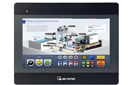
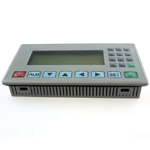




- Industrial display
-
Industrial Products
- DC Servo Drive
- AC Servo Drive
- Industrial board
- Siemens
- Switch Sensor
- Proximity Switch
- Temperature Controller
- Protection Relay
- Fiber Optic Sensor
- Encoder
- Fan
- other
- Heidelberg
- MITSUBISHI
- FANUC
- Siemens adapter
- Fujitsu connector
- Motherboard
- Board
- Contactor
- Circuit
- OMRON
- Relay
- Motor Driver
- power supply
- Cable
- Transformer
- HMI Touch Glass
-
HMI Full Machine Whole unit
- OMRON HMI Touch Panel
- Siemens HMI Touch Panel
- Mitsubishi HMI Touch Panel
- Allen-Bradley automation HMI Touch Panel
- DELTA HMI Touch Panel
- Proface HMI Touch Panel
- KINCO DELTA HMI Touch Panel
- HITECH HMI Touch Panel
- WEINTEK HMI Touch Panel
- TECVIEW HMI Touch Panel
- WEINVIEW HMI Touch Panel
- PANASONIC HMI Touch Panel
- KYOCERA HMI Touch Panel
- SCHNEIDER HMI Touch Panel
- Module
- lcd inverter
- Membrane Keypad Switch
- Zhiyan Customized Touch Screens
- Frequency Inverter
- Servo Motor
- PLC
In the intricate world of electronic components, where specifications dictate performance and compatibility determines success, the C090EAN04.1 stands out as a significant and widely utilized model. This 9-inch LCD display module, manufactured by AU Optronics (AUO), a global leader in display technology, serves as a critical visual interface for countless industrial, medical, and embedded applications. Unlike consumer-grade screens, this display is engineered for reliability, precision, and integration into larger systems where environmental factors and long-term operation are paramount concerns.

This article delves into a comprehensive analysis of the AUO C090EAN04.1. We will move beyond basic datasheet parameters to explore its technical architecture, the rationale behind its design choices, and its practical implementation challenges. By understanding its core strengths and inherent limitations, engineers, procurement specialists, and product developers can make informed decisions about integrating this specific display into their projects, ensuring optimal performance and system stability.

Technical Architecture and Core Specifications
Key specifications define its performance envelope. It features a standard RGB interface, typically requiring an LVDS (Low-Voltage Differential Signaling) controller for communication with a host processor, ensuring robust signal integrity over longer cable runs within a device. The module boasts a brightness of 500 cd/m² (nits), making it readable in brightly lit indoor environments. Its contrast ratio of 800:1 and wide viewing angles (85/85/85/85 degrees) ensure consistent image quality from various perspectives. Understanding these foundational specs is crucial for assessing its suitability for a target environment.
Interface and Signal Integration
Successful integration requires careful attention to the pinout definition, power sequencing, and the matching of the LVDS signal pairs on the PCB. Designers must often incorporate a dedicated timing controller (T-Con) board or ensure their host processor's display controller can generate the precise timing parameters required by the module. Failure to correctly handle this integration can lead to issues like flickering, no display, or electromagnetic interference, underscoring the importance of meticulous circuit design and layout.
Optical Performance and Enhancement Features
Furthermore, the module supports a color gamut covering a significant portion of the sRGB standard, ensuring accurate color representation for diagnostic or monitoring purposes. Some variants may also offer wide-temperature operation, allowing functionality in environments beyond standard commercial ranges. These optical characteristics are not merely numbers; they directly impact user experience, reduce eye strain during prolonged use, and ensure the display performs reliably under its intended operating conditions.
Mechanical Design and Durability Considerations
Durability is engineered into its construction. The use of LED backlighting offers a longer lifespan and better resistance to vibration compared to older CCFL technology. The module is designed to withstand the mechanical stresses of installation and operation in equipment that may be subject to movement or shock. Selecting the appropriate mounting method—such as using gaskets for sealing or specific screw types—is vital to prevent physical damage and ensure long-term reliability in the field.
Application-Specific Implementation Scenarios
Other key applications include transportation infotainment systems (in-seat displays, driver information panels), point-of-sale (POS) terminals, and specialized embedded systems like security control consoles. In each scenario, the module's balance of size, performance, and industrial-grade construction makes it a preferred choice over consumer displays, which lack the same level of integration support and environmental robustness.
Sourcing, Compatibility, and Lifecycle Management
Furthermore, managing the product lifecycle is crucial for long-term projects. As a mature product, understanding its End-of-Life (EOL) roadmap and identifying potential drop-in replacements or compatible alternatives from AUO or other manufacturers (like Innolux or BOE) is a part of responsible design. This proactive approach mitigates supply chain risk and prevents costly last-minute redesigns, ensuring product sustainability.
Frequently Asked Questions (FAQs)
Q10: What should I check before integrating this module?A10: Verify the interface pinout, power requirements (voltage for logic and backlight), timing parameters, mechanical dimensions, and connector type against your system design.





