



















- Industrial display
-
Industrial Products
- DC Servo Drive
- AC Servo Drive
- Industrial board
- Siemens
- Switch Sensor
- Proximity Switch
- Temperature Controller
- Protection Relay
- Fiber Optic Sensor
- Encoder
- Fan
- other
- Heidelberg
- MITSUBISHI
- FANUC
- Siemens adapter
- Fujitsu connector
- Motherboard
- Board
- Contactor
- Circuit
- OMRON
- Relay
- Motor Driver
- power supply
- Cable
- Transformer
- HMI Touch Glass
-
HMI Full Machine Whole unit
- OMRON HMI Touch Panel
- Siemens HMI Touch Panel
- Mitsubishi HMI Touch Panel
- Allen-Bradley automation HMI Touch Panel
- DELTA HMI Touch Panel
- Proface HMI Touch Panel
- KINCO DELTA HMI Touch Panel
- HITECH HMI Touch Panel
- WEINTEK HMI Touch Panel
- TECVIEW HMI Touch Panel
- WEINVIEW HMI Touch Panel
- PANASONIC HMI Touch Panel
- KYOCERA HMI Touch Panel
- SCHNEIDER HMI Touch Panel
- Module
- lcd inverter
- Membrane Keypad Switch
- Zhiyan Customized Touch Screens
- Frequency Inverter
- Servo Motor
- PLC
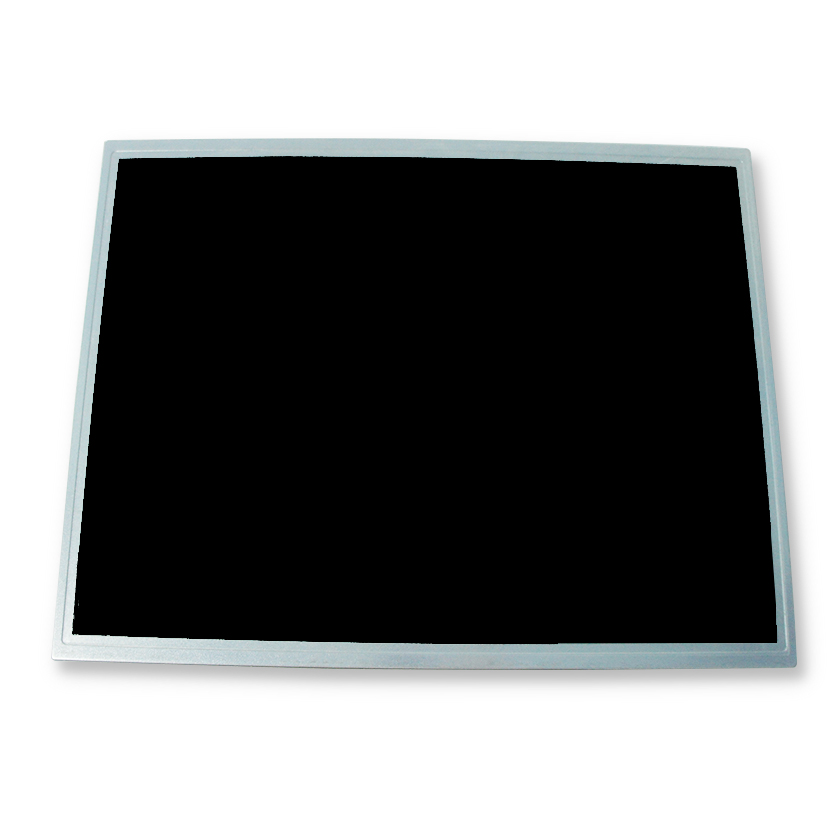
In the intricate world of industrial and specialized display solutions, certain components stand out not for flashy consumer appeal, for their unwavering reliability, precision engineering, and critical role in demanding applications. The Mitsubishi AA150XT01 is one such component. This 15-inch a-Si TFT-LCD Liquid Crystal Module (LCM) represents a mature yet highly relevant technology standard, built to deliver consistent performance where it matters most.
This article delves into a comprehensive analysis of the AA150XT01. We will move beyond basic datasheet specifications to explore its underlying technology, the significance of its key parameters like the 1024(RGB)×768 XGA resolution and 85 PPI density, and its ideal application ecosystems. We will further examine its interface and control characteristics, compare its positioning in the modern display landscape, and provide practical guidance for integration and sourcing. Our goal is to provide engineers, procurement specialists, and technical decision-makers with a deep, actionable understanding of this pivotal display module.

Deconstructing the Core Technology: a-Si TFT and LCM Integration
At the heart of the AA150XT01 lies Amorphous Silicon (a-Si) Thin-Film Transistor technology. This mature and cost-effective TFT process is the workhorse of the industrial LCD world. Unlike more advanced technologies like LTPS or IGZO designed for ultra-high resolution and power efficiency in smartphones, a-Si excels in stability, manufacturing yield, and reliability for medium-sized panels. It provides excellent uniformity and a long operational lifespan, which are paramount in commercial and industrial settings.
The module is offered as an LCM (Liquid Crystal Module), meaning it is a fully integrated unit. It includes the TFT glass, backlight system, driver electronics, and often a controller. This "ready-to-drive" configuration significantly reduces engineering overhead for OEMs, as the complex tasks of timing control, voltage regulation, and backlight driving are handled internally. The AA150XT01 presents a clean, logical interface to the host system, allowing designers to focus on their core application rather than the intricacies of display panel physics.
The Significance of XGA Resolution and 85 PPI in Context
The AA150XT01 features a native resolution of 1024 (RGB) × 768 pixels, the standard XGA (Extended Graphics Array) format. In an era of 4K and beyond, this may seem modest. However, its value is contextual. XGA offers a perfect balance between information density, legibility, and system resource requirements. It provides ample space for complex machine HMI interfaces, diagnostic menus, point-of-sale systems, or instrumentation panels without necessitating high-powered, expensive graphics processors.
Coupled with the 15-inch diagonal, this resolution results in a pixel density of approximately 85 Pixels Per Inch (PPI). This is a crucial metric for readability. At typical viewing distances for industrial equipment (arm's length or farther), 85 PPI renders sharp, clear characters and graphics without the scaling issues or tiny icons associated with high-PPI consumer screens. It ensures information is accessible and reduces operator eye strain, a critical factor in productivity and safety for prolonged use.
Primary Application Ecosystems and Use Cases
The technical profile of the AA150XT01 directly aligns with specific, reliability-first industries. Its rugged construction and stable performance make it a preferred choice in industrial automation and Human-Machine Interfaces (HMIs). Here, it serves as the visual gateway for controlling machinery, monitoring production lines, and displaying real-time process data in environments with potential electrical noise, vibration, or extended operating hours.
Beyond the factory floor, this module finds a home in medical equipment (for non-critical diagnostic displays or control panels), point-of-sale (POS) and kiosk systems requiring durability, and transportation and marine instrumentation. Its wide operating temperature range (typically specified by Mitsubishi for such modules) and long-life CCFL or LED backlight options (depending on variant) ensure functionality in non-climate-controlled settings. It is the display of choice where failure is not an option and consistent, predictable performance trumps cutting-edge specs.
Interface, Control, and Electrical Characteristics
Integration is streamlined through a well-defined interface. The AA150XT01 typically utilizes an LVDS (Low-Voltage Differential Signaling) interface. LVDS is renowned for its robustness, resisting electromagnetic interference—a common challenge in industrial environments—while transmitting high-speed digital video data over simple twisted-pair cables. This simplifies cabling and improves signal integrity over longer runs compared to older TTL interfaces.
Electrically, the module is designed for straightforward system integration. It operates on a single power supply voltage (often 3.3V or 5V for logic, with a separate higher voltage for the backlight). The onboard timing controller locks onto the input signal's sync pulses and manages all pixel addressing. Designers must pay close attention to the manufacturer's datasheet for the specific power sequence, which is critical to prevent damage and ensure proper initialization. Proper grounding and ESD protection are also essential for long-term reliability.
Market Positioning and Comparison with Modern Alternatives
The AA150XT01 occupies a distinct niche. It is not competing with consumer-grade monitors but rather with other industrial-grade modules and newer technologies. Compared to modern IPS (In-Plane Switching) panels, it may have narrower viewing angles and color gamut. However, it often surpasses them in cost-effectiveness for its target applications and long-term supply stability, a key concern for products with multi-year lifecycles.
Its main "competition" often comes from later generations of industrial panels with similar form factors but LED backlights (if the AA150XT01 in question uses CCFL) or slightly different interfaces. The decision to use the AA150XT01 hinges on a total cost of ownership calculation: factoring in the module cost, design integration effort, proven reliability, and the significant risk/cost of redesigning a product if a component becomes obsolete. For many existing and even new designs prioritizing proven performance, it remains a compelling solution.
Sourcing, Integration Best Practices, and Lifecycle Considerations
Sourcing the AA150XT01 requires diligence. As a component that has been in production for many years, it may be in mature or obsolescence phases of its lifecycle. Partnering with authorized distributors or reputable specialists in display components is crucial to avoid counterfeit or refurbished units being sold as new. Verifying the exact version (e.g., backlight type, connector pinout, brightness level) against your project's Bill of Materials is essential.
For successful integration, follow these best practices: 1) Adhere strictly to the recommended power-on/off sequence in the datasheet. 2) Implement robust ESD protection on all external connections. 3) Ensure the host system's graphics output matches the module's native resolution and timing precisely. 4) Mechanically secure the module using its provided mounting holes, avoiding stress on the panel or PCB. 5) Plan for the long term by securing a reliable supply chain or exploring pre-qualified alternative modules early in the design refresh cycle.
FAQs: Mitsubishi AA150XT01 Display Module
Q1: What is the AA150XT01?A: A 15-inch industrial TFT-LCD module with XGA (1024x768) resolution, using a-Si technology.
Q2: What does "LCM" mean?A: Liquid Crystal Module. It's a complete, integrated display assembly including drivers and backlight.
Q3: What is the pixel density (PPI)?A: Approximately 85 PPI, optimized for clarity at typical viewing distances in industrial settings.
Q4: What is the primary interface type?A: It typically uses an LVDS (Low-Voltage Differential Signaling) digital interface.
Q5: Where is this display commonly used?A: Industrial HMIs, medical equipment control panels, POS/kiosk systems, and transportation instrumentation.
Q6: Is it suitable for outdoor use?A: Not inherently. Standard versions lack high-brightness and sunlight-readable enhancements, though protective covers can be used.
Q7: What type of backlight does it use?A: Variants exist with either CCFL or LED backlights. The specific part number suffix indicates the type.
Q8: How does it compare to a modern IPS panel?A> It may have narrower viewing angles but offers proven reliability, cost-effectiveness, and supply stability for industrial designs.
Q9: What are key integration precautions?A> Strictly follow the power sequencing, ensure correct LVDS signal timing, and provide proper mechanical support.
Q10: Is this module still in production?A> Its status is "mature." Availability should be verified with authorized distributors, as it may be transitioning to obsolescence.
Conclusion
The Mitsubishi AA150XT01 15-inch XGA TFT-LCD module exemplifies the enduring value of robust, purpose-built engineering. In a landscape obsessed with the latest and highest specifications, this component serves as a reminder that optimal technology is defined by the application. Its combination of a-Si TFT reliability, the functional clarity of XGA resolution at 85 PPI, and integrated LCM design has cemented its role across critical industries for over a decade.
For engineers and product managers, understanding this module is about more than just parameters; it's about recognizing a proven solution that minimizes risk and ensures operational continuity. While future designs may migrate to newer panel technologies, the principles embodied by the AA150XT01—reliability, clarity, and integration ease—remain timeless benchmarks for any industrial display specification. Its legacy continues in the countless machines and systems that depend on its steadfast performance every day





