














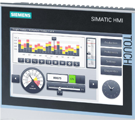





- Industrial display
-
Industrial Products
- DC Servo Drive
- AC Servo Drive
- Industrial board
- Siemens
- Switch Sensor
- Proximity Switch
- Temperature Controller
- Protection Relay
- Fiber Optic Sensor
- Encoder
- Fan
- other
- Heidelberg
- MITSUBISHI
- FANUC
- Siemens adapter
- Fujitsu connector
- Motherboard
- Board
- Contactor
- Circuit
- OMRON
- Relay
- Motor Driver
- power supply
- Cable
- Transformer
- HMI Touch Glass
-
HMI Full Machine Whole unit
- OMRON HMI Touch Panel
- Siemens HMI Touch Panel
- Mitsubishi HMI Touch Panel
- Allen-Bradley automation HMI Touch Panel
- DELTA HMI Touch Panel
- Proface HMI Touch Panel
- KINCO DELTA HMI Touch Panel
- HITECH HMI Touch Panel
- WEINTEK HMI Touch Panel
- TECVIEW HMI Touch Panel
- WEINVIEW HMI Touch Panel
- PANASONIC HMI Touch Panel
- KYOCERA HMI Touch Panel
- SCHNEIDER HMI Touch Panel
- Module
- lcd inverter
- Membrane Keypad Switch
- Zhiyan Customized Touch Screens
- Frequency Inverter
- Servo Motor
- PLC
In the intricate world of industrial and embedded display solutions, the choice of a display module is a critical engineering decision that impacts performance, reliability, and total cost of ownership. At the heart of many demanding applications lies a specific component: the AA104XF12, a 10.4-inch TFT-LCD module from Mitsubishi Electric. This is not a consumer-grade screen but a precision-engineered LCM (LCD Module) built for environments where consistency and durability are non-negotiable.
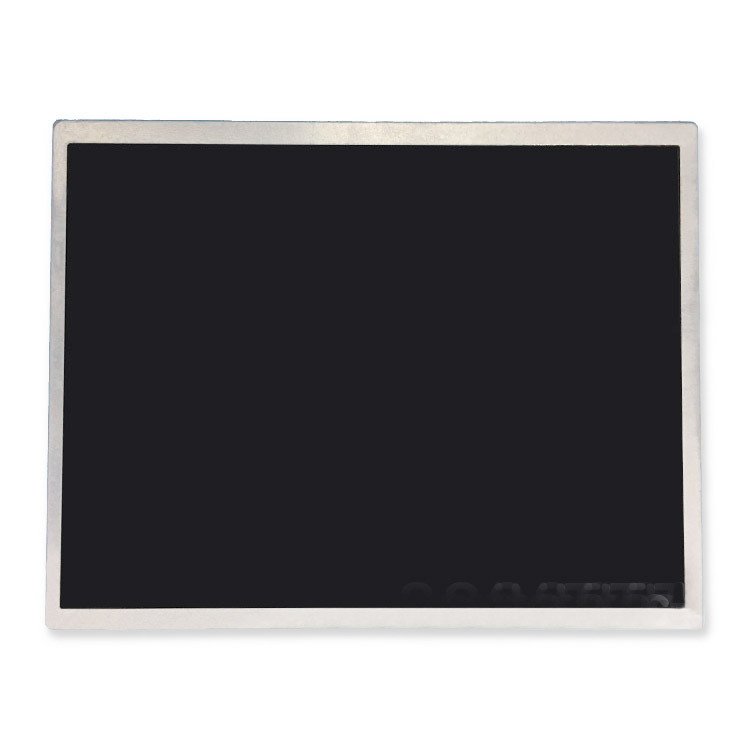
This article provides a deep technical and application-focused analysis of the Mitsubishi AA104XF12. We will move beyond basic datasheet specifications to explore the significance of its a-Si TFT technology, its XGA resolution in an industrial context, and the practical implications of its 123 PPI pixel density. Furthermore, we will examine its typical interfaces, ruggedized construction, and the specific market niches—from factory automation to medical instrumentation—where this module excels. Our goal is to offer engineers, procurement specialists, and system integrators a comprehensive resource for evaluating the AA104XF12's role in their next-generation equipment.


Deconstructing the Core Technology: a-Si TFT-LCD
The foundation of the AA104XF12's performance is its Amorphous Silicon (a-Si) Thin-Film Transistor (TFT) backplane. This mature and highly reliable technology is the workhorse of industrial LCDs. Unlike consumer displays that may prioritize ultimate color gamut or refresh rates for gaming, a-Si TFT focuses on stability, long operational life, and consistent performance across a wide temperature range. Each pixel is controlled by its own transistor, allowing for sharp, static images with minimal crosstalk or ghosting—a crucial feature for displaying complex control system schematics, diagnostic data, or medical images.
The technology offers an excellent balance between cost, manufacturing yield, and performance. For the 10.4-inch form factor and XGA resolution targeted by the AA104XF12, a-Si TFT provides sufficient switching speed and electrical characteristics without the premium cost associated with alternatives like LTPS (Low-Temperature Polycrystalline Silicon). This makes it a de facto standard for mid-size industrial displays where robustness is valued over ultra-slim bezels or extreme brightness.
The Significance of XGA Resolution in an Industrial Context
The specification 1024(RGB)×768 defines the module's XGA (Extended Graphics Array) resolution. In an era of 4K and 8K consumer displays, 768p might seem modest. However, in industrial and professional applications, this resolution holds strategic importance. XGA represents a historical and software-compatibility sweet spot. A vast library of legacy machine control software, diagnostic applications, and embedded graphical user interfaces (GUIs) were designed for this resolution. Adopting the AA104XF12 ensures perfect pixel-for-pixel compatibility, eliminating scaling artifacts or the need for costly software redevelopment.
Furthermore, the 4:3 aspect ratio of XGA is inherently practical for vertical and landscape applications. It provides more usable vertical space compared to widescreen formats, ideal for displaying long lists, ladder logic diagrams, or multi-parameter monitoring screens. The AA104XF12's XGA resolution delivers sufficient detail for complex information while keeping data bandwidth and processing requirements manageable for embedded CPUs, a key consideration for system efficiency and cost.
Pixel Density and Optical Performance: Understanding 123 PPI
Pixel Density, measured in Pixels Per Inch (PPI), is a critical determinant of perceived image sharpness. The AA104XF12's 123 PPI is a calculated specification derived from its 10.4-inch diagonal and 1024x768 resolution. This density is optimal for its intended viewing scenarios. At typical industrial viewing distances (arm's length or slightly farther), 123 PPI renders text and fine lines with clarity, eliminating the "screen door effect" where individual pixels become distractingly visible.
This PPI also influences the design of the touch panel (if integrated by the system builder) and the required precision of graphical assets. Icons and fonts must be designed to be legible at this density. From an optical stack perspective, Mitsubishi engineers this module to offer high contrast ratio and wide viewing angles (typically 70/70/60/70 degrees, Left/Right/Up/Down) consistent with premium industrial panels, ensuring the displayed information remains readable from various operator positions under challenging ambient light conditions.
Interface and Integration: The LVDS Connection Standard
The AA104XF12 typically utilizes an LVDS (Low-Voltage Differential Signaling) interface. This is a pivotal feature for system integration. LVDS is a noise-resistant, low-power, high-speed digital interface standard that has dominated industrial and automotive display connectivity for decades. Its differential signaling method minimizes electromagnetic interference (EMI), which is paramount in electrically noisy environments like factory floors or inside medical devices.
For engineers, the presence of a standard LVDS interface simplifies design. It allows for longer cable runs between the system's mainboard and the display module without signal degradation. Furthermore, a vast ecosystem of LVDS transmitter chips and controller boards exists, providing flexibility in sourcing and design. The interface carries not only pixel data but also timing signals and often backlight control, making it a comprehensive link that streamlines the integration of the AA104XF12 into a larger electronic system.
Ruggedized Design for Demanding Environments
Beyond the glass and electronics, the AA104XF12 is built to survive. Its construction is tailored for environments where consumer displays would rapidly fail. Key ruggedization aspects include an extended operating temperature range, often from -30°C to +80°C for the panel itself, ensuring functionality in unheated warehouses or sun-exposed outdoor kiosks. The module is designed to resist vibration and shock, critical for mobile equipment or machinery with moving parts.
The surface treatment often includes anti-glare (AG) coating to diffuse ambient light and prevent reflections that could obscure critical data. Furthermore, the mechanical design ensures strong mounting points and a stable form factor. When combined with a properly sealed front bezel by the OEM, the display system can achieve high ingress protection (IP) ratings against dust and moisture. This ruggedized DNA is what transforms the AA104XF12 from a simple display into a reliable human-machine interface (HMI) component.
Target Applications and Market Relevance
The technical profile of the Mitsubishi AA104XF12 aligns perfectly with several high-value, long-lifecycle markets. In Industrial Automation, it serves as the primary HMI for PLCs, CNC machine tools, and robotic control stations, where its readability and reliability are paramount. The Medical Device field utilizes it in patient monitoring systems, diagnostic equipment, and surgical displays, benefiting from its stable performance and clinical-grade image consistency.
Additionally, it finds use in Transportation (in-vehicle information systems for buses, trains, or construction vehicles), Point-of-Sale (POS) and kiosk systems, and specialized Test & Measurement instrumentation. In these applications, the module's long-term availability from a reputable manufacturer like Mitsubishi is as important as its specifications, allowing OEMs to support their products in the field for a decade or more without forced display redesigns.
Frequently Asked Questions (FAQs)
Q1: What does "LCM" stand for in AA104XF12 Mitsubishi LCM?A1: LCM stands for LCD Module. It indicates the product includes the LCD panel, driver electronics, backlight unit, and often a metal frame, supplied as a complete, integrated unit ready for system integration.
Q2: Is the AA104XF12 a touch screen?A2: The base AA104XF12 is a display module (LCM) without a touch panel. However, it is a standard practice for system integrators to laminate a resistive or capacitive touch sensor onto the front surface to create a touch-enabled display assembly.
Q3: What is the typical lifespan of this display?A3: Industrial LCD modules like the AA104XF12 are designed for long life, often rated for 50,000 to 100,000 hours of operation (based on backlight life at specific brightness), which translates to over a decade of continuous use.
Q4: What type of backlight does it use?A4: It typically uses a CCFL (Cold Cathode Fluorescent Lamp) backlight system. CCFL offers uniform brightness, wide operating temperature range, and long life, which are preferred for industrial applications, though some versions may use LED backlighting.
Q5: What is the main advantage of the 4:3 aspect ratio?A5: The 4:3 aspect ratio provides more vertical screen space compared to widescreen formats. This is advantageous for displaying text-heavy data, lists, technical documents, and legacy software interfaces designed for this format.
Q6: Can this display be used outdoors?A6: While rugged, direct outdoor use requires additional design considerations. An integrator would need to add a high-brightness backlight option (for sunlight readability) and ensure the final assembly is fully sealed against moisture and temperature extremes.
Q7: Is the LVDS interface compatible with standard controller boards?A7: Yes, the LVDS interface is an industry standard. It is compatible with numerous off-the-shelf LCD controller boards and embedded system-on-chip (SoC) platforms that feature an LVDS transmitter output.
Q8: What does "a-Si" mean and why is it important?A8: a-Si stands for Amorphous Silicon. It's the technology used to create the TFT layer that controls each pixel. It's important because it offers a proven, reliable, and cost-effective solution with excellent stability for industrial use cases.
Q9: How does 123 PPI affect image quality?A9: At a typical viewing distance for industrial equipment, 123 PPI provides a sharp, crisp image where individual pixels are not easily discernible to the human eye, ensuring good legibility for text and detailed graphics.
Q10: Is Mitsubishi still manufacturing this model?A10: The AA104XF12 is a mature product. For current manufacturing status and availability, it is essential to contact Mitsubishi Electric's official distributors or check their official product longevity statements, as industrial products often have long but defined production cycles.
Conclusion
The Mitsubishi AA104XF12 is far more than a simple collection of specifications; it is a testament to engineered reliability for mission-critical applications. Its value proposition lies in the intelligent synthesis of mature, robust technologies—a-Si TFT, XGA resolution, and LVDS interface—into a package designed to withstand the rigors of industrial, medical, and commercial use. Its 123 PPI density and 4:3 aspect ratio are not outdated but are purpose-driven choices that align with real-world usability and software compatibility.
For system designers, selecting a module like the AA104XF12 mitigates risk. It offers a known performance envelope, extensive field history, and the backing of a major manufacturer. In an era of rapid technological churn, such components provide the stability necessary for building equipment with lifecycles measured in decades. Ultimately, the AA104XF12 exemplifies the principle that in specialized display markets, optimal performance is not about chasing the highest numbers, but about guaranteed performance under the most demanding conditions.





