













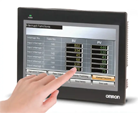
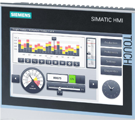





- Industrial display
-
Industrial Products
- DC Servo Drive
- AC Servo Drive
- Industrial board
- Siemens
- Switch Sensor
- Proximity Switch
- Temperature Controller
- Protection Relay
- Fiber Optic Sensor
- Encoder
- Fan
- other
- Heidelberg
- MITSUBISHI
- FANUC
- Siemens adapter
- Fujitsu connector
- Motherboard
- Board
- Contactor
- Circuit
- OMRON
- Relay
- Motor Driver
- power supply
- Cable
- Transformer
- HMI Touch Glass
-
HMI Full Machine Whole unit
- OMRON HMI Touch Panel
- Siemens HMI Touch Panel
- Mitsubishi HMI Touch Panel
- Allen-Bradley automation HMI Touch Panel
- DELTA HMI Touch Panel
- Proface HMI Touch Panel
- KINCO DELTA HMI Touch Panel
- HITECH HMI Touch Panel
- WEINTEK HMI Touch Panel
- TECVIEW HMI Touch Panel
- WEINVIEW HMI Touch Panel
- PANASONIC HMI Touch Panel
- KYOCERA HMI Touch Panel
- SCHNEIDER HMI Touch Panel
- Module
- lcd inverter
- Membrane Keypad Switch
- Zhiyan Customized Touch Screens
- Frequency Inverter
- Servo Motor
- PLC
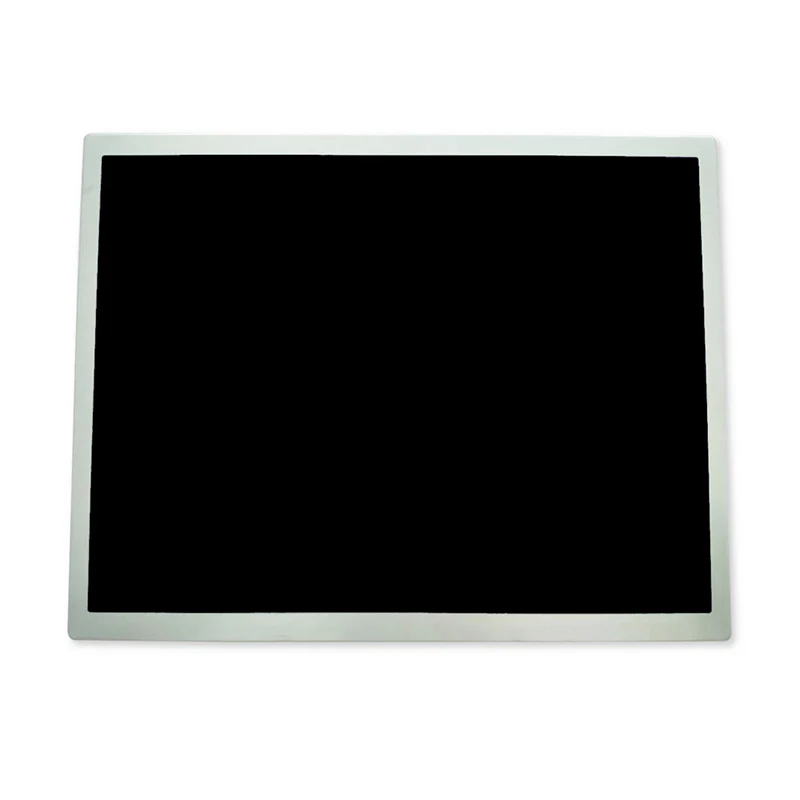
In the demanding world of industrial automation, medical devices, and point-of-sale systems, the display is far more than a simple output window. It is a critical interface that must deliver unwavering reliability under extreme conditions. At the heart of many such robust applications lies a specific component: the LCD display AA104VH02. This 10.4-inch industrial screen, with its characteristic 640x480 (VGA) resolution, represents a mature yet persistently vital technology in an era dominated by high-definition panels.
This article delves deep into the AA104VH02, moving beyond basic specifications to explore its enduring relevance. We will dissect the engineering rationale behind its design choices, from its ruggedized construction to its specific electrical interface. The analysis will cover its optimal application environments, the distinct advantages it holds over commercial-grade screens, and the key integration parameters engineers must consider. Furthermore, we will examine its compatibility with modern systems and provide a clear perspective on its position in the current technological landscape, offering a comprehensive guide for procurement specialists, design engineers, and technical decision-makers.


The Engineering Philosophy Behind the 10.4-Inch VGA Format
The AA104VH02’s 10.4-inch diagonal and 640x480 resolution are not arbitrary figures but the result of deliberate engineering for industrial contexts. The 4:3 aspect ratio provides a square-like viewing area ideal for legacy machine control interfaces, diagnostic terminals, and data-entry applications where information is often arranged in lists or fixed-form layouts, minimizing wasted space common on wider screens.
VGA resolution, while considered low by consumer standards, offers significant advantages in stability and speed. The lower pixel count reduces the processing load on often-embedded or specialized industrial computers, ensuring faster graphical rendering and more predictable performance. This simplicity translates to robustness; the display controller technology is well-understood, battle-tested over decades, and less prone to complex timing or compatibility issues that can afflict higher-resolution interfaces in harsh electrical environments.
Ruggedized Construction for Hostile Environments
What fundamentally separates an industrial display like the AA104VH02 from a commercial monitor is its built-to-last construction. This panel is designed to survive where others fail. It typically features a wide operating temperature range, often from -20°C to 70°C or beyond, allowing functionality in unheated warehouses or under the hot sun. Its mounting frame and internal components are reinforced to resist high levels of vibration and shock, crucial for use in vehicles, factory floors, or heavy machinery.
Furthermore, the screen surface is often treated with enhanced hardness coatings or paired with a rugged front bezel to protect against scratches, impacts, and chemical exposure. Many variants also incorporate high-brightness LED backlights (500 nits or more) and anti-glare treatments to ensure perfect readability in direct sunlight or under bright industrial lighting, a feature seldom needed in office settings.
Interface and Signal Compatibility: LVDS as a Standard
The AA104VH02 commonly utilizes an LVDS (Low-Voltage Differential Signaling) interface. This is a critical differentiator. LVDS is a digital transmission standard that offers excellent noise immunity over longer cable runs compared to older analog VGA signals or other single-ended digital interfaces. The differential signaling method cancels out electromagnetic interference (EMI), which is rampant in industrial settings filled with motors, relays, and power cables.
This choice ensures a clean, stable digital image transmission from the controller board to the panel itself. Engineers integrating this display must ensure their system’s graphic controller outputs a compatible LVDS signal, matching the specific pin assignment and voltage requirements. This reliable digital pipeline is essential for maintaining system integrity and preventing flickering or corruption of the displayed information.
Ideal Application Scenarios and Use Cases
The AA104VH02 excels in applications where reliability, longevity, and clarity trump pixel density. Its classic domain is industrial human-machine interfaces (HMIs) for PLCs, CNC machines, and process control systems, where the interface is often static and functional. It is a staple in medical equipment like patient monitors and diagnostic devices, where clear, consistent data presentation is vital and equipment lifecycles are long.
Other prime use cases include transportation and logistics (forklift terminals, vehicle telematics), point-of-sale and kiosk systems requiring constant operation, and test and measurement instruments. In these fields, the display is a component expected to last for the entire product lifecycle, often 7-10 years or more, making proven technology like this a safer, more economical choice than cutting-edge but unproven panels.
Advantages Over Commercial-Grade Alternatives
Choosing an industrial screen like the AA104VH02 over a similarly sized commercial LCD is a strategic decision for reliability. Commercial panels are built for cost-effective mass production and benign office environments. They often have narrow temperature tolerances, use lighter-duty components, and lack protective enhancements. Their lifespan is typically rated for 16/7 operation at best, whereas industrial screens are engineered for 24/7 continuous duty.
The supply chain and longevity support also differ drastically. Industrial displays are often available with consistent specifications over many years, preventing costly redesigns. Manufacturers provide detailed datasheets with full environmental ratings and long-term availability guarantees, which are rarely offered for consumer parts. This mitigates the risk of obsolescence and ensures maintenance and repair capabilities far into the future.
Integration Considerations and Modern Relevance
Successfully integrating the AA104VH02 requires attention to several parameters beyond the LVDS interface. Power supply requirements must be meticulously followed, and the backlight inverter or LED driver circuit must be correctly matched. Mechanical integration involves accounting for its exact dimensions, mounting hole patterns, and bezel overlap.
In today's context, its relevance is secure in retrofit, upgrade, and specific new-build projects. For modern systems, it often interfaces via an FPGA or dedicated display controller IC that can take higher-resolution outputs from modern processors and convert them to the native VGA format. Its value proposition is not about competing with 4K displays, but about providing a dependable, readable, and environmentally hardened solution for critical tasks where failure is not an option.
FAQs
Q: What is the exact resolution of the AA104VH02?A: It is 640 pixels horizontally by 480 pixels vertically, known as VGA.
Q: What type of interface does it use?A: It typically uses a digital LVDS (Low-Voltage Differential Signaling) interface.
Q: Why is the screen brightness important?A: High brightness (often 500+ nits) ensures readability in high-ambient light conditions like outdoors or under factory lights.
Q: Can it operate in cold environments?A: Yes, industrial models like this are rated for wide temperature ranges, often starting from -20°C or lower.
Q: Is this display suitable for 24/7 operation?A: Absolutely. It is specifically designed and rated for continuous, around-the-clock operation.
Q: What is the main advantage of the 4:3 aspect ratio?A: It is optimal for displaying traditional data-heavy interfaces, lists, and control panels without the wasted space of a widescreen format.
Q: How does it handle vibration?A: It features ruggedized construction with reinforced components and secure mounting to withstand significant vibration and shock.
Q: Is the AA104VH02 touch screen compatible?A: The base panel is a display-only unit, but it can be laminated with a resistive or capacitive touch overlay for interactive applications.
Q: Why choose VGA resolution in the age of HD?A: For stability, lower processing overhead, faster rendering, compatibility with legacy systems, and cost-effectiveness in dedicated industrial applications.
Q: Where can I find technical specifications for integration?A: Detailed datasheets from the manufacturer or authorized distributors provide mechanical drawings, pinout definitions, electrical characteristics, and environmental ratings.
Conclusion
The LCD display AA104VH02 stands as a testament to the principle that in industrial technology, appropriateness and reliability often outweigh raw specification metrics. Its 10.4-inch VGA format, ruggedized LVDS-based design, and wide-environmental capability are not signs of obsolescence but of specialized optimization. It serves a critical niche where clarity, durability, and long-term stability are non-negotiable.
For engineers and procurement specialists, selecting this display is a decision driven by total cost of ownership, system longevity, and risk mitigation. It represents a proven solution that bridges the gap between legacy industrial systems and modern manufacturing demands. In a world increasingly focused on the new and high-resolution, the AA104VH02 reminds us that for mission-critical interfaces, dependability is the highest resolution of all.





