

















- Industrial display
-
Industrial Products
- DC Servo Drive
- AC Servo Drive
- Industrial board
- Siemens
- Switch Sensor
- Proximity Switch
- Temperature Controller
- Protection Relay
- Fiber Optic Sensor
- Encoder
- Fan
- other
- Heidelberg
- MITSUBISHI
- FANUC
- Siemens adapter
- Fujitsu connector
- Motherboard
- Board
- Contactor
- Circuit
- OMRON
- Relay
- Motor Driver
- power supply
- Cable
- Transformer
- HMI Touch Glass
-
HMI Full Machine Whole unit
- OMRON HMI Touch Panel
- Siemens HMI Touch Panel
- Mitsubishi HMI Touch Panel
- Allen-Bradley automation HMI Touch Panel
- DELTA HMI Touch Panel
- Proface HMI Touch Panel
- KINCO DELTA HMI Touch Panel
- HITECH HMI Touch Panel
- WEINTEK HMI Touch Panel
- TECVIEW HMI Touch Panel
- WEINVIEW HMI Touch Panel
- PANASONIC HMI Touch Panel
- KYOCERA HMI Touch Panel
- SCHNEIDER HMI Touch Panel
- Module
- lcd inverter
- Membrane Keypad Switch
- Zhiyan Customized Touch Screens
- Frequency Inverter
- Servo Motor
- PLC
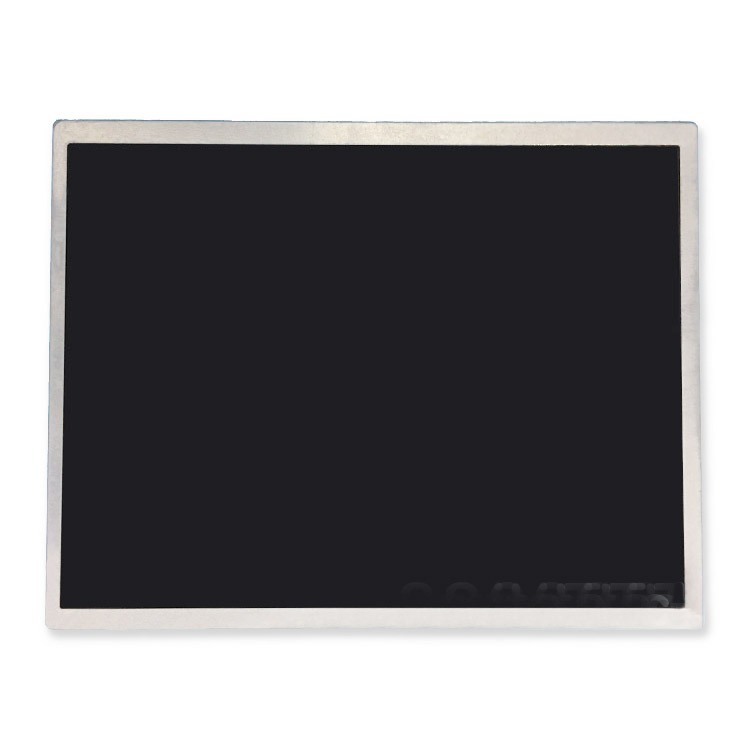
In the intricate world of industrial and embedded display solutions, specific components become the unsung heroes behind reliable human-machine interfaces. One such component is the AA104VC15, a 10.4-inch TFT-LCD module manufactured by Mitsubishi Electric. This article delves deep into this particular display module, moving beyond basic datasheet specifications to explore its technological foundations, inherent strengths, and ideal applications. The AA104VC15 is not merely a screen; it represents a carefully engineered solution built for longevity and performance in demanding environments.

We will dissect its core characteristics, starting with its fundamental a-Si TFT-LCD technology and its 640x480 VGA resolution. The analysis will extend to its critical optical and mechanical properties, interface and power architecture, and the rigorous environmental durability it offers. By understanding these facets, engineers, procurement specialists, and system integrators can make informed decisions about whether this module is the optimal visual interface for their medical, industrial, or transportation systems. This exploration aims to provide a comprehensive resource that connects technical specifications to real-world implementation value.
Deconstructing the Core Technology: a-Si TFT-LCD
The Significance of Resolution and Pixel Density: VGA at 76 PPI
The 76 PPI density means individual pixels and graphical elements are distinctly visible at a typical viewing distance, which is a critical advantage for HMI applications. Buttons, text, schematic lines, and alarm indicators need to be clearly discernible, often to an operator standing a meter away. A higher PPI could render these interface elements too small, requiring scaling and introducing software complexity. Thus, this resolution provides an optimal balance of information clarity, graphical simplicity, and system-wide compatibility for control panels and diagnostic equipment.
Optical and Mechanical Performance Parameters
Mechanically, the module is designed as a LCM (LCD Module) which includes the LCD panel, backlight unit, and driver electronics integrated into a single, ready-to-interface unit. This drop-in design drastically reduces engineering overhead for OEMs. The physical outline, mounting hole patterns, and the depth of the module are precise, allowing it to fit seamlessly into standardized enclosures. This plug-and-play mechanical philosophy is as vital as its electrical performance, enabling faster time-to-market for end products.
Interface and Power Architecture
The power supply design is equally straightforward, typically requiring a single +5V or +3.3V input (depending on the specific variant). This aligns with common power rails in embedded systems, eliminating the need for complex, multi-voltage power circuits. The integrated power sequencing and inversion management within the module's controller further shield the system designer from low-level timing complexities. This combination of a robust LVDS interface and a simple power requirement makes the module a reliable and engineer-friendly component.
Environmental Durability and Reliability
Furthermore, the module is built to withstand the vibrations encountered in transportation systems or on production floors. Component selection, board soldering techniques, and mechanical securing are all optimized for this ruggedness. This inherent durability reduces total cost of ownership by minimizing downtime and failures. For applications in medical devices, industrial automation, or fleet vehicle systems, this reliability is not a luxury—it is a fundamental requirement that the AA104VC15 is designed to meet.
Ideal Application Ecosystems
In the medical sector, it finds use in diagnostic instruments, patient monitoring systems, and smaller medical carts, where stable performance and compliance with regulatory frameworks are critical. Additionally, its ruggedness makes it suitable for transportation and logistics, such as in-vehicle information displays for forklifts, agricultural machinery, or auxiliary screens in commercial vehicles. In each case, the module's value proposition is its ability to perform as a dependable visual conduit between machine and human for many years, with minimal fuss.
FAQs: AA104VC15 Display Module
Q10: Who should consider using this module?A10: System designers for industrial control panels, medical devices, and specialized transportation equipment where long-term reliability and simple integration are key.
Conclusion
The Mitsubishi AA104VC15 is far more than a simple 10.4-inch screen with VGA resolution. It embodies a philosophy of engineered reliability and purposeful design. From its foundational a-Si TFT technology and strategically chosen 76 PPI resolution to its robust LVDS interface and rugged construction, every aspect is optimized for performance in demanding, longevity-focused applications.





