


















- Industrial display
-
Industrial Products
- DC Servo Drive
- AC Servo Drive
- Industrial board
- Siemens
- Switch Sensor
- Proximity Switch
- Temperature Controller
- Protection Relay
- Fiber Optic Sensor
- Encoder
- Fan
- other
- Heidelberg
- MITSUBISHI
- FANUC
- Siemens adapter
- Fujitsu connector
- Motherboard
- Board
- Contactor
- Circuit
- OMRON
- Relay
- Motor Driver
- power supply
- Cable
- Transformer
- HMI Touch Glass
-
HMI Full Machine Whole unit
- OMRON HMI Touch Panel
- Siemens HMI Touch Panel
- Mitsubishi HMI Touch Panel
- Allen-Bradley automation HMI Touch Panel
- DELTA HMI Touch Panel
- Proface HMI Touch Panel
- KINCO DELTA HMI Touch Panel
- HITECH HMI Touch Panel
- WEINTEK HMI Touch Panel
- TECVIEW HMI Touch Panel
- WEINVIEW HMI Touch Panel
- PANASONIC HMI Touch Panel
- KYOCERA HMI Touch Panel
- SCHNEIDER HMI Touch Panel
- Module
- lcd inverter
- Membrane Keypad Switch
- Zhiyan Customized Touch Screens
- Frequency Inverter
- Servo Motor
- PLC
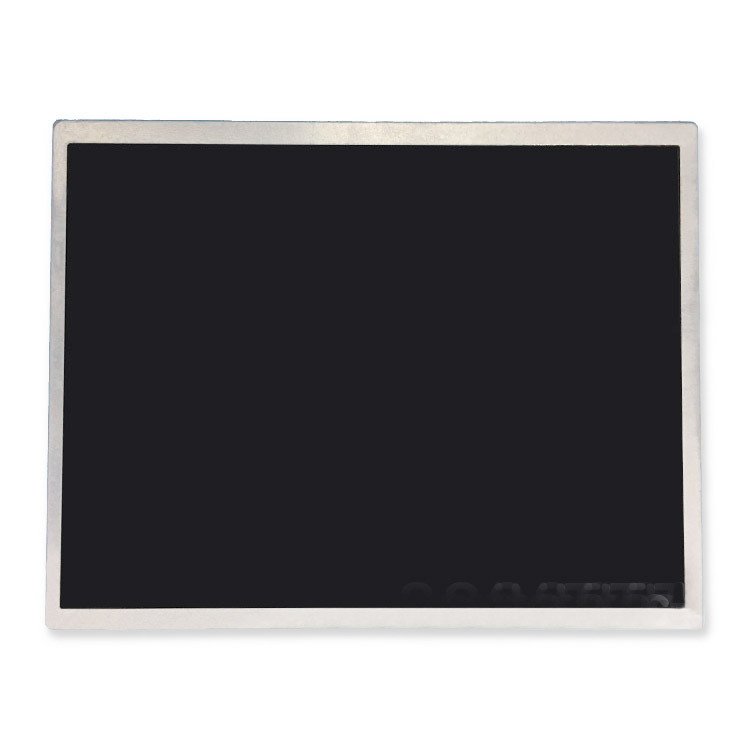
In the intricate world of industrial and embedded display solutions, the selection of a specific LCD module can define the performance, reliability, and user experience of an entire system. The Mitsubishi AA104SL02 stands as a prime example of engineering tailored for demanding applications. This 10.4-inch a-Si TFT-LCD module, with its SVGA (800x600) resolution and 96 PPI pixel density, represents a specific class of display technology designed not for consumer novelty, but for long-term operational integrity in controlled environments.

This article delves into a comprehensive technical and application-focused analysis of the AA104SL02. We will move beyond basic datasheet specifications to explore the rationale behind its design choices, its performance characteristics in context, and the practical considerations for integration. Our goal is to provide engineers, product designers, and procurement specialists with a deep understanding of where and why this particular LCM excels, and how its seemingly standard features translate into critical advantages for specialized use cases.
Deconstructing the Core Specifications: SVGA and 96 PPI in Context
The AA104SL02's 800 x 600 SVGA resolution on a 10.4-inch diagonal is a deliberate and strategic specification. In an era of 4K displays, this may seem modest. However, for industrial human-machine interfaces (HMIs), medical devices, and process control panels, SVGA offers a crucial balance. It provides sufficient pixel real estate for clear data visualization, schematic diagrams, and control elements without imposing excessive processing overhead on the system's central controller.
The resulting 96 Pixels Per Inch (PPI) is equally intentional. This density yields sharp, legible character and graphic rendering at typical viewing distances for rack-mounted or panel-embedded equipment. It avoids the scaling issues and increased GPU demands associated with ultra-high-density screens, ensuring consistent and predictable rendering. This combination makes the module a reliable "workhorse" resolution, optimized for functionality over sheer pixel count.
The a-Si TFT-LCD Advantage: Stability and Longevity
At the heart of the module lies Amorphous Silicon (a-Si) Thin-Film Transistor technology. For the AA104SL02's target markets, a-Si is chosen not for peak performance, but for proven long-term stability and cost-effectiveness. Unlike more advanced technologies that may prioritize speed or contrast for multimedia, a-Si TFT-LCDs offer excellent reliability over wide temperature ranges and extended operational lifetimes.
This technology ensures consistent performance with minimal risk of image retention or degradation over time, a critical factor for equipment that may run 24/7 for years. The manufacturing maturity of a-Si also contributes to the module's robustness and better availability, making it a lower-risk component choice for products with long lifecycles and stringent supply chain requirements.
Optical Performance: Tailored for Readability, Not Entertainment
The optical stack of the AA104SL02 is engineered for clarity in specific conditions. Its brightness, contrast ratio, and viewing angles are specified to meet the needs of controlled lighting environments, whether in a bright factory floor or a dimmed control room. The focus is on high legibility and reduced eye strain for operators who monitor data for extended periods.
Key considerations include its backlight system—designed for consistent illumination and long life—and the surface treatment of the panel, which is likely to include anti-glare properties. These features work in concert to minimize reflections and ensure that critical information is always discernible, directly impacting operational safety and efficiency.
Interface and Signal Integration: The LVDS Standard
Integration is a primary concern, and the AA104SL02 utilizes a Low-Voltage Differential Signaling (LVDS) interface. LVDS remains the industry-standard digital interface for such displays due to its robustness against electromagnetic interference (EMI)—a common challenge in industrial settings with motors and power electronics.
This interface ensures high-speed, low-noise transmission of the video signal from the system's graphics controller to the LCD panel. For engineers, this means a reliable and well-understood integration path, with a wealth of compatible controller chips and reference designs available, simplifying the development process and reducing time-to-market.
Mechanical and Environmental Design for Harsh Conditions
The module's mechanical construction is where its industrial pedigree becomes most apparent. It is built to withstand vibration, shock, and fluctuating temperatures that would compromise consumer-grade displays. The frame and mounting provisions are designed for secure integration into larger enclosures.
Furthermore, the AA104SL02 is often specified with an operating temperature range that far exceeds commercial panels. This resilience ensures functionality in unheated warehouses or near heat-generating machinery. This ruggedness, combined with a long-life backlight, translates directly into lower total cost of ownership by minimizing failures and maintenance needs.
Primary Application Scenarios and Industry Fit
The true value of the AA104SL02 is realized in its application domains. It is a quintessential component in:
Industrial Automation: As the display for PLC interfaces, CNC machine controls, and test equipment.
Medical Devices: In patient monitoring systems, diagnostic equipment, and surgical tools where reliability is non-negotiable.
Transportation and Aerospace: For in-cabin information systems, ground support equipment, and avionics test benches.
Point-of-Sale and Kiosks: Where durability and continuous operation are required.
In these fields, the module's blend of adequate resolution, rock-solid reliability, and environmental toughness makes it a preferred and often specified component.
FAQs: Mitsubishi AA104SL02 LCD Module
Q1: What does "LCM" stand for in AA104SL02?A1: LCM stands for LCD Module. It indicates the unit includes the LCD panel, backlight, driver circuits, and interface connectors as a complete package.
Q2: Is the 800x600 resolution sufficient for modern applications?A2: Yes, for its target industrial and embedded applications. It provides clear data display without unnecessary GPU load, which is ideal for functional interfaces.
Q3: What is the advantage of a 96 PPI density?A3: It ensures excellent text and graphic legibility at typical viewing distances, avoiding the need for operating system-level scaling which can cause compatibility issues.
Q4: What type of backlight does it use?A4: It typically uses a long-life CCFL (Cold Cathode Fluorescent Lamp) or an LED backlight system, designed for high reliability and consistent brightness over time.
Q5: Why is the LVDS interface important?A5: LVDS provides robust, high-speed, low-noise data transmission, which is critical for maintaining display integrity in electrically noisy industrial environments.
Q6: Can this display be used in outdoor conditions?A6: Not directly. While rugged, it is designed for indoor or protected environments. Outdoor use would require a specialized, sealed front-end enclosure with high-brightness enhancement.
Q7: What is the typical operating temperature range?A7: Specific ranges vary, but industrial-grade modules like this often operate from -10°C to 60°C or wider, far exceeding commercial display specs.
Q8: Is it compatible with single-board computers like Raspberry Pi?A8: Not directly. It requires an LVDS signal. Integration with most SBCs necessitates an additional controller board to convert the video output (e.g., HDMI) to LVDS.
Q9: How does a-Si TFT compare to IPS technology?A9: a-Si offers better cost-effectiveness and long-term stability for fixed-content applications. IPS provides superior viewing angles and color but at a higher cost and potentially different reliability profile.
Q10: Where can I find technical drawings and the datasheet?A10: They are typically available through authorized distributors of Mitsubishi display products or by contacting Mitsubishi Electric's component division directly.
Conclusion
The Mitsubishi AA104SL02 is far more than a simple collection of specifications on a datasheet. It embodies a design philosophy centered on reliability, integration ease, and purposeful performance. Its SVGA resolution, a-Si TFT technology, LVDS interface, and rugged construction are not arbitrary choices but a coherent response to the rigorous demands of industrial, medical, and professional embedded systems.
For engineers and designers, selecting this module represents a decision to prioritize long-term operational stability and minimized risk over fleeting technological trends. In a landscape cluttered with consumer-grade components, the AA104SL02 stands as a testament to the enduring value of specialized, well-engineered hardware designed to perform consistently at the heart of critical equipment for years to come.





