In the intricate world of electronic displays, the selection of a screen module is a critical decision that influences the performance, reliability, and user experience of countless devices. At the heart of many industrial, automotive, and commercial applications lies a specific component: the AA090ME01. This 9-inch LCD module, with its 800(RGB)×480 resolution and LVDS interface, represents a mature yet highly relevant technology solution. This article delves beyond the basic datasheet specifications to explore the technical nuances, application landscapes, and practical considerations of this ubiquitous display module.

We will unpack the engineering rationale behind its design choices, compare its positioning in the modern display ecosystem, and provide actionable insights for engineers, procurement specialists, and product developers. Understanding the AA090ME01 is not just about knowing its pinout; it's about comprehending its role as a robust, dependable workhorse in environments where consistency often trumps cutting-edge specs.
Decoding the AA090ME01: Core Specifications and Technology
The AA090ME01 is a 9-inch diagonal TFT-LCD module built around a traditional Twisted Nematic (TN) or Advanced-TN panel. The resolution of 800 horizontal pixels (by RGB subpixels) × 480 vertical pixels defines its aspect ratio as 15:9, a format commonly used in industrial and embedded systems. The "LVDS" in its description is crucial—it stands for Low-Voltage Differential Signaling, a robust interface standard for transmitting high-speed data over copper cables with inherent resistance to electromagnetic noise. This combination of a moderate resolution and LVDS interface indicates a design philosophy centered on stability and longevity over ultra-high definition. The module typically incorporates a CCFL or LED backlight system, with the latter being more common in modern iterations for its lower power consumption and longer lifespan. Key parameters like brightness (nits), contrast ratio, and viewing angles are engineered to meet the demands of controlled environments, such as machinery operator panels or point-of-sale terminals, rather than consumer media consumption.

The LVDS Interface: A Pillar of Reliability in Noisy Environments
Why does the LVDS interface remain a cornerstone for modules like the AA090ME01? The answer lies in its differential data transmission. Unlike single-ended signals that reference a common ground, LVDS sends two complementary signals. Any noise picked up along the cable affects both wires equally, and the receiver cancels out this common-mode noise, extracting the original clean data.
This makes the AA090ME01 exceptionally resilient in electromagnetically challenging environments found in factories, vehicles, or medical equipment. The interface also supports longer cable runs between the display module and the controller board without signal degradation. For system integrators, this reliability translates to reduced development risk, simpler shielding requirements, and ultimately, a more robust end product. It's a proven technology that "just works," which is often the highest priority in industrial design.
Ideal Application Scenarios: Where the AA090ME01 Excels
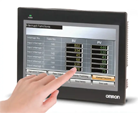
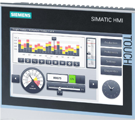
The technical profile of the AA090ME01 directly maps to a well-defined set of applications. Its 9-inch form factor and 800×480 resolution offer a sweet spot of sufficient information density and physical compactness. You will predominantly find this module serving as the human-machine interface (HMI) in industrial automation, controlling PLCs, CNC machines, and test equipment.
Beyond the factory floor, it is a common sight in point-of-sale (POS) systems, kiosks, and transportation infotainment. Its reliability under constant operation makes it suitable for these roles. In automotive aftermarket, it functions as a display for rear-seat entertainment or navigation systems. The module is less suited for applications requiring wide viewing angles (like public signage) or high-fidelity color reproduction (like graphic design), as its performance is optimized for direct, front-on viewing in functional contexts.
Integration Considerations and Design Challenges
Successfully integrating the AA090ME01 into a product requires attention to several key areas. First is power sequencing: the LCD panel, backlight, and controller ICs must be powered up in a specific order to prevent permanent damage. Second, the LVDS signal integrity must be maintained on the PCB, requiring controlled impedance routing and proper termination.
Designers must also account for the mechanical mounting—the module typically has a metal frame with mounting holes—and the thermal management of the backlight and drivers. Furthermore, one must source or design a compatible controller board that can generate the correct LVDS signal format and timing for this specific panel. Neglecting these aspects can lead to display flicker, image retention, or reduced lifespan, turning a reliable component into a source of field failures.
Comparative Landscape: LVDS vs. Modern Interfaces like MIPI
In an era dominated by Mobile Industry Processor Interface (MIPI) displays for smartphones and tablets, the LVDS-based AA090ME01 represents a different paradigm. MIPI DSI is designed for ultra-high bandwidth, low power, and compact physical interconnects, ideal for portable consumer electronics. LVDS, as seen in the AA090ME01, prioritizes noise immunity, longer cable runs, and simpler protocol handling.
The choice is not about which is universally better, but which is application-appropriate. For a compact IoT device, MIPI might be superior. For a 9-inch display inside an industrial cabinet with motors and drives generating interference, the robustness of LVDS is irreplaceable. The AA090ME01 occupies a vital niche where environmental toughness and proven supply chains are more valuable than the latest interface standard.
Sourcing, Longevity, and the Future of Mature Display Modules
A critical factor in choosing a component like the AA090ME01 is its product lifecycle and supply chain stability. These modules are often produced for years, even decades, which is essential for industrial products with long service lives. When sourcing, it's vital to partner with reputable distributors or the original manufacturer to avoid counterfeit or refurbished units falsely sold as new.
Looking ahead, the future for such modules involves incremental evolution rather than revolution. We may see a shift to all-LED backlights for higher efficiency and the potential adoption of more advanced panel types like IPS for wider viewing angles, while likely retaining the trusted LVDS interface for core communication. The AA090ME01's legacy is a testament to the enduring value of specialized, reliable technology in a world chasing consumer-grade trends.
Frequently Asked Questions (FAQs)
Q1: What is the exact resolution of the AA090ME01?A1: It is 800 pixels horizontally (by RGB stripes) by 480 pixels vertically, often noted as 800×480 or WVGA.
Q2: What does "LVDS" mean and why is it important?A2: LVDS stands for Low-Voltage Differential Signaling. It's a noise-resistant interface critical for stable display operation in electrically noisy environments.
Q3: Is this module suitable for outdoor use?A3: Typically not without additional modifications. Standard versions have moderate brightness. For outdoor use, a high-brightness version and proper environmental sealing are required.
Q4: What is the typical lifespan of the AA090ME01?A4: Lifespan is often rated at 50,000 hours or more for the LED backlight, making it suitable for continuous operation in commercial settings.
Q5: Can I touch-enable this display?A5: Yes, it is commonly paired with a resistive or projected capacitive (PCAP) touch overlay to create a touchscreen interface.
Q6: What is the main alternative to an LVDS interface today?A6: For embedded displays, MIPI DSI is the primary modern alternative, though it serves different design priorities (size, power vs. robustness).
Q7: What type of backlight does it use?A7: Modern versions predominantly use an LED backlight system for lower power and longer life compared to older CCFL technology.
Q8: Is the AA090ME01 a drop-in replacement for other 9-inch 800×480 modules?A8: Not necessarily. Mechanical dimensions, pinouts, and power sequences can vary. Always consult the datasheet for compatibility.
Q9: What are the common failure modes?A9: Backlight failure (LED degradation), display driver IC issues, or physical damage from improper handling or integration are most common.
Q10: Where can I find the technical datasheet for this module?A10: Datasheets are available from authorized distributors or by contacting display module manufacturers directly. Avoid using unofficial sources.
The AA090ME01 9-inch LVDS display module exemplifies a class of electronic components where proven reliability and specific functionality outweigh the allure of the latest specs. Its 800×480 resolution and robust LVDS interface are not limitations but deliberate choices that make it an indispensable component in industrial control, transactional systems, and other demanding embedded applications.
For engineers and developers, understanding this module's strengths—its noise immunity, long lifecycle, and straightforward integration—provides a blueprint for selecting the right display technology. In a rapidly evolving tech landscape, the continued relevance of the AA090ME01 serves as a powerful reminder that the optimal solution is often the one that solves the problem with unwavering dependability, not the one with the highest pixel count.