














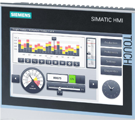
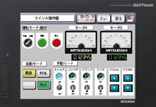





- Industrial display
-
Industrial Products
- DC Servo Drive
- AC Servo Drive
- Industrial board
- Siemens
- Switch Sensor
- Proximity Switch
- Temperature Controller
- Protection Relay
- Fiber Optic Sensor
- Encoder
- Fan
- other
- Heidelberg
- MITSUBISHI
- FANUC
- Siemens adapter
- Fujitsu connector
- Motherboard
- Board
- Contactor
- Circuit
- OMRON
- Relay
- Motor Driver
- power supply
- Cable
- Transformer
- HMI Touch Glass
-
HMI Full Machine Whole unit
- OMRON HMI Touch Panel
- Siemens HMI Touch Panel
- Mitsubishi HMI Touch Panel
- Allen-Bradley automation HMI Touch Panel
- DELTA HMI Touch Panel
- Proface HMI Touch Panel
- KINCO DELTA HMI Touch Panel
- HITECH HMI Touch Panel
- WEINTEK HMI Touch Panel
- TECVIEW HMI Touch Panel
- WEINVIEW HMI Touch Panel
- PANASONIC HMI Touch Panel
- KYOCERA HMI Touch Panel
- SCHNEIDER HMI Touch Panel
- Module
- lcd inverter
- Membrane Keypad Switch
- Zhiyan Customized Touch Screens
- Frequency Inverter
- Servo Motor
- PLC
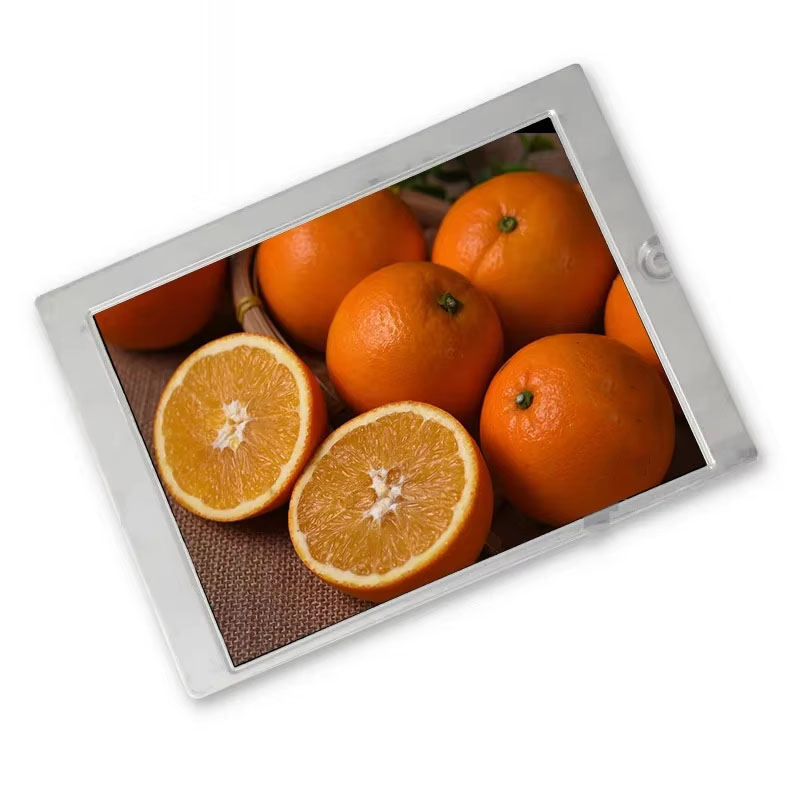
In the intricate world of industrial automation, medical instrumentation, and specialized transportation systems, the display interface is more than a screen—it is the critical nexus of human-machine interaction. At the heart of many Mitsubishi Electric control systems and specialized devices lies a component engineered for reliability and clarity: the AA084VJ01 8.4-inch TFT LCD module. This is not a consumer-grade panel but a purpose-built industrial module designed to meet the rigorous demands of continuous operation in challenging environments.
This article delves deep into the AA084VJ01, moving beyond basic specifications to explore its integral role within Mitsubishi's ecosystem and broader industrial applications. We will dissect its technical architecture, examine the tangible benefits it delivers in real-world scenarios, and provide crucial guidance for integration and sourcing. For engineers, procurement specialists, and technical decision-makers, understanding this module's capabilities is key to ensuring system robustness and operational excellence.

Technical Architecture and Core Specifications
The AA084VJ01 is built upon a robust a-Si (amorphous Silicon) TFT LCD technology, offering an 8.4-inch diagonal viewing area with a standard resolution of 800 x 600 pixels (SVGA). This 4:3 aspect ratio is historically significant and remains highly practical for many industrial control interfaces, which are often designed for landscape-oriented, data-dense layouts. The module typically incorporates a high-brightness CCFL (Cold Cathode Fluorescent Lamp) backlight system, ensuring visibility in brightly lit factory or outdoor settings.
Beyond the panel itself, the module integrates critical driving electronics. It accepts standard RGB analog video signals, making it compatible with a wide array of industrial PC and PLC graphics controllers. The interface is typically a single-channel LVDS (Low Voltage Differential Signaling) connector, which ensures stable data transmission with reduced electromagnetic interference. This technical foundation prioritizes signal integrity and longevity over the ultra-thin profiles common in consumer electronics, defining its industrial character.
Defining Features for Harsh Environments
What truly distinguishes the AA084VJ01 from commercial displays are its engineered resilience features. It is designed to operate reliably across an extended temperature range, often from -20°C to 70°C or wider, accommodating unregulated control cabinets or mobile equipment exposed to seasonal extremes. The screen surface is treated with anti-glare coatings to mitigate reflections from overhead lighting, a critical feature for operator comfort and error reduction.
Furthermore, the mechanical construction is geared for durability. The module resists vibrations and shocks inherent in manufacturing floors or vehicular applications. Its longevity is also a key metric; where a consumer LCD may last a few years, industrial modules like the AA084VJ01 are rated for tens of thousands of hours of continuous operation, minimizing downtime and total cost of ownership. This ruggedization is not an afterthought but a core design principle.
Integration within the Mitsubishi Ecosystem
The AA084VJ01 is not a standalone product but a vital component within Mitsubishi Electric's extensive automation portfolio. It is commonly found as the display core in Mitsubishi's own GOT (Graphic Operation Terminal) series, which are HMIs (Human-Machine Interfaces) for their MELSEC PLCs. In this context, the module provides the physical visual interface for proprietary software like GT Designer, used to create control and monitoring screens.
Understanding this ecosystem is crucial for system designers. Using the designated module ensures perfect compatibility with Mitsubishi's mounting hardware, bezel designs, and controller boards. It guarantees that the optical performance (brightness, viewing angle) meets the original equipment specifications, ensuring that the end-user experience matches the engineered intent of the complete Mitsubishi control system.
Primary Industrial Applications and Use Cases
The application landscape for the AA084VJ01 is vast and demanding. In factory automation, it serves as the primary operator touchpoint on production lines, displaying real-time machine status, process parameters, and diagnostic alerts. In medical technology, it may be integrated into diagnostic or monitoring equipment where consistent, reliable visual feedback is non-negotiable.
Transportation and infrastructure form another major domain. The module can be found in railway carriage control panels, construction vehicle consoles, or utility substation monitoring systems. In each case, its ability to withstand temperature fluctuations, condensation, and constant vibration makes it a trusted choice. These use cases underscore a common theme: the AA084VJ01 is deployed where failure is not an option, and clarity is paramount.
Sourcing, Compatibility, and Legacy Considerations
As a specialized industrial component, sourcing the AA084VJ01 requires a strategic approach. It is available through authorized Mitsubishi distributors, specialized industrial electronic component suppliers, and, with caution, on the open market. Engineers must be vigilant about sourcing authentic modules, as counterfeits lack the rigorous testing and quality control.
A significant consideration is compatibility and legacy support. Many systems designed years ago rely on this specific module. When performing upgrades or repairs, finding a direct replacement or a verified compatible alternative is essential to avoid costly system redesigns. This reality highlights the module's role in sustaining the lifecycle of critical infrastructure, often long after consumer models have been obsolete.
Future-Proofing and Alternative Technologies
While the AA084VJ01 remains a workhorse, display technology evolves. The industry is gradually shifting towards LED backlighting for its longer life, lower power consumption, and mercury-free composition. Higher-resolution panels and more advanced touch technologies (like projected capacitive) are also becoming prevalent in new designs.
Therefore, when designing new systems, engineers must evaluate whether a traditional module like the AA084VJ01 meets all future needs or if a modern equivalent with updated features is more appropriate. For maintaining existing systems, however, the AA084VJ01's proven design and availability ensure it will remain a relevant and supported component for the foreseeable future, bridging the gap between reliable legacy technology and emerging trends.
FAQs: AA084VJ01 8.4" TFT LCD Module
1. What is the AA084VJ01?An 8.4-inch industrial TFT LCD module, commonly used as the display component in Mitsubishi GOT HMIs and other rugged equipment.
2. What is its screen resolution?It features an SVGA resolution of 800 x 600 pixels with a 4:3 aspect ratio.
3. What type of backlight does it use?It traditionally uses a high-brightness CCFL (Cold Cathode Fluorescent Lamp) backlight system.
4. What is the operating temperature range?It is designed for a wide industrial temperature range, typically from -20°C to 70°C.
5. What is its primary interface?It typically uses an LVDS (Low Voltage Differential Signaling) interface for stable video signal transmission.
6. Where is it commonly used?In factory automation HMIs, medical devices, transportation vehicle consoles, and utility control systems.
7. Is it a touch screen module?The AA084VJ01 itself is the LCD panel. Touch functionality (usually resistive) is added as a separate overlay in a complete HMI unit.
8. How do I source a genuine AA084VJ01?Procure through authorized Mitsubishi distributors or reputable industrial electronic component suppliers to ensure authenticity.
9. Can it be replaced with a newer LED-backlit module?Possible, but requires careful verification of mechanical dimensions, interface compatibility, and power requirements. A direct drop-in replacement may not exist.
10. Why choose this over a commercial LCD panel?For its extended temperature tolerance, vibration resistance, long-term reliability, and guaranteed compatibility within industrial systems.
Conclusion
The AA084VJ01 8.4" TFT LCD module exemplifies the engineering philosophy required for industrial-grade components. It transcends being a mere commodity display by offering proven reliability, environmental resilience, and seamless integration within the Mitsubishi automation ecosystem. Its value is measured not in pixels alone, but in uptime, durability, and the assurance of performance under duress.
For those maintaining legacy systems, this module represents a critical lifeline. For designers of new equipment, it serves as a benchmark for the robustness required in harsh environments. As technology progresses, the principles embodied by the AA084VJ01—clarity, reliability, and purposeful design—remain timeless. Understanding its role and specifications is fundamental for anyone involved in the lifecycle of professional industrial human-machine interfaces.





