
















- Industrial display
-
Industrial Products
- DC Servo Drive
- AC Servo Drive
- Industrial board
- Siemens
- Switch Sensor
- Proximity Switch
- Temperature Controller
- Protection Relay
- Fiber Optic Sensor
- Encoder
- Fan
- other
- Heidelberg
- MITSUBISHI
- FANUC
- Siemens adapter
- Fujitsu connector
- Motherboard
- Board
- Contactor
- Circuit
- OMRON
- Relay
- Motor Driver
- power supply
- Cable
- Transformer
- HMI Touch Glass
-
HMI Full Machine Whole unit
- OMRON HMI Touch Panel
- Siemens HMI Touch Panel
- Mitsubishi HMI Touch Panel
- Allen-Bradley automation HMI Touch Panel
- DELTA HMI Touch Panel
- Proface HMI Touch Panel
- KINCO DELTA HMI Touch Panel
- HITECH HMI Touch Panel
- WEINTEK HMI Touch Panel
- TECVIEW HMI Touch Panel
- WEINVIEW HMI Touch Panel
- PANASONIC HMI Touch Panel
- KYOCERA HMI Touch Panel
- SCHNEIDER HMI Touch Panel
- Module
- lcd inverter
- Membrane Keypad Switch
- Zhiyan Customized Touch Screens
- Frequency Inverter
- Servo Motor
- PLC
This article delves into a comprehensive analysis of the LQ084V1DG42. We will explore its core technical specifications and the unique value proposition of SHARP's IGZO technology. Moving beyond the datasheet, we will examine its primary application landscapes, the critical considerations for system integration, and a balanced view of its advantages and limitations. Finally, we will provide practical guidance on sourcing and implementing this specialized panel, offering a definitive resource for engineers, procurement specialists, and developers working with embedded display systems.
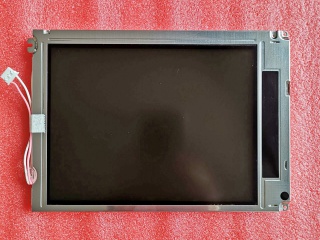
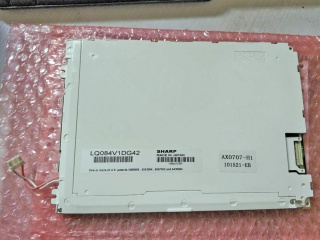
Decoding the Specifications: Core Attributes of the LQ084V1DG42
Key specifications include its outline dimensions, mounting hole patterns, and the crucial interface type—typically an LVDS (Low-Voltage Differential Signaling) interface, which ensures robust signal integrity over longer cable runs in electrically noisy environments. Understanding these foundational specs is the first step in determining the panel's suitability for a project, as they directly impact mechanical design, driver board compatibility, and overall system architecture.


The IGZO Advantage: SHARP's Technological Edge
Firstly, it enables the design of smaller, more transparent transistors, leading to a higher aperture ratio. This allows for either brighter displays with the same backlight power or equivalent brightness with lower power consumption—a critical factor for energy-efficient or battery-powered devices. Secondly, IGZO provides excellent charge retention, which can be leveraged for lower refresh rates in static image scenarios, further reducing power draw. This combination of efficiency and performance is a cornerstone of the panel's value in demanding fields.
Primary Application Landscapes and Use Cases
Beyond the factory, it finds a home in specialized medical devices (for diagnostic equipment where color fidelity and consistency are vital), transportation (in-vehicle information systems or control panels), and point-of-sale/kiosk terminals. In each case, the requirement is for a display that delivers unwavering performance over a product lifecycle that may span many years, often in contexts where immediate replacement with an off-the-shelf component is not feasible.
Critical Considerations for System Integration
Secondly, thermal management is paramount. While IGZO is efficient, the CCFL backlight and power circuitry generate heat. Adequate ventilation or heat sinking must be designed into the enclosure to prevent premature aging or failure. Finally, supply chain longevity is a strategic consideration. For products with multi-year manufacturing cycles, securing a stable supply of this specific panel or planning for a future-approved alternative is a crucial part of the design process.
Analyzing Strengths and Potential Limitations
However, potential limitations must be acknowledged. The SVGA resolution may be considered low for modern applications requiring high-density graphics. The use of a CCFL backlight, while bright, has a finite lifespan, consumes more power than modern LED arrays, and requires an inverter circuit. Furthermore, as a specialized industrial component, its unit cost is higher than mass-market consumer panels, and it may face eventual obsolescence, necessitating lifecycle management.
Sourcing and Implementation Best Practices
For implementation, leveraging the official SHARP datasheet and application notes is non-negotiable. These documents contain critical details on power sequencing, recommended operating conditions, and interface pinouts. Many integrators opt for a system-on-chip (SoC) board or a ready-made LCD controller that explicitly supports this panel's timing parameters. Building a close relationship with a knowledgeable supplier can provide invaluable support for both initial prototyping and volume production phases.
Frequently Asked Questions (FAQs)
Q10: How can I ensure I'm buying a genuine SHARP panel?A10: Source from authorized distributors, request official documentation, and verify part markings. Be wary of prices significantly below market average.





