


















- Industrial display
-
Industrial Products
- DC Servo Drive
- AC Servo Drive
- Industrial board
- Siemens
- Switch Sensor
- Proximity Switch
- Temperature Controller
- Protection Relay
- Fiber Optic Sensor
- Encoder
- Fan
- other
- Heidelberg
- MITSUBISHI
- FANUC
- Siemens adapter
- Fujitsu connector
- Motherboard
- Board
- Contactor
- Circuit
- OMRON
- Relay
- Motor Driver
- power supply
- Cable
- Transformer
- HMI Touch Glass
-
HMI Full Machine Whole unit
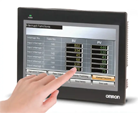
- OMRON HMI Touch Panel
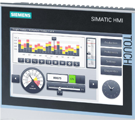
- Siemens HMI Touch Panel
- Mitsubishi HMI Touch Panel
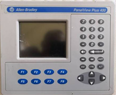
- Allen-Bradley automation HMI Touch Panel
- DELTA HMI Touch Panel
- Proface HMI Touch Panel
- KINCO DELTA HMI Touch Panel
- HITECH HMI Touch Panel
- WEINTEK HMI Touch Panel
- TECVIEW HMI Touch Panel
- WEINVIEW HMI Touch Panel
- PANASONIC HMI Touch Panel
- KYOCERA HMI Touch Panel
- SCHNEIDER HMI Touch Panel
- Module
- lcd inverter
- Membrane Keypad Switch
- Zhiyan Customized Touch Screens
- Frequency Inverter
- Servo Motor
- PLC
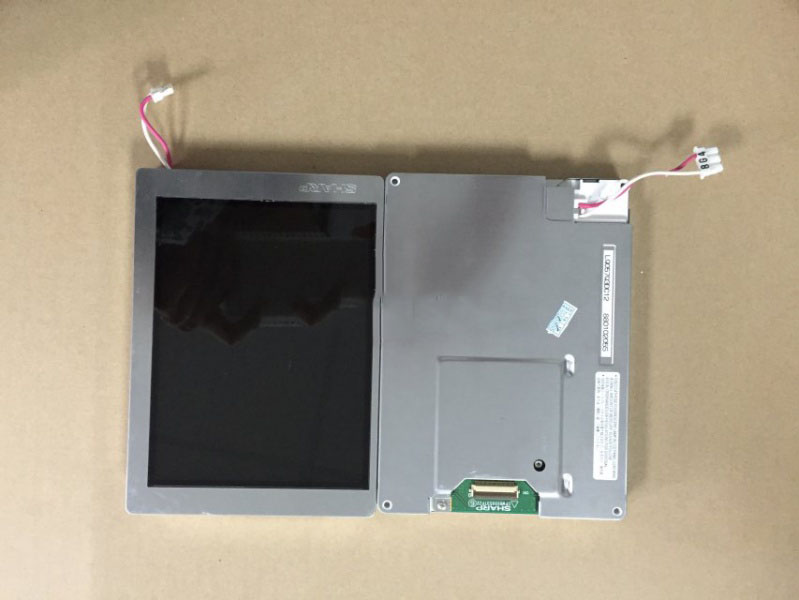
Our exploration will dissect the module's core characteristics, starting with its fundamental 320x240 QVGA resolution and 5.7-inch diagonal size, framing its position in the market. We will then investigate the underlying TFT-LCD technology that drives its performance, followed by a detailed examination of its unique mechanical and electrical interface. Understanding its key strengths and potential limitations is crucial for selection, leading to a discussion of its most suitable real-world applications. Finally, we will provide actionable insights for developers looking to integrate this module into their projects, ensuring a smooth path from prototype to production.
Defining the Form Factor: Resolution and Physical Profile
The LQ057Q3DC12 is fundamentally characterized by its 5.7-inch diagonal screen size and a native resolution of 320 pixels horizontally by 240 pixels vertically, commonly known as QVGA. This specific combination places it in a niche between smaller, ultra-low-power displays and larger, high-definition panels. The 5.7-inch size offers a substantial viewing area suitable for presenting readable text, basic graphics, and user interface elements without dominating the device's footprint.
The 320x240 resolution, while not high by modern smartphone standards, provides a pixel density that is perfectly adequate for industrial, medical, and instrumentation applications where complex visual detail is less critical than reliability and legibility. This resolution directly influences the complexity of the driving circuitry and the required bandwidth, contributing to the module's overall power efficiency and cost-effectiveness. The physical dimensions, including thickness and bezel size, are engineered for straightforward integration into enclosed systems, often featuring a rugged construction to withstand challenging environments.
Core Technology: The TFT-LCD Advantage
This active-matrix design mitigates the "ghosting" effect and provides a stable image, which is essential for applications involving dynamic data or user interaction. The module typically incorporates a CCFL or LED backlighting system (with LED being more common in modern iterations for its longevity and lower power consumption) to ensure visibility in various lighting conditions. The use of TFT technology ensures that the display delivers consistent performance across a wide operating temperature range, a non-negotiable requirement for automotive, outdoor, or industrial control panels.
Interface and Connectivity: The Electrical Blueprint
This parallel interface offers a direct and low-latency connection to many microcontrollers and application processors, simplifying the driver design. Designers must carefully map these signals from their host processor to the module's connector, often a flexible printed circuit (FPC) with a standard pitch. Additionally, the module requires precise power supply rails, typically for the logic board, the TFT array, and the backlight. Proper power sequencing and noise filtering on these lines are critical to avoid display artifacts and ensure long-term reliability.
Strengths and Design Considerations
However, designers must account for certain considerations. The parallel interface, while simple, consumes more GPIO pins on the host processor compared to modern serial interfaces like MIPI-DSI. The physical depth of the module, especially if using CCFL backlighting, may be a constraint in ultra-slim devices. Furthermore, sourcing may shift towards newer models with LED backlights, so verifying the exact specifications and supply chain availability for the "LQ057Q3DC12" variant is a necessary step in the design process.
Ideal Application Scenarios
Industrial Human-Machine Interfaces (HMIs): For control panels on factory machinery, PLC interfaces, and test equipment.
Medical Devices: In portable diagnostic equipment, patient monitoring systems, and bedside instruments where clear data presentation is vital.
Point-of-Sale (POS) Terminals and Kiosks: For displaying transaction information, menus, or interactive options.
Automotive Aftermarket and Telematics: In navigation units, rear-seat entertainment systems, or diagnostic tools.
Test and Measurement Instruments: As the primary output for oscilloscopes, signal generators, and multimeters.
In these contexts, the module's ability to deliver a stable, legible image under varying conditions provides immense value, justifying its selection over more consumer-oriented displays.
Integration Guidelines for Engineers
Initial bring-up should focus on displaying a simple test pattern to verify hardware connections. Stress testing under temperature extremes and prolonged operation is recommended to uncover any thermal or signal integrity issues. Finally, consider the optical stack—the placement of touch panels (resistive or capacitive) and protective cover glass—as these will affect the overall optical performance and mechanical integration of the final product.
FAQs: 5.7-Inch LQ057Q3DC12 LCD Module
Q10: Is this module still in active production?A10: While it's a mature product, availability varies. It's essential to check with distributors or the manufacturer for current status and potential newer equivalents.





