








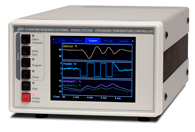





- Industrial display
-
Industrial Products
- DC Servo Drive
- AC Servo Drive
- Industrial board
- Siemens
- Switch Sensor
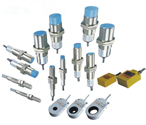
- Proximity Switch
- Temperature Controller
- Protection Relay
- Fiber Optic Sensor
- Encoder
- Fan
- other
- Heidelberg
- MITSUBISHI
- FANUC
- Siemens adapter
- Fujitsu connector
- Motherboard
- Board
- Contactor
- Circuit
- OMRON
- Relay
- Motor Driver
- power supply
- Cable
- Transformer
- HMI Touch Glass
-
HMI Full Machine Whole unit
- OMRON HMI Touch Panel
- Siemens HMI Touch Panel
- Mitsubishi HMI Touch Panel
- Allen-Bradley automation HMI Touch Panel
- DELTA HMI Touch Panel
- Proface HMI Touch Panel
- KINCO DELTA HMI Touch Panel
- HITECH HMI Touch Panel
- WEINTEK HMI Touch Panel
- TECVIEW HMI Touch Panel
- WEINVIEW HMI Touch Panel
- PANASONIC HMI Touch Panel
- KYOCERA HMI Touch Panel
- SCHNEIDER HMI Touch Panel
- Module
- lcd inverter
- Membrane Keypad Switch
- Zhiyan Customized Touch Screens
- Frequency Inverter
- Servo Motor
- PLC
This article delves deep into the LQ121S1DG41, moving beyond basic datasheet parameters to explore its architectural significance and practical implications. We will dissect its core technology, analyze its performance characteristics, and contextualize its role within modern digital systems. By understanding the nuances of this display, from its rugged construction to its optimized optical performance, designers and procurement specialists can make informed decisions that impact product durability, user experience, and ultimately, project success.

Deconstructing the Core Technology: TFT-LCD and IPS Innovation
This characteristic is paramount in applications where multiple operators need to view the screen simultaneously or where the screen may be mounted in a fixed position that requires off-axis viewing, such as in medical carts or industrial control panels. Furthermore, IPS technology offers superior color reproduction and consistency across the entire screen surface, ensuring that graphical data, diagnostic images, or user interface elements are rendered with accuracy and fidelity, reducing the risk of misinterpretation.
Optical Performance and Readability Under Pressure
Equally important is the screen's surface treatment. It often features an anti-glare coating that diffuses ambient light, reducing reflections that can cause eye strain and obscure information. For applications involving sensitive data or used in public spaces, the module can be integrated with privacy filters. When combined with a robust backlight system designed for long-term stability, these optical features ensure the display delivers consistent, legible, and visually comfortable performance throughout its extended operational life, a key consideration for mission-critical systems.
Ruggedized Design for Demanding Environments
The structural integrity is enhanced to withstand higher levels of vibration and shock, which are common in transportation, military, or heavy machinery applications. Furthermore, the panel is typically sealed to protect against the ingress of dust and moisture, addressing concerns in cleanrooms, food processing plants, or outdoor installations. This ruggedized philosophy extends the product's lifecycle, reduces failure rates, and lowers the total cost of ownership by minimizing downtime and replacement needs in environments where reliability is paramount.
Interface and Integration: The Digital Bridge
This noise resistance ensures a stable, high-speed digital signal transmission, resulting in a clear image free from flicker or distortion. The interface is designed for straightforward integration with standard controller boards, simplifying the design-in process for engineers. Understanding the interface protocol, power requirements, and mechanical mounting specifications is crucial for a successful implementation, ensuring the display acts as a reliable digital bridge rather than a system bottleneck.
Application-Specific Customization and Versatility
Touchscreen Integration: Adding a projected capacitive (PCAP) or resistive touch overlay, complete with driver support, to create an interactive human-machine interface (HMI).
Enhanced Durability: Opting for strengthened cover glass (like chemically tempered glass) for extreme environments or public-facing kiosks prone to vandalism.
Optical Bonding: Filling the air gap between the LCD and the cover glass with a clear resin. This process reduces internal reflection, improves sunlight readability, prevents condensation, and adds structural rigidity.
This versatility allows the same core display platform to be adapted for a surgical monitor, an in-vehicle infotainment system, or a point-of-sale terminal, demonstrating its foundational role across sectors.
Lifecycle Considerations and Supply Chain Strategy
Procurement specialists must evaluate not just the initial cost and specs, but also the supplier's reputation for quality control, technical support, and lifecycle management. Establishing a relationship with a reliable distributor or directly with the manufacturer ensures access to consistent components, necessary documentation, and support for end-of-life planning, thereby mitigating project risk and ensuring sustainable production.
FAQs: LQ121S1DG41 Display Module
Q10: What should I consider beyond the basic specs when sourcing this display?A10: Consider customization options (touch, bonding), the supplier's lifecycle support, technical documentation quality, and compliance with relevant industry standards (e.g., medical, automotive).





