In the intricate world of electronic components, the display panel serves as the critical interface between user and machine. Among the myriad of options available to engineers and product designers, the
LTM200KT10 LCD Module stands out as a sophisticated solution for applications demanding high resolution and reliable performance. This module, featuring a
1600x900 pixel (HD+) display, represents a specific convergence of size, clarity, and integration level, tailored for mid-to-high-end industrial, medical, and professional equipment.
This article delves into a comprehensive analysis of the LTM200KT10. We will move beyond basic specifications to explore its architectural advantages, the technical nuances of its 1600x900 resolution, and its ideal application ecosystems. Furthermore, we will examine the critical considerations for integration, from interface protocols to power management, and situate this module within the broader competitive landscape of LCD technology. Our goal is to provide a resource that empowers decision-making for professionals seeking a display solution that balances sharp visual output with robust engineering.

Architectural Overview of the LTM200KT10 Module
The LTM200KT10 is not merely a panel but a fully integrated LCD module. This distinction is crucial. It typically incorporates the TFT-LCD glass itself, the driver ICs, a built-in backlight unit (LED array, light guide, and diffusers), and a defined interface connector, all housed within a structural frame. This turn-key approach significantly reduces development complexity for the integrator.
At its heart is a 20.1-inch diagonal active area utilizing In-Plane Switching (IPS) or similar advanced technology, which provides superior color consistency, wider viewing angles, and better image stability compared to older TN panels. The module is designed for longevity and stability, often specified for 24/7 operation in controlled environments. Understanding this integrated architecture is the first step in appreciating its value proposition, as it shifts the engineering burden from low-level display control to higher-level system integration.
The Significance of 1600x900 HD+ Resolution
The 1600x900 resolution, known as HD+ or 900p, occupies a strategic middle ground in the display market. For a 20-inch panel, it results in a pixel density that offers a clear, detailed image without the scaling challenges and higher processing overhead associated with 4K or even Full HD (1600x900) on a similar size.
This resolution provides substantially more screen real estate than the legacy 1600x600 format commonly found in industrial monitors, allowing for more data points, graphs, or software controls to be displayed simultaneously. The aspect ratio of 16:9 is also a key benefit, being the modern standard for multimedia content and user interface design. It facilitates the display of widescreen video feeds or the side-by-side arrangement of applications without the black bars associated with older 4:3 or 5:4 ratios, thereby maximizing the effective use of the physical display area.
Target Applications and Use Cases
The specific combination of size, resolution, and industrial-grade construction directs the LTM200KT10 towards specialized markets. Its primary domain is professional and embedded systems where reliability is paramount.
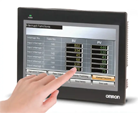
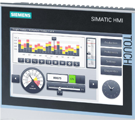
Industrial Control Panels (HMI): As the primary interface for factory automation and process control systems, offering clear visibility of schematics and metrics.
Medical Diagnostic Displays: For non-critical diagnostic imaging, patient monitoring stations, or surgical equipment displays where color accuracy and consistency are important.
Test & Measurement Equipment: In high-end oscilloscopes, spectrum analyzers, and other lab gear requiring precise graphical data representation.
Transportation and Aerospace: In cabin control systems or ground support equipment, where the module must withstand vibration and variable temperatures.
These applications leverage the module's stability and integrated design over the consumer-grade features like ultra-high refresh rates.

Critical Integration Parameters and Interfaces
Successfully incorporating the LTM200KT10 into a product requires careful attention to its electrical and physical interface specifications. The module typically utilizes an LVDS (Low-Voltage Differential Signaling) interface, a common and robust standard for transmitting high-speed video data with low noise in industrial environments. Understanding the pinout, voltage levels (often 3.3V or 5V for logic and power), and timing requirements of this interface is essential.
Furthermore, integrators must design for the backlight power supply, which is often a separate high-voltage circuit for the LED array. Thermal management is another key consideration; while the LED backlight is more efficient than CCFL, proper heat dissipation ensures long-term luminance stability and lifespan. Mechanical integration involves accounting for the module's exact bezel dimensions, mounting holes, and the avoidance of pressure on the active screen area.
Performance Analysis: Brightness, Color, and Viewing Angles
Beyond resolution, the perceptual quality of a display is defined by several key performance metrics. The LTM200KT10 is typically characterized by a high brightness output, often ranging from 300 to 1000 nits, making it readable in brightly lit industrial or medical settings. Its color gamut coverage, perhaps 72% NTSC or sRGB, defines the range of colors it can reproduce, which is sufficient for many diagnostic and monitoring tasks.
The use of IPS technology ensures viewing angles approaching 178 degrees, meaning the image does not invert or lose color fidelity when viewed from the side. Contrast ratio, the difference between the brightest white and darkest black, impacts perceived depth and detail. Response time, while not a focus for this module type, is adequate for dynamic data and video feeds without severe motion blur. Evaluating these specs against the operational environment is crucial for final selection.
Competitive Landscape and Alternative Considerations
Placing the LTM200KT10 in context reveals its market position. It competes with other 20-inch class modules from manufacturers like Innolux, , and Panasonic. Alternatives may offer different resolutions (e.g., 1600x600 for a 16:10 ratio), different interface options (like eDP), or enhanced features such as wider temperature ranges or optical bonding.
The choice often boils down to a trade-off between cost, performance, and availability. For projects with extreme environmental requirements, a fully ruggedized monitor might be necessary. For cost-sensitive applications, a consumer panel with an adapter board might be considered, albeit with sacrifices in longevity and reliability. The LTM200KT10's value lies in its balanced, integrated proposition for professional use, avoiding the extremes of both the consumer and ultra-ruggedized markets.
FAQs: LTM200KT10 LCD Module
1. What is the exact size of the LTM200KT10 display?It is a 20-inch diagonal TFT-LCD module with an active area defined by its 1600x900 resolution.
2. What type of interface does it use?It typically uses a standard LVDS (Low-Voltage Differential Signaling) interface for video data transmission.
3. Is this a touch screen module?No, the standard LTM200KT10 is a display-only module. Touch functionality (resistive or capacitive) would require an additional overlay and controller.
4. What is the backlight type and lifespan?It uses an LED backlight system, often rated for 50,000 hours or more to half-brightness under normal operating conditions.
5. Can it be used outdoors?Not directly. While bright, it lacks the anti-reflective treatment and high-brightness specification of true sunlight-readable displays. It is intended for indoor/controlled environments.
6. What is the power supply requirement?It requires separate logic and backlight power supplies, commonly at 3.3V/5V and a higher voltage for the LED string (e.g., 24V), detailed in the datasheet.
7. Does it support landscape and portrait orientation?Physically, it can be mounted in either orientation, but the image rotation must be handled by the source controller or graphics driver software.
8. What is the main advantage over a consumer monitor?Integrated design, industrial-grade component quality, longer lifespan, stable performance over wide temperature ranges, and direct LVDS interface for embedded systems.
9. Are drivers or controller boards needed?As a module with an LVDS interface, it requires a compatible graphics source or an LVDS controller board if your source (like Raspberry Pi) outputs HDMI or other signals.
10. Where can I find the technical datasheet?Datasheets should be sourced directly from authorized distributors or the manufacturer's (likely LG Display) official channels for accuracy.
Conclusion
The LTM200KT10 LCD module, with its 1600x900 resolution, embodies a carefully engineered solution for the professional display market. Its value is not found in consumer-oriented flash, but in its integrated reliability, balanced performance, and suitability for demanding environments like industrial HMIs, medical devices, and test equipment. The choice of resolution offers a pragmatic blend of detail and system efficiency, while its standard LVDS interface and industrial construction ensure a smoother, more reliable integration path than ad-hoc consumer panel solutions.
For engineers and product managers, selecting a display like the LTM200KT10 is a strategic decision. It involves weighing the specific needs of brightness, color fidelity, and environmental stability against cost and integration effort. Ultimately, this module serves as a robust bridge between sophisticated electronic systems and the human operators who depend on clear, consistent, and trustworthy visual information to make critical decisions.