



















How to Use the at070tn92 Transistor in Circuits
In the intricate world of electronic components, certain part numbers become quietly ubiquitous, powering the devices that shape our daily digital experiences. One such component is the AT070TN92. To the uninitiated, it is merely an alphanumeric string. For engineers, product designers, and tech enthusiasts, however, it represents a specific and widely implemented standard in visual interface technology. This article delves deep into the AT070TN92, moving beyond its basic specifications to explore its technological significance, application landscapes, and the practical considerations that define its use.
This exploration is not just a technical datasheet review. We will unpack the engineering decisions behind its design, analyze its position within the competitive market of display modules, and provide actionable insights for integration and optimization. Understanding a component like the AT070TN92 is to understand a piece of the foundation upon which modern consumer and industrial electronics are built.


Decoding the Designation: A 7-Inch TFT LCD Standard
The AT070TN92 is, at its core, a 7.0-inch diagonal Thin-Film Transistor Liquid Crystal Display (TFT LCD) module. The designation itself is informative: AT likely references the manufacturer series, 070 indicates the 7-inch screen size, TN signifies the Twisted Nematic technology used in the liquid crystal layer, and 92 often denotes a specific revision or variant. Its most fundamental specification is a resolution of 800 x 480 pixels (WVGA), a format that became a workhorse for mid-sized interfaces.
This module typically integrates the LCD panel, driver circuitry, and a CCFL or LED backlight system into a single, ready-to-use unit. The choice of TN technology offers key advantages for its target applications: relatively low cost, fast response times, and high brightness. While it may not offer the ultra-wide viewing angles or deep color contrast of IPS (In-Plane Switching) panels, its performance profile is precisely tuned for a vast array of embedded systems and dedicated-function devices where cost-effectiveness and reliability are paramount.
The Engine Behind the Image: Driving Technology and Interface
The static display is only part of the story. The AT070TN92 requires a precise electronic conversation to function. This is managed through its parallel RGB interface, a common standard for connecting displays to microcontrollers or application processors. This interface transmits color data for each pixel across multiple data lines, synchronized by clock and control signals.
Integrating this display necessitates a dedicated timing controller (T-CON), often embedded within the module or on the host's mainboard. This controller generates the critical signals that scan each row and column of pixels in the correct sequence. Furthermore, the power architecture is crucial. The module requires separate voltage rails for logic, the LCD drive voltage (AVDD/VGH/VGL), and the backlight power. Proper power sequencing and noise filtering on these rails are essential to prevent image artifacts, reduce electromagnetic interference (EMI), and ensure long-term stability, making the power supply design a critical step in implementation.
Dominant Applications: Where This Display Excels
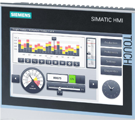
The AT070TN92 found its niche in applications where durability, readability, and cost converge. Its 7-inch form factor and WVGA resolution proved ideal for human-machine interfaces (HMIs) in industrial automation, serving as the control and monitoring screen for PLCs, CNC machines, and test equipment. In the consumer realm, it was a popular choice for in-car navigation and entertainment systems, portable DVD players, and early-generation portable media devices.
Its robustness also made it suitable for point-of-sale (POS) systems, kiosks, and medical monitoring devices where continuous operation is required. The module's ability to perform consistently across a standard industrial temperature range (often from -20°C to 70°C) expanded its utility beyond consumer electronics into more demanding environments. This widespread adoption created a strong ecosystem of compatible driver boards, controllers, and protective glass, further cementing its status as a de-facto standard.
Challenges and Considerations in System Integration
While seemingly plug-and-play, successful integration of the AT070TN92 involves navigating several technical challenges. Signal integrity is paramount; the parallel RGB interface, especially at higher refresh rates, can be susceptible to crosstalk and attenuation if PCB trace lengths are not carefully managed. Impedance matching and proper grounding strategies are non-negotiable for a clean, stable image.
Another critical consideration is electrostatic discharge (ESD) protection. The delicate transistors on the glass substrate are highly vulnerable to ESD events. Designers must incorporate protection diodes and circuits on all interface and power lines connected to the module. Furthermore, mechanical integration requires attention to bezel design, ensuring even pressure on the module's frame to avoid stress on the glass, and implementing effective thermal management for the backlight driver to prevent premature dimming or failure.
The Evolution of Display Tech: Contextualizing the AT070TN92
To fully appreciate the AT070TN92 is to view it within the relentless evolution of display technology. It represents a mature, optimized point in the TN TFT lineage. Today, the market has shifted significantly. Higher-resolution displays (1024x600, 1280x800) in the same 7-inch size are now common at competitive price points. IPS technology has become more affordable, offering superior viewing angles and color fidelity.
Furthermore, new interface standards like MIPI DSI (Display Serial Interface) have largely replaced parallel RGB in new designs, offering higher data rates with fewer connection lines, reducing EMI and complexity. The AT070TN92, therefore, exists today as a legacy-compatible solution, a cost-effective choice for product refreshes, or for applications where its specific performance envelope is perfectly adequate and changing to a new display would necessitate a complete system redesign.
Optimizing for Performance and Longevity
For projects utilizing the AT070TN92, several strategies can maximize performance and operational life. Backlight management is a primary lever. Implementing dimming control, either through PWM (Pulse-Width Modulation) or analog dimming, can drastically reduce power consumption and heat generation, while also extending the backlight's lifespan. On the software side, careful tuning of the gamma correction and lookup tables can improve perceived color accuracy and contrast on the TN panel.
For designs operating in high-noise environments, additional shielding of the display cables and connectors may be necessary. Finally, sourcing from reputable suppliers is critical, as the market contains variants and clones with potentially different performance characteristics or inferior build quality. Verifying key parameters like brightness uniformity, color temperature, and response time with your specific batch is a prudent step in ensuring consistent product quality.
FAQs: Common Questions on the AT070TN92
Q1: What is the AT070TN92?A: A 7-inch TFT LCD display module with 800x480 (WVGA) resolution, using TN technology and a parallel RGB interface.
Q2: What does "TN" mean in AT070TN92?A: It stands for Twisted Nematic, a common LCD technology known for fast response and lower cost, but with narrower viewing angles than IPS.
Q3: What is the most common interface for this display?A: A parallel RGB digital interface (typically 24-bit or 18-bit), requiring several data and control signal lines.
Q4: What is the typical backlight type and lifespan?A: It commonly uses an LED backlight system with a typical lifespan of 20,000 to 50,000 hours, depending on drive current and temperature.
Q5: Can I touch-enable the AT070TN92?A: Yes, it is commonly paired with a resistive or projected capacitive (PCAP) touchscreen overlay to create a touch interface.
Q6: What are its main application areas?A: Industrial HMIs, car navigation/media, portable devices, POS systems, kiosks, and embedded instrumentation.
Q7: What are key power supply requirements?A: It requires multiple, clean voltage rails (e.g., 3.3V for logic, ~10-20V for LCD drive, and backlight voltage). Proper sequencing is important.
Q8: Is it still a recommended choice for new designs?A: It depends. For cost-sensitive legacy updates or where its specs suffice, it's viable. New designs often opt for higher-res or IPS panels with modern interfaces like MIPI.
Q9: What are major integration challenges?A: Managing signal integrity for the parallel interface, ensuring ESD protection, providing stable power, and handling mechanical/thermal stress.
Q10: How can I extend the display's operational life?A: Implement backlight dimming, ensure good thermal management, provide clean/stable power, and protect against ESD during handling and operation.
Conclusion
The AT070TN92 is far more than a simple catalog number. It embodies a specific era and philosophy in embedded display design, prioritizing robust functionality, cost-effectiveness, and proven reliability. Through its widespread adoption across diverse industries, it demonstrated how a well-executed standard component can become an invisible yet essential pillar of the digital landscape.
While newer technologies have since emerged, offering higher performance and efficiency, the lessons learned from integrating and optimizing workhorse components like the AT070TN92 remain profoundly relevant. It teaches the importance of understanding fundamental driving technology, meticulous system integration, and designing for longevity. For engineers and creators, this deep dive underscores that true expertise lies not only in chasing the latest specs but in mastering the intelligent application of technology—past or present—to solve real-world problems effectively and reliably.





