



















- Industrie-LCD-Display
-
Industrial Products
- DC Servo Drive
- AC Servo Drive
- PCB
- Siemens
- Switch Sensor
- Näherungsschalter
- Temperaturregler
- Schutzrelais
- Fiber Optic Sensor
- Encoder
- Fan
- other
- Heidelberg
- MITSUBISHI
- FANUC
- Siemens adapter
- Fujitsu connector
- Der Aufsichtsrat
- Board
- Contactor
- Circuit
- Omron
- Relais.
- Motortreiber
- power supply
- Cable
- Transformator
- HMI Touch-Glas
-
HMI-Vollautomat Ganze Einheit
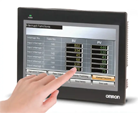
- OMRON HMI Touch Panel
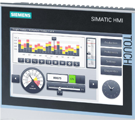
- Siemens HMI Touch Panel
- Mitsubishi HMI Touch Panel
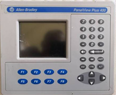
- Allen-Bradley Automatisierung HMI Touch
- DELTA HMI Touch Panel
- EVIEW DELTA HMI Touch Panel
- KINCO DELTA HMI Touch Panel
- HITECH HMI Touch Panel
- WEINTECK HMI Touch Panel
- TECVIEW HMI Touch Panel
- WEINVIEW HMI Touch Panel
- PANASONIC HMI Touch Panel
- KYOCERA HMI Touch Panel
- SCHNEIDER HMI Touch Panel
- Module
- LCD Wechselrichter
- Membran Tastenfeld Schalter
- Winni Touch Screens
- Frequenzumrichter
- Servo Motor
- PLC
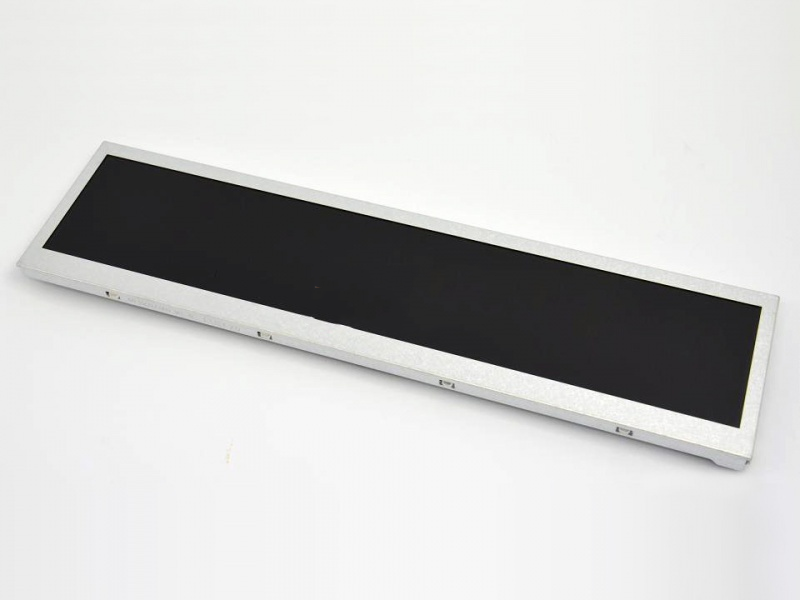
The industrial display market demands reliability, clarity, and longevity—specifications that consumer-grade screens often fail to meet. Within this specialized niche, the AUO G151EVN01.0 has emerged as a critical component for embedded systems, medical devices, and human-machine interfaces (HMIs). As a 15.1-inch TFT-LCD panel from AU Optronics (AUO), it is frequently specified in environments where visual precision and durability are non-negotiable.
This article delves deep into the technical DNA of the G151EVN01.0. We will explore its architectural design, optical performance, interface compatibility, and how it compares against modern alternatives. More than just a spec sheet review, this analysis is intended for engineers, procurement specialists, and system integrators who need to understand why this specific panel remains relevant in an era of rapid display evolution. By the end, you will have a comprehensive framework for evaluating this panel's fit within your next project.
The Architectural Foundation: Understanding the a-Si TFT-LCD Technology
At its core, the AUO G151EVN01.0 employs Amorphous Silicon (a-Si) Thin-Film Transistor (TFT) technology. While a-Si is not the newest technology on the market—competing with LTPS (Low-Temperature Polycrystalline Silicon) and Oxide TFTs—its maturity offers distinct advantages for industrial applications. The primary benefit is cost-effectiveness and uniformity. For a 15.1-inch diagonal, a-Si manufacturing processes are well-established, ensuring high yields and lower unit costs compared to more exotic semiconductor backplanes.
Unlike consumer smartphones that prioritize ultra-high pixel densities, the G151EVN01.0 operates at a native resolution of 1024 x 768 pixels (XGA). This results in a pixel density of approximately 84 PPI (Pixels Per Inch). While modest by modern standards, this density is ideal for HMIs and medical monitoring because it balances readability with computational load. The panel architecture utilizes a standard RGB vertical stripe sub-pixel arrangement. This arrangement is crucial for sharp text rendering and precise iconography, avoiding the color fringing issues sometimes seen with PenTile or other non-traditional matrix layouts. The 6-bit to 8-bit color depth allows for presentation of up to 16.2 million colors, providing sufficient fidelity for most industrial GUI dashboards.

Optical Performance: Brightness, Contrast, and Viewing Angles in Harsh Environments
One of the most defining characteristics of the G151EVN01.0 is its exceptional optical performance under challenging lighting conditions. The panel boasts a typical brightness rating of 1000 cd/m² (nits). This is significantly higher than standard office monitors (typically 250-350 nits) and is deliberately engineered for "high-brightness" environments, such as factory floors with overhead lighting or outdoor kiosks in direct sunlight. High luminosity is not just about visibility; it also helps overcome glare from protective glass overlays commonly used in industrial settings.
Contrast ratio is equally important. The G151EVN01.0 typically specifies a 1000:1 contrast ratio. This is achieved through careful optimization of the TN (Twisted Nematic) or VA (Vertical Alignment) panel technology used in specific revisions of this model (note: early variants are TN, later revs may leverage improved VA). While TN panels are infamous for poor viewing angles, they offer the fastest response times. The G151EVN01.0 strikes a balance: its 85°/85° (H) and 80°/80° (V) viewing angles ensure that operators viewing the screen from slightly off-center positions—a common scenario in control rooms—experience minimal color shift and gamma inversion, maintaining operational accuracy.
Interface and Signal Integrity: The LVDS Connection and Backlight Drivers
Connectivity is the backbone of any embedded system integration. The AUO G151EVN01.0 relies on a dual-channel LVDS (Low-Voltage Differential Signaling) interface. LVDS is the de facto standard for industrial displays because of its inherent noise immunity and ability to drive data over longer distances within a chassis compared to eDP (Embedded DisplayPort). Operating at 6-bit or 8-bit per color, the interface typically uses a 30-pin connector (e.g., JAE FI-RE series or similar). For an engineer integrating this panel, the pinout configuration is critical, specifically regarding the signal mapping for odd and even pixel data on the two LVDS channels.
The backlight system is another critical architectural component. The G151EVN01.0 utilizes WLED (White Light Emitting Diode) backlighting, replacing older CCFL tubes. This provides a more consistent luminance distribution over the panel's life and eliminates the need for high-voltage inverters, simplifying power supply design. The panel typically requires a dedicated LED driver circuit to supply a constant current of approximately 750-850 mA. Understanding the backlight voltage drop (typically around 35-40V for the series string) is essential to avoid overdriving or underpowering the LEDs, which directly impacts long-term reliability and brightness uniformity.
Mechanical Integration: Form Factor, Mounting, and Durability Considerations
From a mechanical standpoint, the G151EVN01.0 is designed for secure mounting in heavy-duty enclosures. The active area measures approximately 307.2 mm x 230.4 mm, with an overall module dimension that includes a robust metal bezel. This bezel not only protects the fragile glass edge but also provides mounting points for standard industrial brackets or VESA adapters. The module thickness, often around 11.0 mm (excluding the control board), is carefully managed to fit within standard 1U or 2U chassis depths.
Thermal management is a silent but crucial factor. The panel is rated for an operating temperature range of 0°C to +70°C and a storage range of -20°C to +80°C. This environmental resilience is achieved through specific material choices in the polarizers and liquid crystal mixture. Unlike consumer displays that may degrade in high humidity or rapid thermal cycling, the G151EVN01.0 uses chemical-resistant polarizers that prevent delamination. When integrating this display, designers must ensure adequate airflow around the backlight driver board to prevent hotspot formation, as LED life is directly correlated with junction temperature.
Comparative Analysis: G151EVN01.0 vs. Modern Alternatives (eDP vs. LVDS Era)
To truly appreciate the G151EVN01.0, we must position it against current market trends. The industry is rapidly migrating from LVDS to eDP (Embedded DisplayPort) for new designs, primarily due to eDP's higher bandwidth, reduced cable count, and native support for Dynamic Backlight Control (DPBC) for power saving. However, the G151EVN01.0's LVDS interface is not a weakness—it is a deliberate choice for backward compatibility. Many legacy embedded systems (e.g., those built on older ARM Cortex-A9 or x86 architectures) have native LVDS outputs without the need for expensive bridge chips. Retooling these systems for eDP adds cost and complexity.
Furthermore, when comparing to modern 15.6-inch high-resolution panels, the G151EVN01.0's 15.1-inch form factor is an anomaly that fits specific cutouts in existing machinery. Replacing a 15.1" panel with a 15.6" requires complete enclosure redesign. The panel's 1000 nit brightness also outclasses many standard eDP panels which top out at 400-500 nits. For applications where sunlight readability is paramount, the G151EVN01.0 remains a superior choice despite older interface generation. The longevity of its production lifecycle—often 5-7 years—also appeals to industries with long product lifecycle requirements, such as avionics or medical carts.
Longevity and Supply Chain Strategy: Why This Panel Remains in Production
In the volatile world of display manufacturing, product discontinuation is a constant risk. The AUO G151EVN01.0 benefits from being classified as an Industrial Panel with a long-term supply commitment (LTS) from AUO. Panels designed for medical and automation markets are often guaranteed for a minimum of 3-5 years of continuous production, followed by a prolonged "last-time-buy" phase. This contrasts sharply with consumer panels, which may be discontinued within 18 months.
For procurement managers, the strategy is clear: the G151EVN01.0 is a low-risk obsolescence choice. It uses standard components for the timing controller (T-CON) and LED driver ICs that are widely available from multiple second-source suppliers. The electrical interface (LVDS) is a mature standard that will be supported by FPGAs and system-on-chips for decades to come. However, caution is warranted. As of 2024, some early model numbers of the G151EVN01.0 are entering their end-of-life phase. Buyers should verify the specific part number suffix (e.g., G151EVN01.0 vs. G151EVN01.1 or G151EVN01.2) to confirm current production status and check for cross-compatibility with their legacy controller boards.
Frequently Asked Questions (FAQs)
Q1: What is the native resolution of the AUO G151EVN01.0?A: The native resolution is 1024 x 768 (XGA) at a 4:3 aspect ratio.
Q2: What type of backlight does this panel use?A: It uses a WLED (White LED) edge-lit backlight, requiring an external constant current driver (typically 750-850mA).
Q3: Is the interface LVDS or eDP?A: It is a dual-channel LVDS interface, 6-bit or 8-bit per color, with a standard 30-pin connector.
Q4: What is the typical brightness of the G151EVN01.0?A: The typical brightness is 1000 cd/m² (nits), making it suitable for high-ambient-light environments.
Q5: What is the operating temperature range?A: The standard operating range is 0°C to +70°C, with a wider storage range of -20°C to +80°C.
Q6: Can I replace a broken G151EVN01.0 with a modern 15.6" panel?A: Not directly. The active area and mounting hole positions differ. A full mechanical and electrical redesign would be required.
Q7: Does the panel have an integrated touchscreen?A: No, this is a bare TFT-LCD module. Touch functionality must be added via an external touch panel (resistive, capacitive, or IR).
Q8: What is the typical power consumption?A: The panel consumes approximately 12-15W, depending on the backlight current and signal load.
Q9: Is the G151EVN01.0 still in production?A: Some variants are active, but others are in last-time-buy status. Always verify the exact model suffix (01.0, 01.1, etc.) with your supplier.
Q10: What is the typical lifespan of the LED backlight?A: The backlight is rated at 50,000 hours to half-brightness (L50), assuming proper thermal management and constant current drive.
Conclusion: Integrating Proven Reliability with Future-Proof Planning
The AUO G151EVN01.0 is more than just a display panel; it is a testament to the enduring value of purpose-built engineering. In a market saturated with high-resolution, ultra-slim consumer screens, this 15.1-inch workhorse proves that luminance, mechanical compatibility, and interface maturity often outweigh pixel count and modernity. Its 1000-nit brightness, robust a-Si architecture, and LVDS connectivity solve real-world problems for engineers dealing with legacy system integration and harsh industrial conditions.
For any procurement specialist or system architect, the strategic takeaway is this: leverage the panel's proven track record, but actively plan for its eventual obsolescence. By understanding its strengths—high brightness, XGA resolution for UI clarity, and thermal resilience—you can maximize its value today while designing a migration path toward eDP-based successors for tomorrow. The G151EVN01.0 will not be the last great industrial display, but it remains a benchmark for reliability that future designs must strive to exceed.





