













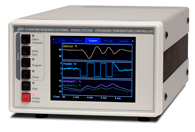
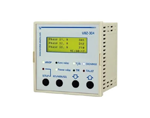






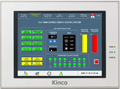





- Industrie-LCD-Display
-
Industrial Products
- DC Servo Drive
- AC Servo Drive
- PCB
- Siemens
- Switch Sensor
- Näherungsschalter
- Temperaturregler
- Schutzrelais
- Fiber Optic Sensor
- Encoder
- Fan
- other
- Heidelberg
- MITSUBISHI
- FANUC
- Siemens adapter
- Fujitsu connector
- Der Aufsichtsrat
- Board
- Contactor
- Circuit
- Omron
- Relais.
- Motortreiber
- power supply
- Cable
- Transformator
- HMI Touch-Glas
-
HMI-Vollautomat Ganze Einheit
- OMRON HMI Touch Panel
- Siemens HMI Touch Panel
- Mitsubishi HMI Touch Panel
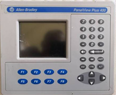
- Allen-Bradley Automatisierung HMI Touch
- DELTA HMI Touch Panel
- EVIEW DELTA HMI Touch Panel
- KINCO DELTA HMI Touch Panel
- HITECH HMI Touch Panel
- WEINTECK HMI Touch Panel
- TECVIEW HMI Touch Panel
- WEINVIEW HMI Touch Panel
- PANASONIC HMI Touch Panel
- KYOCERA HMI Touch Panel
- SCHNEIDER HMI Touch Panel
- Module
- LCD Wechselrichter
- Membran Tastenfeld Schalter
- Winni Touch Screens
- Frequenzumrichter
- Servo Motor
- PLC
In an era dominated by ultra-high-definition panels and edge-to-edge glass, the G150XVN01.2 from AU Optronics (AUO) stands as a testament to the enduring value of reliability and functional precision over raw pixel count. This 15-inch XGA (1024×768) LCD display is not a consumer-facing component; rather, it is a workhorse designed for the demanding environments of industrial automation, medical imaging, and transportation systems. While its resolution may appear modest by modern smartphone standards, the true depth of this panel lies in its robust engineering, specific aspect ratio advantages, and extended lifecycle support that consumer electronics rarely offer. This article dissects the G150XVN01.2 beyond its basic specifications, exploring its unique role within mission-critical systems. We will examine the technical rationale behind its industrial design, its optical performance characteristics, the complexities of integration, and its strategic importance in a market seeking long-term supply stability. By understanding this panel, one gains insight into the broader philosophy of industrial display design—where consistency, longevity, and environmental resilience outweigh the allure of the latest fads.

The Strategic Value of the XGA (1024×768) Resolution
At first glance, a 1024×768 resolution on a 15-inch diagonal seems dated. However, in the context of industrial design, this so-called "standard" resolution is a deliberate asset. The 4:3 aspect ratio provides a nearly square canvas, which is critically important for applications such as point-of-sale (POS) systems, industrial panel PCs, and medical monitoring stations. Unlike widescreen formats that prioritize video content, the XGA resolution allows for efficient vertical document display and software UI layouts that require fewer scrolls. From a software compatibility standpoint, many legacy industrial Human-Machine Interfaces (HMIs) and diagnostic tools were originally coded for 4:3 displays. Switching to a widescreen format would force costly software re-engineering or result in awkward scaling and black bars. Furthermore, the lower pixel density (approximately 85 PPI) offers a practical advantage: it is significantly more readable at a distance or from an angle, as a technician might view it while standing at a machine. This resolution also reduces the processing load on the embedded controller, lowering power consumption and heat generation—a crucial factor for fanless industrial computers. The G150XVN01.2’s XGA is not a compromise; it is a calculated decision to ensure maximum operability and backward compatibility within a controlled ecosystem.

Optical Engineering and Viewing Performance
The G150XVN01.2 typically employs Twisted Nematic (TN) technology, which, contrary to consumer biases, is often the preferred choice for industrial applications. While In-Plane Switching (IPS) panels offer wide viewing angles, TN panels excel in response time and power efficiency. The specific optical stack of this AUO model is engineered for high luminance, often rated at 350 cd/m² or 400 cd/m². This brightness is not for visual flair; it is a necessity for overcoming ambient light in factory floors, hospital corridors, or outdoor kiosk niches. The panel’s contrast ratio, typically around 700:1 or 1000:1, ensures that critical data points and alarms remain distinguishable even under glare. Furthermore, AUO implements specialized surface treatments. The anti-glare (AG) coating on this model is crucial. It diffuses reflections from overhead lighting, a common source of operator eye strain in control rooms. While viewing angles are narrower than IPS (typically 80°/80°/80°/80°), the 6 o’clock viewing angle (bottom view) is often optimized for downward-looking installations, such as displays embedded in a console. The combination of high luminance, robust contrast, and a matte surface makes the G150XVN01.2 a reliable optical tool that prioritizes legibility over cinematic color accuracy.
Mechanical Robustness and Thermal Management
A defining characteristic of the G150XVN01.2 is its mechanical construction. Unlike consumer laptop screens that are glued and fragile, this AUO panel is built for a 20,000-hour or more operational life. It features a robust metal frame and standard mounting holes that allow for secure integration into a chassis. The panel’s thickness and overall weight are higher than a consumer monitor, which is a direct result of a heavy-duty backlight unit designed for sustained operation. Thermal management is a hidden but critical feature. The backlight system, often using CCFL (Cold Cathode Fluorescent Lamp) or early-generation LED arrays, is designed to dissipate heat efficiently without a dedicated fan. The interface is typically a standard 20-pin or 30-pin LVDS connector, a legacy interface that remains the standard for industrial single-board computers. This ensures a stable, low-EMI connection that is easier to lay out on a custom PCB than modern eDP interfaces. The operating temperature range is another key mechanical specification. This panel can function reliably in environments from 0°C to 70°C, and with a heater add-on, it can handle sub-zero temperatures. This ruggedized mechanical design ensures that the display will function effectively in vibrating machinery and fluctuating industrial climates.
Integration Challenges and the Ecosystem of Compatibility
Integrating the G150XVN01.2 is not a plug-and-play process like connecting a USB monitor. It requires a deep understanding of the LVDS interface. The panel requires a specific 6-bit or 8-bit color depth driver configuration and correct pixel clock settings. A common pitfall is mismatching the LVDS signal timing, resulting in a scrambled image or no display. Furthermore, the backlight driver is separate; you cannot simply power the panel from the logic board. An external inverter (for CCFL versions) or a constant current LED driver is mandatory. The pinout of the connector must be strictly adhered to; a reversed cable can permanently damage the panel. From a sourcing perspective, the display has a long lifecycle but can be subject to last-time-buy notifications. Engineers must design for this by ensuring alternative pin-to-pin compatible models or having a robust inventory strategy. Another integration nuance is the optical bonding process. Many industrial panels use air bonding, but for high-brightness or outdoor applications, optical bonding of a touchscreen to the cover glass reduces glare and prevents condensation. The G150XVN01.2’s structure is designed to accommodate such lamination, but it is a delicate, usually factory-performed process. Therefore, successful integration hinges on rigorous electrical and mechanical planning.
Market Positioning and the Economics of Longevity
The economic logic behind the G150XVN01.2 is counterintuitive to the consumer electronics market. While a 15-inch consumer monitor might cost $100, this industrial panel can cost three to five times more. This price premium is justified by the long-term Total Cost of Ownership (TCO). Industrial equipment is often validated for 5, 10, or even 15 years. A lower-cost consumer panel would fail prematurely due to backlight degradation, environmental stress, or mechanical fatigue, leading to expensive downtime and field service calls. The G150XVN01.2 is designed for supply chain stability. AUO commits to producing this model for a minimum of 5-7 years, allowing OEMs to plan their product roadmaps without costly redesigns. This is a critical factor for medical device manufacturers who must undergo rigorous FDA re-approval if a display changes. From a secondary market perspective, a surplus of these panels exists, creating a liquid ecosystem for repair and replacement. The demand is driven by replacement cycles for aging equipment, rather than new technology adoption. Thus, the panel represents a mature, stable market segment where reliability and long-term availability command a premium over performance. It is a strategic purchase, not a spontaneous one, and its value is measured in years of uninterrupted service, not pixels per inch.
The Future Landscape: Legacy Systems in an Evolving World
The G150XVN01.2 faces a paradoxical future. While it remains a staple in existing infrastructure, the industry is slowly moving toward higher resolutions and higher-performance interfaces like eDP. However, the sheer installed base of equipment using this panel ensures its relevance for at least another decade. The challenge for engineers is bridge technology. As LVDS becomes obsolete on new graphics chipsets, designers must use active converter boards (e.g., HDMI to LVDS) to interface modern processors with this legacy panel. This adds cost and complexity but is often cheaper than redesigning a full system. Furthermore, the shift from CCFL to LED backlighting within the same physical footprint has created a new generation of panels like the G150XVN01.2 variant that uses LEDs. Optics technology continues to evolve, and new quantum dot and nano-cell filters may eventually find their way into industrial displays, but the mechanical footprint will remain to support legacy chassis. The future of this panel is not about technological revolution; it is about incremental improvement in backlight efficiency, optical bonding quality, and driver availability. It will coexist with newer, higher-resolution panels, serving as the reliable backbone for the next generation of automated factories and clinical environments that simply cannot tolerate a display failure.
Frequently Asked Questions (FAQS)
What is the exact resolution of the G150XVN01.2?1024 x 768 pixels (XGA) with a 4:3 aspect ratio.
Is this panel compatible with a standard VGA or HDMI input?No. It uses a direct LVDS signal for data and requires a separate inverter for the backlight. An adapter board is needed for VGA/HDMI.
What is the typical lifespan of the backlight?For CCFL versions, about 30,000 hours. For LED versions, typically 50,000 to 70,000 hours to half-brightness.
Can I use this display outdoors?Yes, but only if it is in a shaded area. The 400 cd/m² brightness is adequate for indirect sunlight, but direct sun requires a higher brightness or optical bonding.
Is the connector standard or a special pinout?It uses a standard 20-pin or 30-pin LVDS connector, but the pinout must be verified against the AUO datasheet as some pins are reserved or have different functions.
What is the response time of the panel?Typically 25 ms (Tr+Tf), which is fine for static data and slow-moving graphics but not suitable for fast video games.
Does this panel support touch functionality?Not natively. A touch overlay can be added via optical bonding or a separate frame, but the LCD itself is just the display.
Can I replace a CCFL backlight with an LED one in this model?Not directly. The backlight unit is integrated. You must purchase a specific LED variant of the G150XVN01.2 model.
What are the common failure modes of this display?Backlight inverter failure, bad capacitors on the power board, or physical damage to the ribbon cable connecting to the glass.
Where can I find the detailed datasheet for this panel?On the AU Optronics official download portal or through authorized distributors like DigiKey, Mouser, or specialized industrial LCD suppliers.
Conclusion: The Unseen Backbone of Operational Technology
The G150XVN01.2 is far more than a list of specifications; it is a strategic component that embodies the philosophy of functional longevity. In an age obsessed with the next big thing, this 15-inch XGA display serves as a quiet anchor for critical infrastructure. Our exploration reveals a meticulously engineered product built for heat, vibration, and time itself. Its modest resolution is a strength for readability and software compatibility. Its optical performance prioritizes legibility in harsh lighting. Its mechanical backbone ensures it survives where consumer displays fail. The integration challenges remind us that deep technical knowledge is required to harness its power. It stands as a profitable, stable investment for industries where failure is not an option. For engineers, system integrators, and procurement specialists, the G150XVN01.2 is a reminder that the most profound technological achievements are often the quietest, most reliable ones. It is not a screen; it is a guarantee. Its future is not about becoming obsolete, but about being the steady foundation for the factories and hospitals of tomorrow, proving that in the world of industrial electronics, lasting value is the ultimate innovation.





