





















In the demanding world of industrial automation, medical imaging, and rugged computing, the display is not merely a peripheral; it is the critical interface between human operator and machine logic. Among the myriad of options available, the AUO G150XTT02.0 stands as a significant benchmark within the 15-inch segment. This article provides a deep-dive analysis of this specific model, a 15-inch a-Si TFT-LCD Liquid Crystal Module (LCM) with a native resolution of 1024 x 768 pixels (XGA). We will move beyond basic specifications to explore the underlying technology, the strategic implications of the aspect ratio, and the performance characteristics that define this module. The goal is to equip engineers, procurement specialists, and system integrators with the technical context necessary for intelligent component selection, understanding precisely where and why this display excels in a marketplace increasingly dominated by consumer-grade panels.

The Foundation: Why a-Si TFT-LCD Technology Matters
To appreciate the G150XTT02.0, one must first understand the foundational technology: Amorphous Silicon (a-Si) Thin-Film Transistor (TFT) LCD. While modern consumer devices have largely migrated to LTPS (Low-Temperature Polycrystalline Silicon) or Oxide semiconductors for higher mobility and resolution, a-Si remains the workhorse of the industrial display world. Its primary advantage lies in its maturity and cost-effectiveness for larger substrates. For a 15-inch diagonal like the G150XTT02.0, a-Si provides a perfect balance of electrical performance and manufacturing yield.
The "TFT" designation means each pixel is controlled by an independent transistor, ensuring sharp images and rapid refresh rates compared to passive matrix displays. In the context of this AUO module, a-Si technology allows for a stable, reliable gate driver circuit that can withstand the temperature extremes common in factory floors. Furthermore, a-Si panels typically exhibit lower leakage current in their off-state, which is beneficial for maintaining consistent grayscale levels in static image applications, a common scenario in HMIs (Human-Machine Interfaces). Selecting a-Si is not a compromise; it is a deliberate engineering choice for applications requiring longevity and consistent performance over the product lifecycle, which can span 5 to 10 years or more.
Decoding the Resolution: The Strategic Advantage of XGA (1024x768)
The G150XTT02.0 utilizes an XGA resolution (1024 x 768 pixels) with an RGB stripe pixel arrangement. In a world saturated with Full HD (1920x1080) and 4K panels, this specification may appear dated to the uninitiated. However, for the target industrial and medical applications, XGA is a deliberate, strategic choice that prioritizes usability and readability over raw pixel count.
With a standard 4:3 aspect ratio, this resolution is perfectly suited for legacy software, SCADA (Supervisory Control and Data Acquisition) systems, and many medical imaging tools that were designed and certified with this exact format. Using a widescreen panel often forces incompatible scaling, letterboxing, or distorted UI elements, which can be catastrophic in a control room or surgical environment. Furthermore, at a 15-inch size, the pixel density (approximately 85 PPI) creates a comfortable reading size for text and UI icons without requiring a user to squint. This is ergonomically superior for operators who must view the screen for extended periods at a typical desk or panel arm’s length distance. The consistency and clarity of the RGB stripe arrangement further ensure text is sharp and images are free from the color fringing artifacts sometimes seen in alternative pixel layouts.
Optical Performance: Brightness, Contrast, and Viewing Angles Deconstructed
The optical characteristics of the G150XTT02.0 are engineered for visibility in challenging ambient light conditions. While specific datasheet values may vary by revision, this class of AUO display typically offers a high luminance level, often exceeding 350 cd/m² (nits). This high brightness is a critical feature for industrial environments where overhead factory lighting can wash out a lower-brightness display. It competes directly with ambient light to maintain a readable image.
Contrast ratio is another key parameter. A typical specification of 700:1 or higher provides deep blacks and vibrant colors, which is essential for distinguishing subtle variations in a medical X-ray or a complex process control chart. The viewing angle technology is typically based on Vertical Alignment (VA) or Twisted Nematic (TN) depending on the specific build. VA offers superior contrast stability and reduced color shift when viewed from off-center positions, making it ideal for panel mount applications where multiple operators need to see the screen from different angles. TN, while having faster response times, suffers from gamma shift. The G150XTT02.0’s design choices are a direct response to the need for consistent, reliable optical data regardless of the operator's physical position relative to the machine.
Thermal and Durability Engineering: Surviving the Harsh Environment
Beyond the glass and liquid crystals, the G150XTT02.0 LCM (Liquid Crystal Module) is a complete assembly, engineered for mechanical and thermal resilience. The "Module" designation means it comes with integrated components like the backlight unit, driver ICs, and a robust metal frame that facilitates panel mounting. Unlike consumer displays, this AUO module is designed to operate across a wide temperature range, typically from -20°C to +70°C or higher. This is not a marketing number; it is a critical requirement for equipment that may be installed in outdoor kiosks, unheated warehouses, or near industrial ovens.
The backlight system is a key differentiator. It usually consists of an LED array designed for a long lifespan, often rated at 50,000 hours or more. This longevity reduces total cost of ownership by minimizing the need for field replacement. The thermal management within the LCM is designed to dissipate heat generated by the backlight effectively, preventing hot spots that could degrade the liquid crystal over time. Furthermore, the mechanical design ensures the display can withstand the vibration and shock common in automotive assembly lines or heavy machinery. This focus on thermal and mechanical robustness is the silent guardian of data integrity in mission-critical applications.
Interface and Integration: The Data Bridge
Connectivity is paramount for any embedded LCM. The G150XTT02.0 typically utilizes a LVDS (Low-Voltage Differential Signaling) interface, traditionally a 20-pin or 30-pin connector. LVDS remains the standard for industrial displays due to its excellent noise immunity and ability to transmit high-bandwidth data over relatively long distances (compared to parallel interfaces) within the chassis of a machine. This is crucial because the display controller board is often located away from the screen itself inside the control cabinet.
The interface carries not only the video data (Red, Green, Blue) but also timing signals and often power for the logic section. Understanding the pin assignment and signal levels (e.g., 3.3V or 5.0V for Vcc) is non-negotiable for a successful first-power-up. This panel also supports specific timing requirements, such as a defined pixel clock rate and horizontal/vertical blanking intervals, which must be matched by the host controller. Additionally, the backlight is typically driven via a separate connector for high-voltage (often up to 30V-50V for LED strings). This separation of logic and power domains allows for robust, independent control and monitoring of the backlight, enabling features like PWM (Pulse Width Modulation) dimming for brightness management without affecting the LCD logic.
Application-Specific Use Cases: Where This Panel Excels
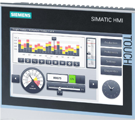
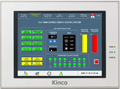
The G150XTT02.0 is not a general-purpose screen; it is a specialized component for specific verticals. Its strongest application is in Industrial Human-Machine Interfaces (HMIs). Imagine a production line controller for a bottling plant or a CNC machine interface. The 4:3 aspect ratio perfectly maps the HMI software design, and the high brightness defeats the glare of a factory ceiling. Another primary domain is Medical Imaging, specifically in patient monitoring systems, anesthesia machines, and ultrasound consoles. The consistent color reproduction and grayscale stability are vital for accurate clinical analysis.
Furthermore, this panel is frequently found in Gaming and Kiosk systems, particularly in electronic slot machines, where the robust build and long backlight life are essential for 24/7 operation. Finally, it is a staple in Test & Measurement Equipment, such as oscilloscopes and spectrum analyzers, where the XGA resolution provides a detailed grid for data visualization without unnecessary pixel density. In every case, the selection of the G150XTT02.0 is a signal that the designer prioritizes reliability, longevity, and standardized performance over the fleeting appeal of high-resolution spectacle. It is a tool, not a toy.
FAQs: G150XTT02.0 AUO 15" a-Si TFT-LCD LCM
Q1: What is the exact resolution of the G150XTT02.0?A1: The G150XTT02.0 has a native resolution of 1024 x 768 pixels (XGA), with a 4:3 aspect ratio and an RGB stripe pixel arrangement.
Q2: Is this a glossy or matte screen?A2: It primarily comes with an anti-glare (matte) surface finish to reduce reflections in bright industrial or medical environments.
Q3: What is the typical brightness of this model?A3: The typical brightness is 350-450 cd/m² (nits), making it suitable for high ambient light conditions. The backlight has a long lifespan, often 50,000 hours.
Q4: Does it use an LED or CCFL backlight?A4: It utilizes an LED backlight for lower power consumption, longer life, and mercury-free operation. It typically supports PWM dimming.
Q5: What is the operating temperature range?A5: The standard operating temperature range is typically -20°C to +70°C, designed for harsh industrial environments. Storage range is usually wider.
Q6: What interface does it use to connect to a mainboard?A6: It uses a standard LVDS (Low-Voltage Differential Signaling) interface, typically a 20-pin or 30-pin connector for video data and timing signals.
Q7: Is it a touchscreen display?A7: No, the G150XTT02.0 is an LCD module only. It does not have touch functionality integrated, but it is often used with a separate touch panel overlay.
Q8: Can I use this display for modern gaming?A8: While possible, it is not recommended. The XGA resolution and typical 60Hz refresh rate are not optimized for fast-paced gaming. It is designed for static or slow-moving industrial graphics.
Q9: How does it handle vibration?A9: The metallic frame and robust construction are designed to meet industrial shock and vibration standards, making it reliable in mobile machinery or transport applications.
Q10: Is this display pin-to-pin compatible with other AUO 15" XGA models?A10: Potentially, but not guaranteed. While many AUO 15-inch XGA panels share a similar LVDS pinout, always verify the specific datasheet for the G150XTT02.0 revision you have to avoid damage.
Conclusion: The Unseen Workhorse of Critical Infrastructure
The G150XTT02.0 by AUO is a testament to the principle that the best displays are often those you never think about. It is not a screen designed for the wow factor of a consumer device, but rather a precision instrument built for the quiet, relentless reliability of mission-critical systems. From the mature stability of a-Si TFT technology to the strategic ergonomics of its XGA 4:3 format, every specification serves a purpose rooted in functional longevity. Its high brightness, robust thermal design, and standardized LVDS interface make it the go-to choice for engineers who need a display that simply works, day in and day out, for years. For any professional involved in building or maintaining industrial HMIs, medical devices, or rugged kiosks, understanding this component is not just technical trivia—it is a lesson in value engineering. While the market chases higher pixel counts, the G150XTT02.0 remains a benchmark for what a truly professional display should be: durable, legible, and perfectly fit for purpose. It is the unsung hero on the factory line and in the operating room, ensuring that critical data is always clear, stable, and ready to be acted upon.





