













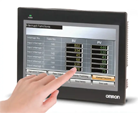
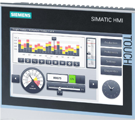





In the specialized world of industrial LCDs, the G150XTN06.A from AU Optronics (AUO) stands as a quintessential example of reliability meeting specification. At first glance, it is a 15-inch a-Si TFT-LCD LCM with an XGA resolution of 1024×768. However, to dismiss it as merely a standard panel would be a mistake. This specific model serves a critical role in sectors where long-term availability, stable performance, and precise optical characteristics are non-negotiable.

This article delves deep into the technical architecture of the G150XTN06.A, exploring why this specific panel remains relevant in an era of high-resolution mobile displays. We will analyze its structural composition, examine its electrical interface, discuss its thermal and luminance parameters, and evaluate its suitability for harsh environments. The goal is to provide engineers, procurement specialists, and system integrators with a definitive guide on what this LCM offers, how it operates, and where it fits best in the industrial landscape. This is not a spec sheet; it is a technical narrative of a component built for endurance.

The Anatomy of a-Si TFT-LCD: Why This Technology Persists in Industrial Use
To understand the G150XTN06.A, one must first appreciate the substrate technology it employs: amorphous Silicon (a-Si) Thin-Film Transistor (TFT). Unlike LTPS (Low-Temperature Poly-Silicon) or Oxide TFTs, a-Si is an older, but profoundly mature technology. Its primary advantages are low manufacturing cost and excellent uniformity over large areas. For a 15-inch diagonal panel, a-Si provides a highly stable electron mobility that is sufficient for the 1024×768 resolution.
The "TFT" part of the equation implies that each of the 786,432 pixels (1024×768) has its own dedicated transistor. This allows for precise voltage control, preventing "crosstalk" between pixels and ensuring that static images do not blur. In the context of this LCM, the a-Si layer is deposited on a glass substrate using PECVD (Plasma-Enhanced Chemical Vapor Deposition). The key takeaway is reliability: a-Si TFTs are inherently less prone to leakage current over time compared to more exotic materials, making this panel ideal for applications requiring 24/7 operation, such as medical patient monitors or industrial HMI terminals.
Resolution and Geometry: The Rationale Behind 1024×768 (XGA)
The G150XTN06.A operates at a native resolution of 1024 × 768 pixels, commonly known as XGA (Extended Graphics Array). While modern consumer displays have moved far beyond this density, XGA remains the gold standard for a specific class of industrial software. Many legacy SCADA (Supervisory Control and Data Acquisition) systems and embedded medical imaging tools were designed around this 4:3 aspect ratio. Migrating to a widescreen panel often results in either stretched images or black bars, wasting valuable screen real estate.
The pixel pitch of this panel is approximately 0.297 mm, which results in a pixel density of roughly 85 PPI (Pixels Per Inch). At a typical viewing distance of 50-70 cm, this provides a comfortable, non-fatiguing reading experience. The "RGB" stripe arrangement is standard, but in this LCM, the sub-pixel layout is optimized for consistent color reproduction across the full 304.128 mm(H) × 228.096 mm(V) active area. For an operator who needs to read fine text or small icons on a machine control panel, this pixel geometry ensures sharpness without the unnecessary processing overhead of a higher resolution.
Interface and Signal Integrity: Navigating the LVDS Connection
The G150XTN06.A utilizes an LVDS (Low-Voltage Differential Signaling) interface. Specifically, it employs a 2-channel, 8-bit data interface. This is a critical distinction from older single-channel or 6-bit panels. The 2-channel configuration allows for a higher data throughput, enabling the panel to refresh the XGA resolution at standard frequencies (typically 60Hz) without signal degradation. The differential nature of LVDS means the data is transmitted over twisted pairs, inherently rejecting electromagnetic interference (EMI).
From a systems integration perspective, this dictates the choice of the controller board or graphics source. The LVDS connector on the LCM is a standard 30-pin, but the pin assignment must be verified. The 8-bit depth is particularly important; it allows the panel to display up to 16.7 million colors. A 6-bit panel would only manage 262k colors, simulating the rest via dithering. For applications requiring gradient smoothness, such as X-ray viewing or high-end video monitoring, this 8-bit capability is non-negotiable. The interface operates at a low voltage (3.3V), which aids in power efficiency and reduces the thermal load inside the chassis.
Optical Performance: Luminance, Contrast, and Viewing Angle Constraints
The optical characteristics of the G150XTN06.A are tightly specified for its target environments. Typical luminance is rated at 350 cd/m² (nits). This is a moderate level—bright enough to be readable in a standard factory or clinical environment, but not so blindingly bright as to cause glare in dark rooms. The contrast ratio is typically specified at 700:1 (or 1000:1 for some revisions). This is adequate for distinguishing grayscale variations in complex schematics.
However, the viewing angle is a significant design consideration. This panel uses TN (Twisted Nematic) technology. The specified angles are usually 70°/70°/60°/70° (L/R/U/D). The "60°" upward angle is the weakest link. In a vertical orientation, an operator looking up at the screen from a low angle will experience color inversion or significant gamma shift. For this reason, the G150XTN06.A is best mounted at eye level or tilted downward. It is not suitable for portrait mode in collaborative settings where viewers stand at different heights. The anti-glare surface treatment (typically 3H hard coating) is a practical addition, reducing reflections from overhead fluorescent lighting in a factory.
Environmental Resilience and Backlight System
This AUO LCM is generally specified for an operating temperature range of -10°C to +60°C and a storage range of -20°C to +60°C. This defines it as a semi-rugged industrial panel. It can survive cold starts in unheated warehouses, but extreme desert or arctic conditions would require a heater or reinforced enclosure. The backlight is a critical component; this model uses an LED array (WLED) with a lifetime typically rated at 50,000 hours to half-brightness.
What sets the G150XTN06.A apart from consumer panels is the LCM (LCD Module) construction. It includes a robust metal bezel and mounting ears rated for M3 screws. This allows for secure, rigid mounting in vibrating environments, such as on a drill rig or a packaging machine. The backlight is replaceable in many configurations, extending the lifespan of the display beyond the LED half-life. The module’s depth is also optimized to fit standard industrial enclosure cutouts, simplifying the mechanical design for the system integrator. This structural resilience is the primary reason this model remains in active production despite its age.
System Integration Strategies: Matching the Controller and Power Supply
Integrating the G150XTN06.A into a product requires careful matching of three elements: the LVDS controller, the power supply, and the mechanical frame. For the controller, a board supporting dual-channel LVDS at 60Hz is required. Common chipsets from Novatek or Mstar are suitable. The power supply must provide a clean +3.3V rail for the logic and a separate +12V or 5V for the LED backlight driver (depending on the specific backlight connector variant). Power sequencing is crucial; the logic voltage must stabilize before the backlight turns on to prevent flickering.
For mechanical integration, the panel’s data sheet provides a critical mechanical drawing. The active area must be aligned precisely with the front bezel. Using the M3 mounting holes located on the side brackets is the standard method. Avoid pressure on the center of the backlight. Finally, for software calibration, an ICC profile specific to this panel is advisable. While the panel itself is consistent, the gamma curve (typically 2.2) and white point (6500K) can be fine-tuned for specific medical or design applications. Always ensure the cable length from the controller to the panel does not exceed 500mm to maintain LVDS signal integrity.
Frequently Asked Questions (FAQs)
Q: What is the native resolution of the G150XTN06.A? A: The native resolution is 1024 × 768 pixels (XGA format).
Q: Does this panel support touch functionality? A: This specific LCM model is a bare display without integrated touch. However, compatible touch screens (resistive or capacitive) can be laminated or air-bonded on top.
Q: What is the difference between a-Si and LTPS in this panel? A: a-Si technology is used here for its low cost and high reliability for moderate resolutions (XGA). LTPS is used for higher resolutions (like WUXGA) and is more expensive.
Q: Can I use this display with a single-channel LVDS connector? A: No. This panel requires a 2-channel (dual-channel) LVDS interface to achieve the full 1024×768 resolution at 60Hz. Single-channel would limit resolution or cause flicker.
Q: Is the backlight replaceable? A: In most factory configurations, the LED backlight is integrated into the module and not user-replaceable. However, some industrial suppliers offer custom versions with replaceable LED bars.
Q: What is the typical power consumption of this LCM? A: Total power consumption is typically around 10-15 Watts, depending on the backlight brightness setting and logic operation.
Q: What storage temperature range is acceptable for this panel? A: The standard storage temperature range is -20°C to +60°C. Avoid freezing conditions when the module is powered.
Q: What is the optimal viewing angle for this TN panel? A: The sweet spot is 6 o'clock (looking straight on or slightly downward). The upward viewing angle is the weakest at 60 degrees.
Q: How does this panel compare to a modern IPS industrial panel? A: The G150XTN06.A offers faster response time (typically 5-8ms) and lower cost, but significantly worse viewing angles than an IPS panel. IPS is better for portrait mode or collaborative use.
Q: Is this panel suitable for outdoor use in direct sunlight? A: Not without modifications. The standard 350 cd/m² brightness is too low. It would require a high-brightness backlight upgrade and a bonding treatment to avoid washout.
Conclusion: Enduring Value in a Specialized Niche
The G150XTN06.A is a testament to the principle that in industrial technology, evolution often favors the proven over the novel. This AUO LCM does not compete on pixel density or color gamut with modern consumer displays. Instead, it competes on three factors that are paramount in its niche: mechanical robustness, interface simplicity, and long-term availability. The a-Si TFT technology provides a rock-solid foundation for 1024×768 resolution, while the LVDS interface ensures low-noise signal transmission over standard cables.
For any system integrator designing a machine control panel, a medical monitor, or a security console that must operate reliably for a decade or more, this panel presents a zero-risk choice. It is a known quantity with extensive driver support and a form factor that fits standard industrial cutouts. The trade-off is the restricted viewing angle, which must be managed through mechanical positioning. Ultimately, the G150XTN06.A serves as a reminder that technology does not always mean "newer." Sometimes, the best tool for the job is the one that simply, and reliably, does the work.





