


















The G150XTN06.4, manufactured by AU Optronics (AUO), is a 15-inch a-Si TFT-LCD LCM module that defines a specific yet crucial niche in the industrial display market. While consumer electronics chase ultra-high resolutions and OLED technology, the industrial sector demands reliability, long-term availability, and precise performance under varied conditions. This specific model, with its native resolution of 1024(RGB) x 768 (XGA) and a 4:3 aspect ratio, represents a standard that has persisted for decades. Understanding this panel goes beyond its static specifications. It requires an exploration of why older aspect ratios remain vital, how its LCM (Liquid Crystal Module) construction supports harsh environments, and what its continued production means for system integrators. This article provides a deep dive into the G150XTN06.4, covering its technical architecture, market positioning, and critical factors for procurement and integration, offering practical value for engineers, purchasers, and maintenance teams who rely on this component for mission-critical systems.

1. The Enduring Relevance of XGA and the 4:3 Aspect Ratio
In an era dominated by widescreen 16:9 displays, the persistence of a 1024×768 resolution with a 4:3 aspect ratio might seem anachronistic. However, for the G150XTN06.4, this is a feature, not a flaw. Many industrial applications, particularly in medical imaging (patient monitors), aviation (cockpit displays), and legacy automation systems, were originally developed using this format. Software interfaces, control panels, and even physical cutouts in machinery are designed around the square-like proportions of XGA.
Retrofitting these systems with widescreen panels would require costly software re-engineering, scaling artifacts, or physical modifications to equipment enclosures. The G150XTN06.4 provides a direct, pin-compatible drop-in solution. Its 1024×768 resolution offers sufficient pixel density for clear text and detailed graphical user interfaces without the processing overhead of higher resolutions. This balance of adequate information display and computational efficiency is a key reason why OEMs continue to specify this panel. The 4:3 format maximizes vertical space, which is particularly advantageous for reading documents, code, or patient vital signs without excessive scrolling.
2. Unpacking the a-Si TFT-LCD LCM Architecture
The G150XTN06.4 is built on Amorphous Silicon (a-Si) Thin-Film Transistor (TFT) technology, combined with a complete Liquid Crystal Module (LCM). Understanding this construction is crucial for assessing its reliability. “a-Si” refers to the semiconductor material used in the TFT backplane. While not as performant as Low-Temperature Polycrystalline Silicon (LTPS) in terms of electron mobility, a-Si is a mature, cost-effective, and highly uniform manufacturing technology. This uniformity is critical for achieving consistent brightness and color across the entire 15-inch diagonal, especially in backlight-driven industrial panels.
The “LCM” designation indicates that this is a fully integrated unit. It includes the TFT glass, the liquid crystal layer, polarizers, the backlight unit (typically CCFL or LED in this generation), and the driver ICs mounted on a PCB. The integration level of an LCM simplifies the mechanical design for the OEM. The panel's internal timing controller (TCON) manages the data from the standard LVDS interface, ensuring that the 1024×768 signal is correctly mapped to the physical pixels. The robustness of this a-Si architecture, proven over decades of production, is a primary driver of its long lifecycle support in sectors where component obsolescence is a major risk.

3. Brightness, Contrast, and Viewing Angle Mechanics
Performance metrics for the G150XTN06.4 are tailored for controlled indoor environments. Typical data sheets list a brightness of around 350-400 cd/m² (nits) and a contrast ratio of 700:1 to 1000:1. This brightness is sufficient for most factory floors, medical rooms, and kiosk applications, but it is not designed for direct sunlight readability without additional optical bonding or a high-brightness backlight upgrade. The contrast ratio ensures deep blacks and sharp text rendering, which is vital for reading small fonts in control system interfaces.
The viewing angle is one of the panel's more critical specifications. Original versions of this series often utilize TN (Twisted Nematic) technology, offering wide horizontal viewing angles (typically 160 degrees) but narrower and color-shifting vertical angles (around 130 degrees or less). For applications where the display is fixed and viewed head-on (e.g., embedded in a machine panel), this is non-issue. However, for interactive kiosks or patient monitors viewed from different angles, engineers must specify the correct variant (e.g., an MVA or IPS version if available in the product family). The gap between the TFT glass and the protective cover glass also affects optical clarity and touch sensor integration, factors that integrators must calculate into their mechanical stack-up.
4. Interface, Power, and Driver IC Considerations
The G150XTN06.4 typically employs a Single-channel LVDS (Low-Voltage Differential Signaling) interface. This is a standard in industrial computing, requiring a simple 20-pin or 30-pin connector. The standardized pinout significantly reduces design risk. The power requirements are moderate, usually operating at 3.3V or 5V for the logic and a separate higher voltage for the backlight (especially if using a CCFL tube). This separation allows for flexible backlight control, essential for dimming in different ambient conditions.
The driver ICs integrated into the LCM are a hidden but vital component. They manage the charging and discharging of each pixel's capacitor through the TFTs. For a 1024×768 resolution at 60Hz, the driver IC must refresh all 786,432 pixels efficiently. The quality of these ICs directly impacts image flicker, ghosting, and long-term stability. When sourcing replacement units, the exact revision of the driver IC can be crucial. Incompatibility can lead to signal timing mismatches, even if the LVDS pinout matches. Experienced engineers always check the board revision number on the LCM driver PCB, as a small change by AUO can affect compatibility with specific single-board computers or video controllers.
5. Backlight Technology: CCFL vs. LED Trade-offs
One of the biggest diagnostic and replacement considerations for the G150XTN06.4 is its backlight technology. This model has been produced in both CCFL (Cold Cathode Fluorescent Lamp) and LED (Light Emitting Diode) variants. Identifying which variant is in use is critical. CCFL backlights are older, require a high-voltage inverter circuit, have a slower warm-up time, and a finite lifespan (typically 30,000-50,000 hours to half-brightness). They also contain small amounts of mercury.
LED backlights, conversely, offer instant-on operation, lower power consumption, a longer operational life (70,000-100,000 hours), and a thinner overall module profile. They also provide better color saturation and dimming control. Many systems originally designed for CCFL are being upgraded to LED variants of the G150XTN06.4. However, this is not a simple swap. The power supply and wiring harness must be adapted. CCFL requires a high-voltage AC supply from an inverter; LED requires a low-voltage DC constant current supply. Attempting to connect an LED-backlit panel to a CCFL circuit will damage the new panel. This transition point is the most frequent source of failure in field replacements, emphasizing the need for careful power architecture verification.
6. Key Aspects of Sourcing, Replacement, and Obsolescence Management
Sourcing a G150XTN06.4 requires navigating the complex electronics aftermarket. Because this is an industrial panel with a long production life, many units are available, but not all are equal. Genuine AUO parts must be distinguished from lower-grade or recycled units. Key indicators of a genuine panel include laser-etched logos on the driver PCB and a specific part number label with a batch code. Counterfeit or third-party “compatible” panels often have poor uniformity or shortened lifespans.
When planning for obsolescence management, companies should consider a multi-year procurement strategy. AUO typically provides a Product Lifecycle Support (PLS) commitment for industrial panels, but this can change. A prudent strategy includes: * Qualifying a second-source panel from another manufacturer (e.g., Innolux, BOE) that is pin-to-pin compatible. * Stockpiling a small quantity of critical panels for long-term service contracts. * Understanding that while the glass panel may be available, its associated touch screen, cable, or inverter board might not be. Always source a complete kit if possible. Integrators must also be aware of variations. A G150XTN06.4 V1.0 may have different electrical characteristics than a V2.0 version. Always cross-reference the complete model number and version against the equipment manufacturer's list of approved substitutes.
FAQs: Ten Essential Questions About the G150XTN06.4
What is the native resolution of the G150XTN06.4? Its native resolution is 1024 x 768 pixels (XGA) with a 4:3 aspect ratio.
Is the G150XTN06.4 a touch screen panel? It is an LCM (Liquid Crystal Module) only. It does not have an integrated touch sensor. A separate touch overlay is required.
What is the typical brightness of this display? Standard brightness is around 350-400 cd/m², though high-brightness variants exist.
How do I identify if my panel uses a CCFL or LED backlight? Check the part number suffix or the label on the backlight circuit. LED variants are often thinner and require a DC voltage, while CCFL variants are thicker and use a separate high-voltage inverter.
Can I directly replace a CCFL-backlit G150XTN06.4 with an LED version? Not without a power supply modification. The connector and voltage requirements are different. A new LED inverter board or power supply is mandatory.
What interface does the panel use to connect to a computer? It uses a single-channel LVDS interface, typically through a 20-pin or 30-pin connector.
What is the typical lifespan of the LED backlight on this panel? LED backlights are rated for approximately 70,000 to 100,000 hours to half-brightness.
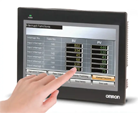
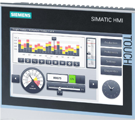
Where is the G150XTN06.4 commonly used? It is a standard component in medical patient monitors, factory automation HMIs, kiosks, and gaming machines.
Are there different versions of this model? Yes. Versions (e.g., V1.0, V2.0) indicate revisions in driver ICs or backlight design. Always verify compatibility with your system.
Is the viewing angle the same for all versions? The standard version uses TN (Twisted Nematic) technology, which has limited vertical viewing angles. Some variants may use wider-angle technology, but it is product-specific.
Conclusion: A Reliable Standard in a Disposable World
The G150XTN06.4 by AUO is more than just a screen; it is a testament to the importance of standardization in industrial technology. Its core value lies not in cutting-edge specs but in its proven reliability, standardized interfaces, and long-term availability. For engineers and procurement professionals, understanding the nuances of its LCM architecture, the critical differences between CCFL and LED backlights, and the importance of version control is paramount to successful system integration and maintenance. As the industry pushes towards higher resolutions, the legacy of XGA panels will persist in environments where stability, compatibility, and predictable performance are prized over innovation alone. For any organization maintaining equipment that relies on this specific module, a proactive sourcing strategy and a deep technical knowledge of its components are the most effective tools against costly downtime and premature system obsolescence. This panel serves as a reminder that in the world of mission-critical displays, a standard that works well is a standard that endures.





