













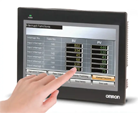
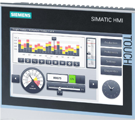






The industrial display landscape is a demanding arena where off-the-shelf consumer technology often fails. Here, reliability, longevity, and precise optical performance are non-negotiable. Among the stalwarts in this sector, the G150XTN06.3 manufactured by AU Optronics (AUO) stands as a testament to mature engineering. This 15-inch a-Si TFT-LCD LCM (Liquid Crystal Module) operates at a native resolution of 1024(RGB)×768 pixels, a configuration that has become a de-facto standard for Human-Machine Interface (HMI) systems, medical monitors, and ruggedized computing.

While the specifications may seem dated to a modern consumer, the XGA resolution and the robust a-Si technology are precisely chosen for their high reliability, excellent sunlight readability, and predictable power draw. This article delves into the architecture, practical performance, and niche market longevity of the G150XTN06.3, exploring why this specific module remains a critical component for design engineers, procurement specialists, and system integrators who prioritize stability over pixel density.

The Architectural Foundation: Why a-Si TFT-LCD Still Matters
Furthermore, this technology excels in low-leakage current performance. For a Liquid Crystal Module (LCM) that includes a control board and backlight unit, this translates to lower power consumption during static image display—a critical metric for fanless embedded systems. The 1024×768 resolution is driven by an LVDS (Low-Voltage Differential Signaling) interface, a robust and noise-immune standard preferred in industrial environments over the more power-hungry eDP (Embedded DisplayPort) used in laptops.
The module also features an anti-glare surface treatment. This is not a simple matte coating; it is a chemical etching process that diffuses ambient light. For an operator standing near a window in a factory, this is the difference between seeing data and seeing a reflection. The RGB stripe pixel arrangement ensures sharp text rendering for the 1024×768 grid, which is ideal for reading PLC logic, medical vital signs, or POS (Point of Sale) menus. The backlight, typically CCFL in older revisions or LED in later "L" variants, is designed for a lifespan of 50,000 hours, ensuring nearly 6 years of continuous operation.
The electrical interface is equally deliberate. The module uses a standard 14-pin or 20-pin LVDS connector (depending on the specific revision), which is a direct match for most industrial single-board computers (SBCs). This plug-and-play compatibility reduces design risk. Furthermore, the LCM variant usually includes a timing controller (TCON) board that is specifically tuned for the panel. This means the system integrator does not need to perform complex gamma calibration. The module accepts a 12V or 5V power supply (check specific datasheet), making it easy to power directly from a common industrial PSU without a dedicated voltage regulator.
This is a critical factor for medical device and aviation maintenance. If a display fails after 5 years, the manufacturer cannot redesign the entire console. They must source an identical drop-in replacement. The G150XTN06.3 benefits from this market inertia. Its continued availability ensures that companies can fulfill warranty obligations and service contracts without costly re-qualification. Furthermore, because the technology is stable, availability on the gray market is high, providing a safety net for urgent replacements. This contrasts sharply with short-life industrial panels that become obsolete within three years, forcing end-of-life (EOL) notices and redesign projects.
Consider a patient monitor: trends, waveforms, and numeric values must be legible instantly. At 1024×768, grid lines are sharp, and font sizes are comfortable without scaling. For a CNC machine controller, this resolution provides enough screen real estate for a tool path view and a data menu simultaneously, without the software complexity of a 1920×1080 panel. The LVDS signal bandwidth required for 60Hz refresh at XGA is low, resulting in lower EMI (Electromagnetic Interference) emissions—a critical concern for passing CE and FCC certification in industrial equipment. It strikes the perfect balance between information density and system performance.
Frequently Asked Questions (FAQs)
1. What is the typical brightness of the G150XTN06.3?Standard brightness is usually 400-500 cd/m² (nits), although specific revisions may offer higher luminance for sunlight-readable applications.
2. Is this a touchscreen panel?No, the G150XTN06.3 is typically a standard LCM (Liquid Crystal Module) without touch. However, it is often paired with an external resistive or capacitive touch overlay by system integrators.
3. What is the operating temperature range?Industrial grade panels operate from -20°C to +70°C, making them suitable for cold storage or hot factory environments.
4. Can I use this for a Raspberry Pi project?Yes, but you require a specific LVDS-to-HDMI driver board designed for 1024x768 panels, as the Raspberry Pi does not directly output LVDS.
5. What is the difference between CCFL and LED backlight versions?Older versions use CCFL (Cold Cathode Fluorescent Lamp), while newer "L" variants use LED. LED offers lower power, longer life (50k hours+), and no mercury content.
6. How do I clean the anti-glare surface?Use a soft, lint-free microfiber cloth slightly dampened with isopropyl alcohol (70%). Avoid ammonia-based cleaners which can damage the coating.
7. Is the 1024×768 resolution good for modern software?Yes, for dedicated industrial software (HMI, medical, POS). It avoids scaling issues, though it may not be ideal for modern web browsing or complex multitasking.
8. What is the viewing angle specification?Typically 80/80/80/80 (CR≥10) for left/right/up/down, but color shift is noticeable at vertical angles due to TN technology.
9. Does it come with a matching LVDS cable?No, the module is sold as a panel only. The LVDS cable must be sourced separately based on your controller board pinout.
10. Is this panel discontinued?While AUO may have moved production to newer lines, the G150XTN06.3 remains widely available on the secondary market due to its high demand in industrial maintenance.





