


















In the intricate ecosystem of electronic displays, the choice of a core component like an LCD panel can define the performance, reliability, and user experience of the final product. Among the myriad of options available to engineers and procurement specialists, the AUO G150XTN03.1 emerges as a significant and widely adopted 15-inch solution. This panel model is not merely a generic screen; it represents a specific set of technological compromises and capabilities tailored for industrial, commercial, and embedded applications where longevity and stability are paramount.
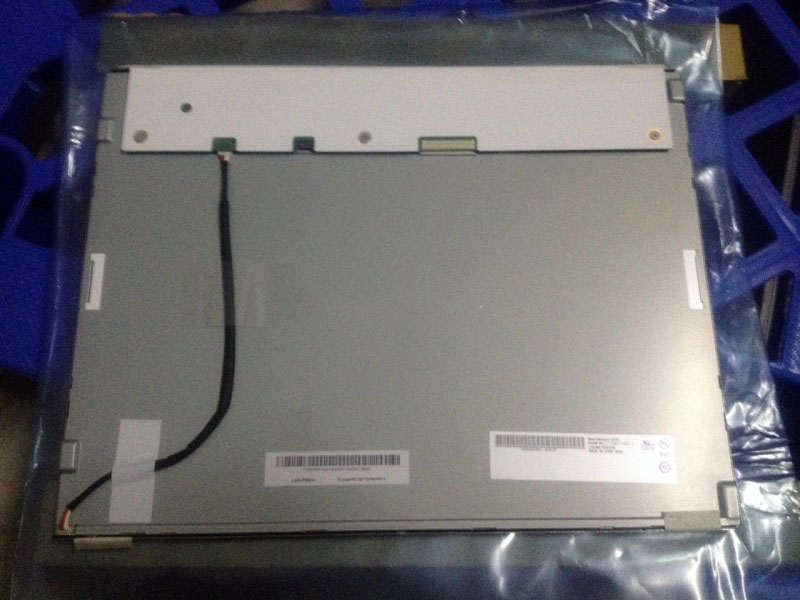
This article delves into a comprehensive technical and application-focused analysis of the AUO G150XTN03.1 LCD panel. We will move beyond basic datasheet specifications to explore its underlying technology, dissect its performance characteristics in real-world scenarios, and understand its ideal use cases. By examining its strengths, limitations, and the ecosystem surrounding it, we aim to provide a valuable resource for professionals tasked with selecting, integrating, or maintaining display solutions in demanding environments.
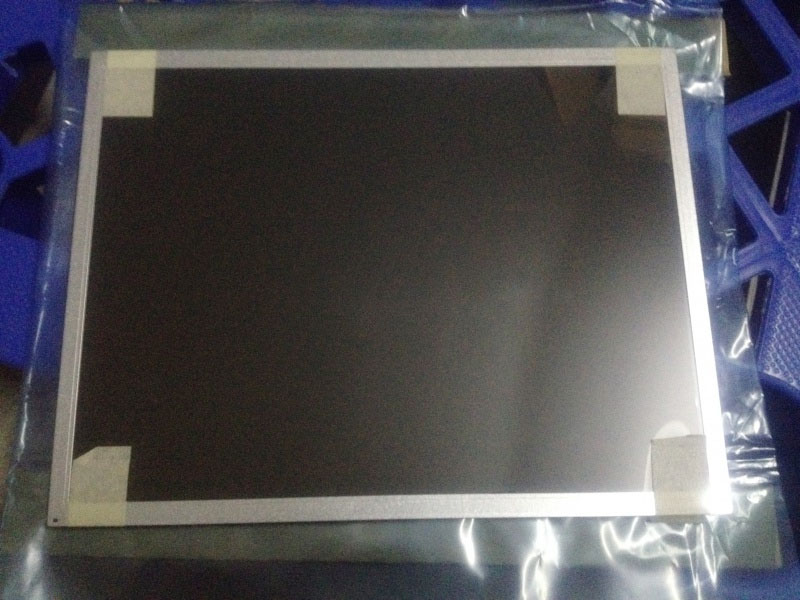
Unpacking the Core Technology: A TN Panel for Demanding Environments
The G150XTN03.1 is built upon Twisted Nematic (TN) panel technology. This mature and cost-effective technology is characterized by its fast response times, typically in the range of 14-25ms, which is suitable for basic motion rendering without severe ghosting. Its operational principle involves liquid crystals twisting to control light passage, offering high brightness and relatively low power consumption.
However, the TN technology underpinning this panel also dictates its primary limitations: notably narrower viewing angles and more modest color reproduction compared to IPS or VA alternatives. The specifications typically indicate viewing angles of 45/45/20/35 degrees (CR>10), meaning color and contrast shift significantly when viewed off-center. This makes the panel less ideal for consumer multimedia but perfectly acceptable for fixed-viewpoint applications like point-of-sale systems, industrial control panels, or instrumentation, where the user interacts directly from the front.
Detailed Specifications and Performance Analysis
At its core, the AUO G150XTN03.1 is a 15.0-inch diagonal panel with an XGA (1024 x 768) resolution, resulting in a pixel density of approximately 85 PPI. This 4:3 aspect ratio is a hallmark of legacy and industrial compatibility. The panel features a brightness of 250 nits (cd/m²) and a contrast ratio of 500:1, providing adequate legibility for most indoor environments.
A critical performance aspect is its interface: a single-channel LVDS (Low-Voltage Differential Signaling) interface. This robust and noise-resistant digital interface is standard for industrial panels, ensuring stable signal transmission over longer cable lengths within devices. The panel's mechanical outline, including its mounting hole patterns and bezel dimensions, is designed for seamless integration into standardized chassis, a key consideration for OEMs. Understanding these specs in concert reveals a panel optimized for reliability and ease of integration over cinematic visual flair.
Ideal Application Scenarios and Use Cases
The specific characteristics of the G150XTN03.1 make it a champion in niche markets. Its primary domain is industrial human-machine interfaces (HMIs). Here, its longevity, stable operation across temperature ranges, and compatibility with industrial PCs are more valuable than wide viewing angles. Similarly, it is a mainstay in point-of-sale (POS) terminals and kiosks, where the display is viewed head-on and needs to run continuously for years.
Other prominent use cases include embedded medical devices (for non-diagnostic displays like equipment control), transportation information displays, and legacy system upgrades where the 4:3 XGA format is required for software compatibility. In these scenarios, the panel is not a consumer-facing feature but a reliable component of a larger, mission-critical system.
Comparative Landscape: TN vs. IPS and Alternatives
To fully appreciate the G150XTN03.1's position, a comparison is essential. Against modern In-Plane Switching (IPS) panels, it concedes in viewing angles and color accuracy. An IPS alternative would provide nearly 178-degree viewing and better color fidelity but often at a higher cost, with potentially slower response times and higher power consumption.
The panel's advantage lies in its cost-effectiveness for its intended purpose, lower power draw, and proven reliability. When evaluating, one must ask: are wide viewing angles necessary? Is the application cost-sensitive? For front-facing, functional displays, the TN technology of the G150XTN03.1 often presents the most pragmatic and economical solution without sacrificing essential performance.
Integration Considerations and Technical Challenges
Successfully integrating this panel requires attention to several technical details. First, the LVDS interface necessitates a compatible controller board or a system with native LVDS output. Second, the backlight system, typically CCFL (Cold Cathode Fluorescent Lamp) in this model, requires an inverter for power. This adds to component count and design complexity compared to modern LED-backlit panels.
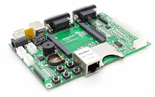
Designers must also account for the panel's power sequence timing and ensure the mounting solution aligns with its mechanical drawing. Furthermore, sourcing a compatible LCD controller board is crucial for converting signals from sources like HDMI or VGA to the panel's native LVDS input. These steps are critical to unlocking the panel's reliable performance in a custom enclosure.
Sourcing, Compatibility, and the Aftermarket Ecosystem
The AUO G150XTN03.1 has been in production for many years, creating a vibrant aftermarket and compatibility ecosystem. While AUO may phase out direct supply, numerous reputable distributors and surplus suppliers stock the panel and its direct compatible replacements. A key task for procurement is verifying cross-compatibility.
Many panels from other manufacturers (like Innolux, LG, or Samsung) are designed as "drop-in replacements," sharing identical physical dimensions, mounting holes, interface pinouts, and electrical characteristics. Verifying compatibility through detailed datasheet comparison—focusing on the interface type, pin assignment, voltage, and timing—is essential for a successful replacement or new design.
FAQS
Q1: What is the resolution of the AUO G150XTN03.1?A1: It has an XGA resolution of 1024 x 768 pixels with a 4:3 aspect ratio.
Q2: What type of panel technology does it use?A2: It uses Twisted Nematic (TN) panel technology.
Q3: What are the main limitations of this panel?A3: Its main limitations are relatively narrow viewing angles and more modest color reproduction compared to IPS panels.
Q4: What is the most common interface for this panel?A4: It uses a single-channel LVDS (Low-Voltage Differential Signaling) interface.
Q5: Is this panel suitable for watching movies or graphic design?A5: No, its narrow viewing angles and color performance make it unsuitable for multimedia consumption or color-critical work.
Q6: What are its typical applications?A6: It is ideal for industrial HMIs, POS systems, kiosks, embedded medical equipment, and legacy system upgrades.
Q7: What is the typical brightness of this panel?A7: The typical brightness is 250 nits (candelas per square meter).
Q8: Does it have an LED or CCFL backlight?A8: The G150XTN03.1 typically uses a CCFL backlight, which requires an inverter.
Q9: Can I find a direct replacement from other brands?A9: Yes, several brands offer drop-in compatible replacements, but careful datasheet verification for interface and pinout is crucial.
Q10: What should I check when integrating this panel into a device?A10: Key checks include LVDS signal compatibility, backlight inverter requirements, power sequencing, and mechanical mounting alignment.
Conclusion
The AUO G150XTN03.1 15-inch LCD panel stands as a testament to the enduring value of purpose-built technology. It is not a cutting-edge consumer display, but a robust, reliable, and economically sensible solution for a well-defined set of industrial and commercial applications. Its TN technology, XGA resolution, and LVDS interface represent a specific engineering choice that prioritizes longevity, signal integrity, and cost-effectiveness over expansive viewing angles and vibrant color gamuts.
For engineers, integrators, and procurement professionals, understanding this panel's true profile—its ideal use cases, integration requirements, and the landscape of compatible alternatives—is key to making informed decisions. In the right context, the G150XTN03.1 remains a highly effective component, ensuring clarity and reliability in the machines that power our daily commercial and industrial infrastructure.





