













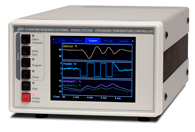
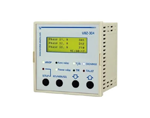





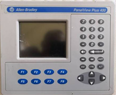


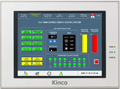








In the intricate ecosystem of industrial and embedded display solutions, certain components stand out not for flashy consumer appeal, but for their unwavering reliability, specialized design, and critical role in demanding applications. The G150XTK01.0 from AUO (AU Optronics) epitomizes this category. This 15-inch a-Si TFT-LCD Liquid Crystal Module (LCM) with its XGA (1024x768) resolution represents a mature yet persistently vital technology backbone.

This article delves beyond the basic datasheet to explore the G150XTK01.0 in depth. We will examine its core technological architecture, the enduring relevance of its display format, and the specific environmental and interface robustness engineered into its design. Our analysis will then pivot to its primary application domains, understanding why it remains the display of choice in fields where failure is not an option. Finally, we will consider its position in the modern market, balancing its established advantages against evolving technological trends, providing a comprehensive resource for engineers, procurement specialists, and industry integrators
.
Deconstructing the G150XTK01.0: Core Architecture and Specifications
At its heart, the G150XTK01.0 is an integrated Liquid Crystal Module (LCM), meaning it combines the TFT-LCD panel with essential driving circuitry into a single, ready-to-use unit. The 15-inch diagonal active area utilizes amorphous Silicon (a-Si) TFT technology, a workhorse process known for its stability, manufacturing maturity, and cost-effectiveness for this size. The native resolution of 1024 (RGB) × 768 pixels defines it as an XGA format display, offering a 4:3 aspect ratio.
This aspect ratio is a defining characteristic. Unlike the widescreen 16:9 panels prevalent in consumer electronics, the 4:3 format provides a taller, more square viewing area. This is particularly advantageous for displaying traditional data interfaces, diagnostic dashboards, legacy software applications, and vertical lists of information without wasteful black sidebars. The module typically incorporates a CCFL (Cold Cathode Fluorescent Lamp) backlighting system, known for its uniform brightness and wide operating temperature range, which is crucial for industrial environments. Electrical interfacing is standardized, often featuring LVDS (Low-Voltage Differential Signaling) inputs, ensuring robust signal integrity against noise.
The Strategic Advantage of the 4:3 XGA Format in Modern Systems
In an era dominated by widescreens, the persistence of the 4:3 XGA format, as seen in the G150XTK01.0, is a deliberate and strategic choice, not an anachronism. This format aligns perfectly with a vast installed base of machinery, control systems, and specialized software developed over the past two decades. Retrofitting these systems to widescreen displays often requires costly software redesign, interface scaling, or results in distorted or non-native image presentation.
The 1024×768 resolution offers a distinct functional clarity. For human-machine interfaces (HMIs) in industrial settings, it allows for larger, more legible text and control elements without excessive pixel density that can be counterproductive in high-vibration or viewed-from-a-distance scenarios. The vertical space is invaluable for applications like medical monitoring (showing long patient vital sign logs), telecommunications infrastructure, or factory floor control panels where data is structured in columns. Thus, the G150XTK01.0 serves as a direct, drop-in replacement or initial design choice that guarantees compatibility and optimal use of screen real estate for purpose-built systems.
Engineered for Endurance: Ruggedness and Environmental Compliance
The true value of an industrial-grade component like the G150XTK01.0 is revealed under harsh conditions where consumer displays would swiftly fail. This module is engineered for endurance. Its operating temperature range is significantly wider, often spanning from -20°C or lower to 70°C or higher, ensuring functionality in unheated warehouses, near industrial heat sources, or in outdoor enclosures with limited climate control.
Robustness extends to mechanical and visual performance. The module is designed to withstand higher levels of vibration and shock, critical for embedding into vehicles, heavy machinery, or manufacturing equipment. Furthermore, it employs optical bonding techniques or enhanced polarizers to combat challenging ambient light. This includes high-brightness options to maintain readability in direct sunlight and anti-glare treatments to reduce reflections. These features collectively mitigate the primary environmental threats—extreme temperatures, physical stress, and problematic lighting—ensuring a stable and readable display interface in real-world operational environments.
Primary Application Domains and Use Case Analysis
The specific architecture and ruggedness of the G150XTK01.0 funnel it into well-defined, mission-critical application domains. Its most prominent role is in Industrial Automation and Human-Machine Interfaces (HMIs). Here, it serves as the visual nerve center for programmable logic controllers (PLCs), controlling assembly lines, robotics, and process machinery, where its reliability and 4:3 format for data display are paramount.
Other key verticals include:
Medical Equipment: Used in diagnostic devices, patient monitors, and older ultrasound systems where display consistency and form-factor compatibility are essential for clinical workflows.
Point-of-Sale (POS) and Kiosk Systems: Provides durable displays for retail terminals, self-service kiosks, and hospitality systems requiring long-duty cycles and stable performance.
Transportation and Fleet Management: Integrated into vehicle dashboards for logistics, public transit, or agricultural machinery for navigation and system telemetry.
Test and Measurement Instruments: Acts as the display for oscilloscopes, spectrum analyzers, and other bench-top or portable equipment requiring precise, flicker-free data representation.
Integration Considerations and Technical Interface
Successfully integrating the G150XTK01.0 into a product requires attention to several technical parameters beyond simple physical mounting. Electrically, designers must accommodate its power requirements for both the logic board and the CCFL backlight inverter, which differ from modern LED-backlit solutions. The standard LVDS interface necessitates a compatible controller board or graphics output from the host system.
Mechanically, the module comes with a predefined bezel and mounting hole pattern. Integrators must design their chassis to precisely match this footprint and provide adequate heat dissipation, especially if the module will be operated at the upper end of its temperature range. Furthermore, understanding the pinout and signal timing is crucial. Designers often leverage the module's datasheet to source compatible controller boards or develop custom driving circuitry, ensuring signal integrity and proper initialization sequences to avoid image artifacts or damage.
Market Context and Legacy vs. Modern Alternatives
In today's market, the G150XTK01.0 occupies a specific niche. It is a mature, legacy-optimized solution. Its primary competitors are not newer consumer panels, but other industrial-grade LCMs with similar form factors and from other manufacturers like Innolux or Panasonic. Its advantages are proven reliability, extensive field history, and perfect compatibility with legacy systems.
Modern alternatives pushing into its space include industrial displays with LED backlighting (offering longer life and lower power consumption) and widescreen formats. However, migration involves trade-offs: cost of redesign, potential software incompatibility, and the need requalification for harsh environments. Therefore, the G150XTK01.0 remains a vital component for long-lifecycle products, maintenance/repair/operations (MRO) supply chains, and new designs where its specific attributes are mandated by the application's functional and environmental requirements. It represents a lower total cost of ownership for the right project.
FAQs: G150XTK01.0 AUO 15" LCD Module
Q1: What does "LCM" stand for in G150XTK01.0?A1: LCM means Liquid Crystal Module. It indicates the unit includes the LCD panel plus integrated drivers and backlight, ready for system integration.
Q2: What is the screen resolution and aspect ratio?A2: The resolution is 1024 (horizontal) x 768 (vertical) pixels, known as XGA, with a 4:3 aspect ratio.
Q3: What type of backlight does it use?A3: It typically uses a CCFL (Cold Cathode Fluorescent Lamp) backlight system, chosen for wide temperature range and uniformity.
Q4: What is the main advantage of the 4:3 aspect ratio?A4: It's ideal for legacy software, vertical data display, and control panels, avoiding the wasted space or distortion when displaying content designed for a square screen.
Q5: What are typical operating temperatures?A5: It is designed for wide industrial temperature ranges, commonly from -20°C to 70°C or similar.
Q6: What interface does it use?A6: It commonly uses an LVDS (Low-Voltage Differential Signaling) digital interface for robust, noise-resistant data transmission.
Q7: Is this module suitable for outdoor use?A7: It can be used outdoors if housed in a properly rated enclosure. Options with high-brightness and anti-glare treatments improve sunlight readability.
Q8: What are its primary applications?A8: Key uses include industrial HMIs, medical devices, POS/kiosk systems, transportation displays, and test/measurement equipment.
Q9: How does it compare to modern LED-backlit displays?A9: CCFL backlights may consume more power and have a shorter lifespan than LEDs, but offer proven performance in extreme temperatures and are key for legacy compatibility.
Q10: Where can I find technical documentation?A10: Datasheets and pinout diagrams are typically available from AUO's official website or through authorized industrial electronic component distributors.
Conclusion
The AUO G150XTK01.0 is far more than a simple 15-inch screen; it is a specialized tool engineered for reliability and performance in non-consumer environments. Its XGA 4:3 format, while considered legacy in some contexts, provides critical functional advantages for a vast array of industrial, medical, and commercial systems. The module's rugged construction, wide operating temperature tolerance, and stable CCFL backlighting make it a dependable choice where environmental challenges are the norm.
In a landscape rapidly adopting widescreen and LED technologies, the enduring relevance of the G150XTK01.0 underscores a fundamental principle in industrial design: fitness for purpose and total cost of ownership often outweigh raw technological novelty. For engineers designing long-lifecycle products or maintaining existing infrastructure, this display module represents a known quantity—a robust, compatible, and trustworthy component that continues to power the interfaces of critical systems worldwide.





