













































- Industrie-LCD-Display
-
Industrial Products
- DC Servo Drive
- AC Servo Drive
- PCB
- Siemens
- Switch Sensor
- Näherungsschalter
- Temperaturregler
- Schutzrelais
- Fiber Optic Sensor
- Encoder
- Fan
- other
- Heidelberg
- MITSUBISHI
- FANUC
- Siemens adapter
- Fujitsu connector
- Der Aufsichtsrat
- Board
- Contactor
- Circuit
- Omron
- Relais.
- Motortreiber
- power supply
- Cable
- Transformator
- HMI Touch-Glas
-
HMI-Vollautomat Ganze Einheit
- OMRON HMI Touch Panel
- Siemens HMI Touch Panel
- Mitsubishi HMI Touch Panel
- Allen-Bradley Automatisierung HMI Touch
- DELTA HMI Touch Panel
- EVIEW DELTA HMI Touch Panel
- KINCO DELTA HMI Touch Panel
- HITECH HMI Touch Panel
- WEINTECK HMI Touch Panel
- TECVIEW HMI Touch Panel
- WEINVIEW HMI Touch Panel
- PANASONIC HMI Touch Panel
- KYOCERA HMI Touch Panel
- SCHNEIDER HMI Touch Panel
- Module
- LCD Wechselrichter
- Membran Tastenfeld Schalter
- Winni Touch Screens
- Frequenzumrichter
- Servo Motor
- PLC
In the intricate ecosystem of industrial and embedded display solutions, specific components become the unsung heroes of reliability and performance. Among these, the G150XNE-L03 from Innolux stands out as a quintessential example of engineering tailored for demanding applications. This 15.0-inch diagonal a-Si TFT-LCD module, with its 1024x768 (XGA) resolution, represents a critical intersection of mature technology, robust design, and versatile integration.
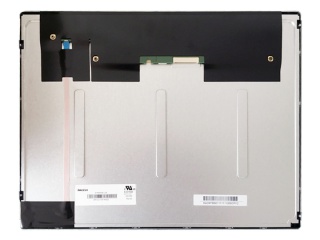
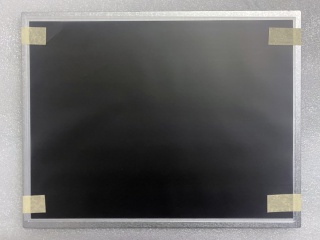
This article delves into a comprehensive analysis of the G150XNE-L03 LCM. We will move beyond basic datasheet specifications to explore its underlying a-Si TFT technology, dissect its optical and mechanical characteristics, and understand its electrical and interface ecosystem. Further, we will examine its ideal application landscapes, the crucial considerations for successful integration, and finally, contextualize its position in the current market of display solutions. Our goal is to provide engineers, procurement specialists, and product developers with a deep, practical understanding of this module's capabilities and optimal use cases.

Deconstructing the Core: a-Si TFT-LCD Technology
At the heart of the G150XNE-L03 lies Amorphous Silicon (a-Si) Thin-Film Transistor (TFT) technology. This mature and highly optimized manufacturing process is the cornerstone of the module's reliability and cost-effectiveness. Unlike newer technologies like LTPS or Oxide TFT, a-Si provides an excellent balance between performance, manufacturing yield, and price for mainstream industrial resolutions like XGA (1024x768).
The technology functions by using a matrix of TFTs, each acting as an individual switch for a single pixel subpixel (red, green, or blue). This active-matrix design allows for faster response and better image stability compared to passive matrices. For the G150XNE-L03, this translates into a display that is free from the flicker and ghosting that can plague lesser technologies, ensuring clear, stable imagery—a non-negotiable requirement in medical, industrial control, or point-of-sale environments where screens are monitored for extended periods.
Optical and Mechanical Profile: Built for Clarity and Durability
The visual performance and physical robustness of an LCM are paramount. The G150XNE-L03 offers a standard brightness of 300 cd/m² (nits) and a contrast ratio of 500:1, providing adequate legibility for most indoor industrial and commercial settings. Its 15-inch active area with XGA resolution results in a pixel pitch of approximately 0.297mm, offering a clear image without visible pixelation at typical viewing distances.
Mechanically, the module is designed for integration. It features a standard outline dimension and a standard LVDS interface position, ensuring compatibility with a wide range of enclosures and controller boards. The surface treatment typically includes an anti-glare (AG) layer to diffuse ambient light and reduce reflections, a critical feature for environments with overhead lighting. The rugged construction is intended to withstand the vibrations and thermal variations common in factory floors, transportation systems, and other non-climate-controlled settings.
Electrical Ecosystem and Interface Logic
Integrating a display module requires a deep understanding of its electrical needs. The G150XNE-L03 operates on a single +3.3V power supply for the logic and typically a higher voltage for the LED backlight driver, simplifying power architecture design. Its interface is a critical component: it utilizes a Low-Voltage Differential Signaling (LVDS) standard.
LVDS is a preferred choice for industrial applications due to its robustness against electromagnetic interference (EMI). This differential signaling method transmits data as the voltage difference between two wires, making it highly resistant to noise picked up along the cable—a common challenge in electrically noisy industrial environments. The use of LVDS ensures signal integrity over longer cable runs between the system's main controller and the display itself, guaranteeing a stable, flicker-free image transmission.
Ideal Application Landscapes
The technical specifications of the G150XNE-L03 directly map to a well-defined set of application verticals. Its 15-inch XGA format is a classic "sweet spot," large enough for detailed information display yet compact enough for space-constrained panels.
Primary application areas include:
Industrial Human-Machine Interfaces (HMIs): For factory automation control panels, PLC operator terminals, and machinery dashboards.
Medical Monitoring Equipment: In patient monitors, diagnostic devices, and other medical systems where reliability and clear data presentation are critical.
Point-of-Sale (POS) and Kiosk Systems: As the customer-facing screen in retail and self-service terminals.
Transportation Information Displays: For in-vehicle infotainment or information systems in buses, trains, or maritime vessels.
Gaming and Amusement Machines: Where consistent performance and durability are required.
Critical Integration and Sourcing Considerations
Successfully deploying the G150XNE-L03 extends beyond understanding its specs. Engineers must consider the complete integration pipeline. This includes designing or sourcing a compatible LVDS controller board, ensuring the power supply can handle the inrush current of the LED backlight at startup, and managing thermal dissipation through proper enclosure design.
Sourcing is another crucial layer. While the G150XNE-L03 is a standard model, understanding its lifecycle status is vital. As a mature product, it's essential to verify long-term availability with distributors or Innolux directly to mitigate supply chain risk for multi-year product programs. Furthermore, evaluating compatible alternative models or potential future upgrades (like higher brightness or wider temperature ranges) as part of the design strategy can future-proof the end product.
Market Context and Technological Evolution
In a market increasingly fascinated by high-resolution, high-refresh-rate OLED and IPS displays, the G150XNE-L03 occupies a vital, pragmatic niche. It represents the "workhorse" segment of the display industry—where proven reliability, cost control, and long-term supply stability often trump cutting-edge specs. Its a-Si TFT and LVDS technology are battle-tested, with vast ecosystems of supporting components and engineering expertise.
While newer interfaces like eDP (Embedded DisplayPort) offer higher data rates, LVDS remains deeply entrenched in industrial applications due to its simplicity and noise immunity. The evolution for modules like the G150XNE-L03 is not necessarily in radical technology shifts, but in incremental improvements: enhanced durability, wider operating temperature ranges, and improved power efficiency for the LED backlight, ensuring its relevance for next-generation industrial and embedded systems.
Frequently Asked Questions (FAQs)
Q1: What is the resolution of the G150XNE-L03?A1: It has an XGA resolution of 1024 horizontal pixels (RGB stripe) by 768 vertical pixels.
Q2: What does "a-Si TFT-LCD" mean?A2: It stands for Amorphous Silicon Thin-Film Transistor Liquid Crystal Display, a mature and reliable technology for controlling individual pixels.
Q3: What type of interface does this module use?A3: It uses a Low-Voltage Differential Signaling (LVDS) interface, known for robust performance in electrically noisy environments.
Q4: What is the typical brightness level?A4: The standard brightness is 300 candelas per square meter (cd/m² or nits).
Q5: Is this display suitable for outdoor use?A5: With 300 nits, it is primarily designed for indoor use. Outdoor readability in direct sunlight would require a much higher brightness spec.
Q6: What is the main power supply voltage?A6: The logic and driver circuitry typically operate on a +3.3V power supply.
Q7: What are the most common applications for this LCM?A7: It is widely used in Industrial HMIs, medical equipment, POS/kiosk systems, and transportation displays.
Q8: Does it have a touchscreen?A8: The G150XNE-L03 is an LCD Module (LCM) only. Touch functionality (resistive or capacitive) would be added as a separate component.
Q9: How does it compare to an IPS display?A9: It likely has more limited viewing angles and color gamut than an IPS panel but offers advantages in cost and proven reliability for fixed-viewing-angle industrial applications.
Q10: Where can I find a controller board for this display?A10: Many third-party manufacturers offer standard LVDS controller boards compatible with this 15-inch XGA format. You must ensure the board's LVDS signal mapping matches the panel's requirements.
Conclusion
The Innolux G150XNE-L03 15-inch LCD module exemplifies the enduring value of optimized, purpose-driven technology in the embedded display world. It is not a showcase for the latest consumer display trends but a meticulously engineered component built for longevity, stability, and performance in challenging conditions. Its foundation on mature a-Si TFT and LVDS interface technology provides a reliable and predictable platform for system designers.
For engineers and product managers developing equipment for industrial, medical, or commercial use, understanding the deep specifications, integration nuances, and ideal application contexts of modules like the G150XNE-L03 is crucial. It represents a strategic choice that prioritizes operational reliability and total cost of ownership over sheer spec-sheet novelty. In an era of rapid technological change, such reliable workhorses remain the bedrock upon which countless critical systems are built.





