




















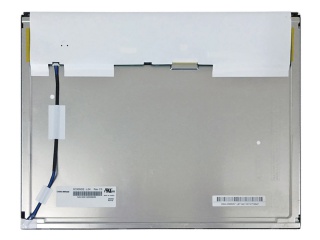
In the intricate world of electronic components, the display panel serves as the critical bridge between digital information and human perception. Among the myriad of options available to engineers and product designers, the 15-inch G150XGE-L04 LCD module stands out as a specific and compelling solution for applications demanding reliability, clarity, and a standardized format. This article delves into a comprehensive analysis of this particular display module, moving beyond basic specifications to explore its technical DNA, inherent advantages, and ideal implementation scenarios.

Our exploration will dissect the module's core architecture, its performance characteristics in terms of visual quality and power efficiency, and the key interfaces that enable seamless integration. We will further examine its primary industrial and commercial applications, provide practical guidance for system integration, and contrast it with alternative display technologies. This deep dive aims to equip developers, procurement specialists, and technology enthusiasts with the nuanced understanding necessary to evaluate whether the G150XGE-L04 is the optimal visual engine for their next-generation device.

Technical Architecture and Core Specifications
The G150XGE-L04 is fundamentally a 15-inch diagonal TFT-LCD (Thin-Film Transistor Liquid Crystal Display) module. Its defining native resolution is 1024 x 768 pixels, conforming to the XGA (Extended Graphics Array) standard. This 4:3 aspect ratio is a hallmark of legacy and many industrial systems, offering a squarer viewing area compared to modern widescreens. The module typically incorporates a CCFL (Cold Cathode Fluorescent Lamp) or LED backlighting system, with the latter being more common in contemporary versions for its longevity and better power efficiency.
At its heart lies an active-matrix TFT panel, where each pixel is controlled by one to four transistors, enabling faster response times and superior image stability compared to passive matrix designs. The "L04" suffix in the model number often indicates specific revision details, such as the type of backlight, interface connector pinout, or surface treatment (e.g., matte or glossy). Understanding this architecture is crucial, as it directly informs the module's performance in contrast ratio, viewing angle, and color reproduction, forming the baseline for all its subsequent applications.
Visual Performance and Key Characteristics
The visual output of the G150XGE-L04 is defined by a balance of parameters suited for functional display rather than high-end multimedia. The XGA resolution provides a pixel pitch that yields sharp text and clear graphics, a critical requirement for medical monitors, point-of-sale systems, and industrial control panels where detail is paramount. Its brightness level, often ranging from 200 to 300 nits, ensures readability in typical office or indoor industrial lighting conditions.
While modern IPS panels offer wider viewing angles, this module may utilize TN (Twisted Nematic) or earlier-generation VA (Vertical Alignment) technology, which provides adequate viewing angles for its intended use cases—often where the user is directly in front of the display. Key characteristics also include its contrast ratio, which defines the difference between the darkest black and the brightest white, and its color gamut, typically covering a standard sRGB range. These factors collectively determine the module's effectiveness in delivering legible, accurate, and consistent visual information over prolonged periods.
Interface and Signal Compatibility
Integration is governed by the module's input interface. The G150XGE-L04 commonly features an LVDS (Low-Voltage Differential Signaling) interface, a standard in the industry for transmitting high-speed video data from a controller board to the display panel with minimal noise interference. The specific pin configuration (e.g., single-channel or dual-channel LVDS) must be matched with the output of the system's graphic controller or timing controller (T-Con) board.
Signal compatibility extends beyond the physical connector. The module operates on specific voltage levels (e.g., 3.3V or 5V for logic, and a higher voltage for the backlight inverter) and requires precise timing signals (horizontal sync, vertical sync, data enable, and pixel clock) that align with its native XGA timing. Designers must ensure the source device can generate a compatible XGA signal (1024x768 at 60Hz is typical). This makes the module a straightforward choice for upgrading or building systems around this established video standard, avoiding the complexities of scaling or format conversion.
Primary Applications and Use Cases
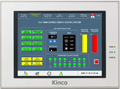
The specific attributes of the G150XGE-L04 make it a workhorse in environments where durability, standardization, and functional clarity trump ultra-high resolution. Its primary domain is the industrial and embedded sector. You will find it at the heart of factory automation HMIs (Human-Machine Interfaces), test and measurement equipment, and CNC machine control panels, where its 4:3 aspect ratio efficiently displays toolpaths and data tables.
Beyond the factory floor, it serves reliably in point-of-sale (POS) terminals, self-service kiosks, and dedicated medical monitoring devices (for non-diagnostic purposes). Its longevity in the supply chain and predictable performance also make it a preferred choice for legacy system maintenance and refurbishment projects, where replacing a display in an existing product line requires a drop-in compatible component without redesigning the entire system architecture.
System Integration and Design Considerations
Successfully incorporating the G150XGE-L04 into a product requires careful planning. First, mechanical integration is paramount: designers must account for its exact physical dimensions, bezel size, mounting hole patterns, and overall depth, which includes the backlight assembly. Thermal management is also essential, as proper ventilation ensures consistent performance and extends the LED backlight's lifespan.
Electrically, the design must provide clean, stable power to both the logic board and the backlight driver. For LED-backlit versions, a constant-current driver is necessary. Furthermore, the system's graphics controller must be configured to output the exact LVDS signal format required by the panel. This often involves programming the correct timing parameters and voltage swings into the controller. EMI (Electromagnetic Interference) shielding may also be required to ensure the display operates without affecting, or being affected by, other sensitive electronics within the enclosure.
Comparative Analysis with Alternative Technologies
Positioning the G150XGE-L04 in the current market requires comparison. Against newer 15-inch panels with higher resolutions (like 1920x1080), its strength is not pixel density but cost-effectiveness, lower system resource consumption, and perfect compatibility with legacy XGA-based hardware and software. Compared to modern IPS panels, it may have narrower viewing angles but often boasts a faster response time, which can be beneficial for basic animation or cursor movement in industrial settings.
The most significant comparison is with touch-enabled modules. The G150XGE-L04 is often a display-only component. For interactive kiosks or HMIs, it must be paired with a separate resistive or capacitive touch overlay, adding complexity but also modularity. Finally, against OLED technology, it remains a more economical and proven solution for applications requiring continuous static image display, where OLED might risk burn-in. This analysis clarifies that its value is niche but significant within that niche.
Frequently Asked Questions (FAQs)
1. What is the exact resolution of the G150XGE-L04?It has a native resolution of 1024 x 768 pixels (XGA standard).
2. What type of interface does it use?It typically uses an LVDS (Low-Voltage Differential Signaling) interface.
3. Is this a touch screen display?No, the G150XGE-L04 is a display panel module. A separate touch overlay can be added.
4. What is the aspect ratio?It features a 4:3 aspect ratio, common for industrial and legacy applications.
5. What are common applications for this panel?Industrial HMIs, POS systems, medical monitors, kiosks, and test equipment.
6. What is the typical backlight technology?Modern versions commonly use LED backlighting for longer life and efficiency.
7. Can I use this with a standard HDMI output?Not directly. You need an HDMI to LVDS converter board compatible with XGA timing.
8. What are the key power requirements?It requires low-voltage DC power for the logic (e.g., 3.3V/5V) and a separate supply for the backlight.
9. How does it compare to a modern 1080p display?It has lower resolution but offers cost savings, lower power draw, and direct XGA compatibility.
10. Where can I find the datasheet for this module?Datasheets are available from authorized distributors or by contacting the manufacturer directly.
Conclusion
The 15-inch G150XGE-L04 LCD module exemplifies how a purpose-driven, standardized component continues to deliver immense value in specific technological ecosystems. Its XGA resolution, 4:3 aspect ratio, and reliable LVDS interface are not outdated features but deliberate specifications that meet the exact needs of industrial, commercial, and embedded applications where consistency, durability, and functional clarity are non-negotiable.
This deep dive reveals that selecting a display module is rarely about chasing the highest specs, but about finding the optimal technical and economic fit. For designers maintaining legacy systems or building new devices that prioritize reliability over ultra-high density, the G150XGE-L04 remains a robust and credible solution. It stands as a testament to the principle that in engineering, the right tool for the job is defined by the job itself, not by the latest trend.





