













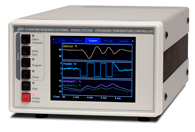



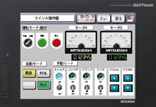







- Industrie-LCD-Display
-
Industrial Products
- DC Servo Drive
- AC Servo Drive
- PCB
- Siemens
- Switch Sensor
- Näherungsschalter
- Temperaturregler
- Schutzrelais
- Fiber Optic Sensor
- Encoder
- Fan
- other
- Heidelberg
- MITSUBISHI
- FANUC
- Siemens adapter
- Fujitsu connector
- Der Aufsichtsrat
- Board
- Contactor
- Circuit
- Omron
- Relais.
- Motortreiber
- power supply
- Cable
- Transformator
- HMI Touch-Glas
-
HMI-Vollautomat Ganze Einheit
- OMRON HMI Touch Panel
- Siemens HMI Touch Panel
- Mitsubishi HMI Touch Panel
- Allen-Bradley Automatisierung HMI Touch
- DELTA HMI Touch Panel
- EVIEW DELTA HMI Touch Panel
- KINCO DELTA HMI Touch Panel
- HITECH HMI Touch Panel
- WEINTECK HMI Touch Panel
- TECVIEW HMI Touch Panel
- WEINVIEW HMI Touch Panel
- PANASONIC HMI Touch Panel
- KYOCERA HMI Touch Panel
- SCHNEIDER HMI Touch Panel
- Module
- LCD Wechselrichter
- Membran Tastenfeld Schalter
- Winni Touch Screens
- Frequenzumrichter
- Servo Motor
- PLC
In the intricate ecosystem of electronic displays, specific components become the unsung heroes behind countless applications. One such component is the G150XAN02.0, a 15-inch TFT-LCD module developed by AUO (AU Optronics). This display module, with its 1024(RGB)×768 (XGA) resolution, represents a mature and highly reliable technological solution that continues to power critical systems across various industries. While not the latest high-resolution panel, its enduring relevance lies in a proven combination of performance, durability, and design integration.

This article delves into a comprehensive technical and application analysis of the AUO G150XAN02.0. We will move beyond basic specifications to explore its architectural design, the implications of its a-Si TFT technology, and its key performance characteristics. Further, we will examine its primary application landscapes, the critical interface and compatibility considerations for engineers, and finally, contextualize its position in the current market. This deep dive aims to provide valuable insights for procurement specialists, product designers, and engineers evaluating this enduring display solution.
Architectural Overview and Core Specifications
The G150XAN02.0 is an LCM (LCD Module), meaning it integrates the TFT-LCD panel, driver ICs, backlight unit, and interface connectors into a single, ready-to-use unit. Its core identity is defined by a 15-inch diagonal active area with a native resolution of 1024 horizontal pixels (each with RGB sub-pixels) by 768 vertical pixels, conforming to the XGA standard. This 4:3 aspect ratio is a hallmark of displays designed for industrial, medical, and legacy computing environments where vertical screen space and compatibility are paramount.
The module employs an a-Si (amorphous Silicon) TFT active matrix, a workhorse technology known for its manufacturing maturity, cost-effectiveness, and reliability over long operational lifetimes. The typical brightness output is around 300 cd/m², with a contrast ratio sufficient for clear readability in controlled lighting. The interface is typically LVDS (Low-Voltage Differential Signaling), a robust standard for transmitting high-speed video data with minimal noise interference. Understanding this foundational architecture is key to appreciating its subsequent performance and application fit.

The Significance of a-Si TFT Technology
The choice of a-Si TFT technology over alternatives like LTPS (Low-Temperature Polycrystalline Silicon) or Oxide TFT is a deliberate one with significant implications. a-Si technology is characterized by its proven stability and lower production cost for larger panels like the 15-inch size. While it may not enable the ultra-narrow bezels or extremely high pixel densities of newer technologies, it excels in long-term operational reliability and consistency.
For the target applications of the G150XAN02.0, such as industrial control panels, medical monitors, or point-of-sale systems, these attributes are critical. The technology offers excellent uniformity across the display area and maintains stable performance across a wide temperature range, which is often a requirement in harsh industrial environments. This reliability-focused engineering makes it a "set-and-forget" component in mission-critical equipment.
Performance Characteristics and Optical Traits
Evaluating the performance of this module requires a lens focused on utilitarian robustness rather than consumer-grade multimedia specs. The XGA resolution provides a sharp pixel pitch suitable for displaying detailed schematics, text-based data, and user interface elements without excessive scaling. The 300 cd/m² brightness level ensures visibility in normally lit office or industrial settings, though it may not be designed for direct sunlight readability.
Key optical traits include a wide viewing angle, typically 80/80/80/80 (Left/Right/Up/Down) at a contrast ratio of 10:1, allowing for clear viewing from various positions—a necessity for collaborative or multi-operator workstations. The color gamut coverage is typically around 50-60% of NTSC, adequate for accurate data representation and basic GUI colors, but not for professional color-critical work. The response time is sufficient to avoid smearing in dynamic industrial graphics or scrolling data feeds.
Primary Application Landscapes
The G150XAN02.0 finds its home in environments where reliability trumps cutting-edge specs. Its primary application landscapes are diverse yet specific:
Industrial Automation & HMI: Serving as the primary interface for machine control, PLC monitoring, and SCADA systems on factory floors.
Medical Diagnostic Equipment: Integrated into devices like ultrasound systems, patient monitors, and diagnostic instruments where consistent grayscale performance and reliability are non-negotiable.
Point-of-Sale & Kiosk Systems: Used in retail terminals, self-checkout kiosks, and information booths, valued for their 4:3 format for legacy software and durability.
Transportation & Maritime: Employed in control consoles for fleet management, vessel navigation, and logistics systems.
In these fields, the module's long lifecycle availability and resistance to continuous operation are as important as its technical specifications.
Interface, Compatibility, and Integration Considerations
Successful integration of the G150XAN02.0 hinges on understanding its interface and power requirements. The standard LVDS interface requires a compatible controller board (often called a LCD controller or driver board) on the host system to convert video signals (e.g., from VGA, DVI, or HDMI sources) into the LVDS format the module accepts. The pin configuration and power sequence are critical; incorrect wiring can permanently damage the module.
Furthermore, designers must account for the mechanical dimensions, including the bezel size and mounting hole positions, to ensure a proper fit within the end-product's enclosure. The backlight inverter (for CCFL backlight versions) or LED driver circuit must be correctly matched. These integration details underscore that this module is a component for engineered products, not a plug-and-play consumer monitor.
Market Context and Longevity Analysis
In a market relentlessly driven toward higher resolutions like Full HD and 4K, the G150XAN02.0 occupies a vital niche. Its value proposition is not based on being the newest, but on being a dependable and available solution. For manufacturers of long-lifecycle equipment, the risk of a display model being discontinued or radically changed mid-production is a serious concern. Modules like the G150XAN02.0 often benefit from extended manufacturing lifetimes and stable supply chains.
When sourcing, the choice may be between a brand-new original module, a new surplus unit, or a refurbished/pulled unit, each with different cost, warranty, and lifecycle implications. Understanding this market context helps buyers make informed decisions that balance technical requirements, budget, and long-term product support needs.
FAQs
Q1: What is the screen size and resolution of the G150XAN02.0?A1: It is a 15-inch diagonal display with an XGA resolution of 1024 (RGB) x 768 pixels.
Q2: Who manufactures the G150XAN02.0 LCD module?A2: It is manufactured by AU Optronics (AUO), a leading Taiwanese display panel maker.
Q3: What does "a-Si TFT-LCD" mean?A3: It stands for amorphous Silicon Thin-Film Transistor Liquid Crystal Display, a mature and reliable panel technology.
Q4: What is the main interface for this module?A4: It typically uses an LVDS (Low-Voltage Differential Signaling) interface for video data transmission.
Q5: Is this a 4:3 or 16:9 aspect ratio display?A5: It features a 4:3 aspect ratio, common for industrial and legacy applications.
Q6: What are typical applications for this display?A6: Common uses include industrial HMIs, medical equipment, POS/kiosk systems, and transportation consoles.
Q7: What is the typical brightness of this module?A7: The typical brightness is around 300 candelas per square meter (cd/m²).
Q8: Can I connect this directly to a standard HDMI or VGA output?A8: No, you need an intermediate LCD controller board to convert HDMI/VGA signals to the LVDS format the module requires.
Q9: Why would I choose this over a newer, higher-resolution panel?A9: Key reasons include long-term availability, proven reliability, compatibility with legacy systems/software, and often a lower total cost of ownership for industrial projects.
Q10: Is the backlight CCFL or LED?A10: The G150XAN02.0 was originally designed with a CCFL backlight, but LED-backlit versions or retrofit kits are commonly available for longer life and lower power consumption.
Conclusion
The AUO G150XAN02.0 15-inch XGA TFT-LCD module exemplifies how a technologically mature component can maintain critical relevance. Its value is not defined by being at the peak of the resolution curve, but by its steadfast reliability, proven a-Si TFT architecture, and perfect suitability for demanding, long-lifecycle applications. From factory floors to medical diagnostics, it serves as a dependable visual interface where failure is not an option.
For engineers and procurement professionals, selecting this module is a strategic decision that prioritizes system stability, long-term supply, and seamless integration over raw pixel count. In an era of rapid technological churn, the G150XAN02.0 stands as a testament to the enduring importance of robustness and specialized design in the embedded display landscape.





