





















In the intricate world of electronic design and embedded systems, the display module serves as the critical bridge between machine intelligence and human interaction. Among the myriad of options available to engineers and product developers, the G043FTN01.0 4.3-inch display module, featuring an AUO (AU Optronics) TFT LCD panel, stands out as a compelling solution for a wide range of compact, power-conscious applications. This module encapsulates a sophisticated blend of visual performance, physical robustness, and integration readiness.
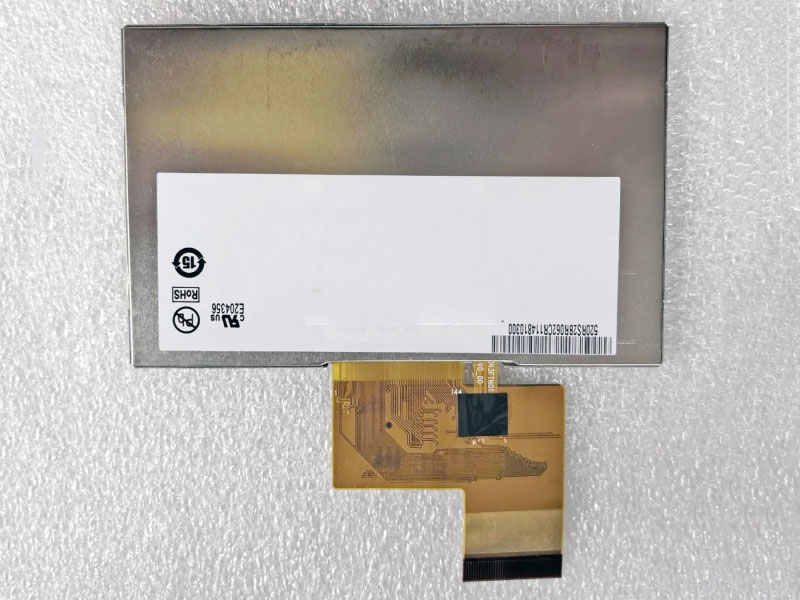
This in-depth exploration will dissect the G043FTN01.0 beyond its basic datasheet specifications. We will delve into its core technological attributes, examine its ideal application landscapes, and unpack the practical considerations for successful implementation. From its optical characteristics and interface protocol to the nuances of mechanical integration and supply chain strategy, this article aims to provide a comprehensive resource for anyone evaluating this specific display module for their next-generation product.
Core Technical Specifications and Optical Performance
The G043FTN01.0 is built around a 4.3-inch diagonal TFT LCD panel from AUO, typically offering a resolution of 480 x 272 pixels (WVGA). This format provides a balanced pixel density for clear text and graphics in compact devices. The module commonly utilizes a RGB interface, a parallel digital interface that offers direct control over sub-pixel data, making it a versatile choice for various microcontroller and application processor platforms.
Optical performance is paramount. Key specifications include brightness, usually measured in nits (cd/m²), which determines readability in ambient light. The contrast ratio defines the depth between blacks and whites, impacting image clarity. Viewing angle, specified in degrees for left/right/up/down directions (e.g., using IPS or similar technology in some variants), dictates how the image quality holds up when viewed off-center. Color gamut coverage indicates the range of colors the display can reproduce, a critical factor for user interfaces requiring accurate color representation.
Interface Protocol and System Integration
Understanding the interface is crucial for hardware design. The RGB interface operates by transmitting synchronized clock, horizontal sync, vertical sync, and data enable signals alongside the 18-bit or 24-bit RGB data buses. This requires a processor with a dedicated LCD controller or an external controller chip to generate these timing signals precisely, as defined by the module's datasheet.
Integration extends beyond the digital interface. The module includes a LED backlight unit, which requires a constant-current driver circuit to ensure uniform illumination and longevity. Designers must also account for power sequencing—the specific order in which I/O voltage, analog voltage, and backlight power are applied and removed—to prevent potential damage to the LCD cells. Proper electromagnetic compatibility (EMC) design around the display's flex cables and drivers is also essential for system stability.
Target Applications and Market Fit
The G043FTN01.0 finds its niche in applications where a balance of screen size, cost, and power consumption is required. Its primary domains include Industrial Human-Machine Interfaces (HMIs) for control systems, diagnostic equipment, and handheld terminals, where reliability under harsh conditions is key. It is also prevalent in consumer electronics like portable media players, smart home controllers, and advanced kitchen appliances.
Furthermore, the automotive aftermarket for infotainment systems, rear-seat entertainment, and auxiliary displays often utilizes this form factor. Medical devices, particularly portable diagnostic monitors and handheld instruments, benefit from its compactness and clarity. The module's suitability is defined not just by its size, but by its ability to deliver consistent performance across these diverse, often demanding environments.
Mechanical Design and Environmental Considerations
The mechanical footprint and mounting method are vital for product design. The module's outline dimensions, active area location, and mounting hole positions must be meticulously followed in the product's enclosure design. Many modules, including variants of the G043FTN01.0, offer a metal frame or bracket for secure fastening and enhanced structural rigidity, which also aids in heat dissipation from the backlight.
Environmental robustness is a decisive factor. Operating and storage temperature ranges must align with the product's intended use case, especially for industrial or outdoor applications. Resistance to vibration and shock is critical for portable or vehicular-mounted devices. Designers should also consider optical bonding options, where the touch panel (if added) is laminated directly to the LCD, which improves sunlight readability, durability, and reduces internal condensation.
Enhancing Functionality with Touchscreen Integration
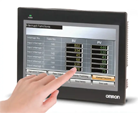
To create a fully interactive user interface, a touchscreen is often layered onto the display module. The two primary technologies are Resistive Touch and Projected Capacitive (PCAP). Resistive touch is cost-effective and can be activated with a stylus or glove but offers lower optical clarity. PCAP, known for its multi-touch capability and superior clarity, is now the standard for consumer-like interfaces.
Integrating a touchscreen adds complexity: it requires a separate controller, communicates via I2C or SPI protocols, and needs a software driver stack. The choice between on-cell (where the touch sensor is on the LCD cell) or add-on (a separate layer) constructions affects thickness, cost, and optical performance. Ensuring proper calibration and mitigating electromagnetic interference between the display and touch sensor are key engineering challenges.
Supply Chain and Long-Term Procurement Strategy
Selecting a display module is not only a technical decision but also a supply chain one. The G043FTN01.0, being an AUO-based module, is subject to the manufacturer's product lifecycle policies. Engineers must verify the module's long-term availability against their product's production timeline. It is prudent to engage with reputable distributors or module integrators who can provide lifecycle guarantees and notify of end-of-life (EOL) milestones.
Developing a second-source strategy or identifying pin-compatible alternative modules from other panel manufacturers can mitigate supply risk. Furthermore, understanding the minimum order quantities (MOQs), lead times, and the level of technical support available (such as reference schematics, drivers, and debugging assistance) from the supplier is crucial for a smooth production ramp and sustained product lifecycle management.
Frequently Asked Questions (FAQs)
Q1: What is the typical resolution of the G043FTN01.0 module?A1: It typically offers a WVGA resolution of 480 x 272 pixels.
Q2: What is the primary interface for this display?A2: It primarily uses a parallel RGB digital interface.
Q3: Can I add a touchscreen to this module?A3: Yes, both resistive and projected capacitive touchscreens are commonly available as integrated options or add-ons.
Q4: What are the key considerations for driving the backlight?A4: A constant-current LED driver circuit is required, and attention must be paid to the backlight's voltage/current requirements and dimming method (e.g., PWM).
Q5: Is this module suitable for outdoor use?A5: It depends on the specific variant's brightness and environmental specs. For direct sunlight, a high-brightness panel (500+ nits) and optical bonding are recommended.
Q6: What processors are compatible with the RGB interface?A6: Most application processors and many microcontrollers with a built-in LCD controller (supporting parallel RGB mode) are compatible.
Q7: How do I ensure long-term supply for my product?A7: Work with suppliers on lifecycle forecasts, consider lifetime buy options, and develop a plan for pin-compatible alternatives.
Q8: What is the difference between the G043FTN01.0 and other 4.3" modules?A8: Differences lie in the specific AUO panel grade, optical performance (brightness, viewing angle), interface options, mechanical construction, and the integrator's added value (like touch integration).
Q9: Are there ready-to-use drivers for embedded OSs like Linux?A9: While generic frame buffer drivers exist, customized configuration for timing and often a touchscreen driver are usually required, which some module suppliers may provide.
Q10: What is the first step in integrating this module into a design?A10: Thoroughly review the official datasheet and application notes, then create a prototype based on the recommended reference schematic and power sequencing.
Conclusion
The G043FTN01.0 4.3-inch display module represents a mature and highly capable solution that bridges the gap between sophisticated visual output and practical embedded design constraints. Its value proposition lies not in being the largest or highest-resolution option, but in offering a reliable, integrable, and performance-consistent component for a vast array of specialized applications.
Successful implementation demands a holistic view that encompasses optical evaluation, electrical integration, mechanical design, and strategic sourcing. By meticulously addressing each layer—from the timing parameters of the RGB interface to the logistics of the supply chain—engineers and product managers can leverage this module to create intuitive, robust, and successful human-machine interfaces. In a world increasingly defined by interaction, the careful selection and integration of components like the G043FTN01.0 remain a foundational step in product innovation.





