

























- Industrie-LCD-Display
-
Industrial Products
- DC Servo Drive
- AC Servo Drive
- PCB
- Siemens
- Switch Sensor
- Näherungsschalter
- Temperaturregler
- Schutzrelais
- Fiber Optic Sensor
- Encoder
- Fan
- other
- Heidelberg
- MITSUBISHI
- FANUC
- Siemens adapter
- Fujitsu connector
- Der Aufsichtsrat
- Board
- Contactor
- Circuit
- Omron
- Relais.
- Motortreiber
- power supply
- Cable
- Transformator
- HMI Touch-Glas
-
HMI-Vollautomat Ganze Einheit
- OMRON HMI Touch Panel
- Siemens HMI Touch Panel
- Mitsubishi HMI Touch Panel
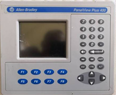
- Allen-Bradley Automatisierung HMI Touch
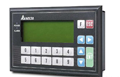
- DELTA HMI Touch Panel
- EVIEW DELTA HMI Touch Panel
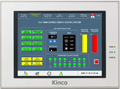
- KINCO DELTA HMI Touch Panel
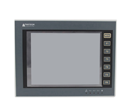
- HITECH HMI Touch Panel
- WEINTECK HMI Touch Panel
- TECVIEW HMI Touch Panel
- WEINVIEW HMI Touch Panel
- PANASONIC HMI Touch Panel
- KYOCERA HMI Touch Panel
- SCHNEIDER HMI Touch Panel
- Module
- LCD Wechselrichter
- Membran Tastenfeld Schalter
- Winni Touch Screens
- Frequenzumrichter
- Servo Motor
- PLC
In the intricate ecosystem of industrial and commercial display solutions, specific panel models become the unsung heroes behind reliable performance. The G150XTN03.5, a 15-inch TFT display module manufactured by AUO (AU Optronics), stands as a prime example. This panel is not a consumer-grade monitor but a critical component engineered for integration into a wide array of demanding applications, from medical devices and industrial human-machine interfaces (HMIs) to point-of-sale systems and transportation displays.

This article delves into a comprehensive technical and application-focused analysis of the AUO G150XTN03.5. We will move beyond basic specifications to explore its defining characteristics, the engineering rationale behind its design, and the practical considerations for successful implementation. Understanding this display's strengths, optimal use cases, and integration requirements is essential for engineers, product designers, and procurement specialists seeking a robust and dependable visual interface solution for their mission-critical projects.
Unpacking the Core Specifications and Technology
The G150XTN03.5 is built on a 15.0-inch diagonal a-Si TFT (Thin-Film Transistor) LCD panel. It features an XGA (1024 x 768 pixels) resolution with a 4:3 aspect ratio, a format that remains highly relevant in industrial and medical contexts where screen real estate for data and legacy software compatibility is crucial. The panel utilizes a standard RGB stripe arrangement and typically offers a brightness level of 300 nits or higher, ensuring adequate visibility in various ambient lighting conditions.
A key technological aspect is its use of Twisted Nematic (TN) technology. While newer panel types like IPS offer wider viewing angles, TN technology provides distinct advantages for this class of display: exceptionally fast response times (often under 10ms), high contrast ratios, and proven long-term reliability. These characteristics make it less susceptible to image persistence and suitable for applications where motion clarity or static images are displayed for extended periods. The interface is typically LVDS (Low-Voltage Differential Signaling), a robust and noise-resistant standard for embedded systems.
Defining Characteristics and Performance Advantages
The performance profile of the G150XTN03.5 is tailored for stability and longevity over consumer-oriented features like ultra-wide viewing angles. Its fast response time minimizes blur in scenarios involving moving data or basic graphical animations, which is vital in monitoring equipment. The panel's high contrast ratio delivers sharp differentiation between text, graphics, and backgrounds, enhancing readability and reducing operator eye strain during long shifts.
Furthermore, this display module is designed for extended operational life. It supports 24/7 operation, a non-negotiable requirement for medical diagnostics, industrial control rooms, and financial trading floors. The backlight system, often utilizing LED technology, is engineered for consistent output over tens of thousands of hours. This reliability, combined with its resistance to image burn-in compared to some other technologies, makes it a "set-and-forget" component in sealed systems where maintenance is costly or impractical.

Ideal Application Environments and Use Cases
The G150XTN03.5 finds its true home in B2B and embedded environments where performance parameters differ from home entertainment. In the medical field, it is commonly integrated into patient monitoring systems, diagnostic ultrasound machines, and laboratory analyzers, where accurate color representation of certain data (like grayscale in X-rays) and unwavering reliability are paramount.
Industrial automation is another primary domain. It serves as the face of PLC-controlled machinery, CNC operator stations, and factory floor HMIs. Its 4:3 aspect ratio is advantageous for displaying multiple data points, ladder logic, or schematic diagrams without excessive empty space. Additionally, it is a staple in point-of-sale (POS) terminals, kiosks, and transportation information displays, where its robustness and standard resolution ensure compatibility with legacy software and hardware.
Critical Integration Considerations and Interface
Successfully incorporating the G150XTN03.5 into a product is not merely a plug-and-play exercise. Engineers must account for several integration factors. The LVDS interface requires a compatible controller board or a system motherboard with an embedded LVDS transmitter. The pin configuration, voltage levels (typically 3.3V or 5V), and timing parameters must be meticulously matched to the panel's datasheet to ensure a stable image.
Physical integration involves designing a secure mounting solution, often using the panel's pre-drilled holes, while ensuring proper heat dissipation from the driver ICs and backlight. The backlight inverter (if using CCFL backlights) or LED driver circuit must be sourced and designed to provide stable, flicker-free power. Furthermore, designers must plan for the connection of the control buttons (for on-screen display menus) and ensure the bezel design provides adequate protection and electromagnetic compatibility (EMC) shielding.
Comparison with Alternative Display Technologies
To appreciate the G150XTN03.5's niche, it's instructive to compare it with other available technologies. Against modern IPS (In-Plane Switching) panels, the G150XTN03.5 may have narrower viewing angles and slightly less vibrant color reproduction. However, it often surpasses IPS in response time, cost-effectiveness for large-scale B2B procurement, and a lower risk of image retention in static display applications.
Compared to newer high-resolution panels (like Full HD on a 15-inch diagonal), the XGA resolution offers a lower pixel density. Yet, for displaying standard text-based data, industrial software interfaces, or legacy systems, the XGA resolution is more than sufficient and reduces the processing power required from the system's host controller, potentially lowering overall system cost and complexity.
Sourcing, Compatibility, and Long-Term Viability
As a mature product, the G150XTN03.5 is widely available through authorized AUO distributors and specialized display component suppliers. A crucial step in sourcing is verifying the exact version and revision of the panel, as minor changes in the connector type, backlight, or firmware can affect compatibility. Many suppliers also offer compatible controller boards, cables, and entire display kits to simplify development.
Planning for the product lifecycle is essential. While this panel has been a workhorse for years, understanding AUO's product lifecycle status (active, end-of-life, etc.) is critical for new designs intended for long production runs. Engaging with suppliers early to discuss long-term availability or identifying approved alternative panels can mitigate future supply chain risks and ensure the continuity of the end product.
Frequently Asked Questions (FAQs)
Q1: What is the resolution of the AUO G150XTN03.5 display?A1: It has an XGA resolution of 1024 x 768 pixels with a 4:3 aspect ratio.
Q2: What type of LCD technology does it use?A2: It uses Twisted Nematic (TN) TFT LCD technology.
Q3: What is the primary interface for this panel?A3: It typically uses an LVDS (Low-Voltage Differential Signaling) interface.
Q4: Is this display suitable for 24/7 continuous operation?A4: Yes, it is specifically designed and rated for reliable 24/7 operation.
Q5: What are its main application areas?A5: Key applications include medical devices, industrial HMIs, POS systems, kiosks, and transportation displays.
Q6: How does its TN technology compare to IPS?A6: TN offers faster response times and often better reliability for static images, while IPS provides wider viewing angles and better color consistency off-axis.
Q7: What should I check when integrating this panel?A7: Verify the LVDS pinout, voltage requirements, timing, backlight type/power, and mechanical mounting points against the official datasheet.
Q8: Can I use this as a direct replacement for a standard VGA computer monitor?A8: Not directly; it requires an LVDS signal from a compatible controller board, which then connects to a computer's video output (like VGA, HDMI, or DP).
Q9: Where can I source the G150XTN03.5?A9: It is available through authorized AUO distributors and specialized electronic component suppliers.
Q10: Is this panel still in production?A10: Its production status can change; it's essential to check with suppliers or AUO directly for current lifecycle information before designing it into a new product.
Conclusion
The AUO G150XTN03.5 15-inch TFT display exemplifies a purpose-built component that prioritizes reliability, performance clarity, and operational endurance. Its value proposition lies not in being the most advanced consumer panel, but in being a profoundly dependable and optimized solution for specialized environments. The combination of XGA resolution, TN technology, LVDS interface, and industrial-grade construction makes it a cornerstone for countless professional systems.
For engineers and product managers, selecting this display is a strategic decision rooted in matching proven technology to specific application demands. By thoroughly understanding its characteristics, integration requirements, and ideal use cases, one can leverage the G150XTN03.5 to build robust, user-friendly, and long-lasting products. In a world of rapidly changing display trends, this panel remains a testament to the enduring need for specialized, reliable components in critical technological infrastructure.





