

















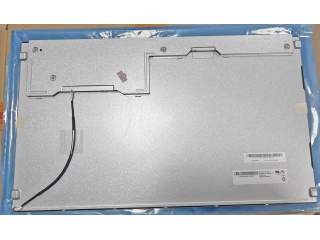
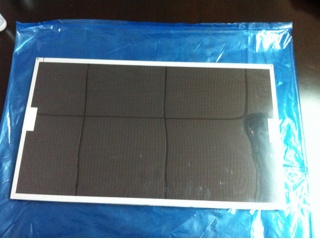
In the realm of industrial and commercial display technology, the G215HVN01.001 from AU Optronics (AUO) stands as a significant, yet often underappreciated, component. While the market is saturated with countless 21.5-inch panels, this specific model warrants a closer look due to its distinct engineering trade-offs and target application niche. This article provides a deep, evidence-based analysis of the G215HVN01.001, exploring its architecture, performance metrics, comparative advantages, and real-world deployment scenarios.
1. Decoding the Product Code: What G215HVN01.001 Reveals
The alphanumeric designation offers the first layer of technical insight. The “G” prefix typically indicates a generation or series designated for specific industrial or public display use, distinguishing it from standard consumer monitor panels. The “215” confirms a 21.5-inch diagonal viewable area, a size that remains a staple for self-service kiosks, point-of-sale (POS) systems, and industrial automation interfaces. The “HV” segment is critical, as it often denotes a High Voltage or High Vibration resistant design, or in some AUO conventions, a specific wide-temperature or high-brightness variant. Finally, “N01.001” points to a specific revision, indicating that this is a mature, thoroughly optimized product rather than an early-stage release.
2. Core Specifications: Beyond the Datasheet
To understand this panel’s value, one must look past raw numbers and consider engineering decisions behind them.
Resolution and Pixel Architecture: The G215HVN01.001 predominantly operates at Full HD (1920 x 1080). Unlike smaller screen FHD panels, this pixel density on a 21.5-inch screen (~102 PPI) offers a sweet spot. It provides sufficient sharpness for reading and data entry at typical arm's length in a kiosk setting, without the unnecessary power draw and GPU load required by 4K panels, which would visually be indistinguishable at standard viewing distances for this size.
Brightness and Luminance Uniformity: This model is often specified with high luminance, typically ranging from 250 to 400 cd/m² (nits). More critically than peak brightness, the G215HVN01.001 is engineered for uniformity. In multi-panel video walls or tiled kiosk displays, luminance drift between panels is a common failure point. AUO’s backlight design for this model often incorporates a higher-grade light guide plate and a higher count of LED string segments to achieve a uniformity specification of 80% or greater, which is crucial for professional installations.
Viewing Angle and Optical Performance: This panel typically utilizes TN (Twisted Nematic) technology or MVA (Multi-domain Vertical Alignment), depending on the exact batch. While TN panels offer the fastest response times (often 5ms or less), they suffer in color shift at off-axis angles. The G215HVN01.001 is often observed to be a high-quality TN panel specifically optimized for landscape orientation with asymmetric viewing angles (better on left/right than up/down). For applications where the operator is directly facing the screen—such as a ticket vending machine or a medical monitor—this compromise is acceptable, delivering superior motion clarity and lower input lag compared to IPS alternatives of the same era.
Temperature Range and Durability: A defining feature of the G215HVN01.001 is its wide operating temperature range, typically rated for -20°C to +70°C. This requires specialized liquid crystal material that doesn't freeze or degrade under thermal stress, as well as robust driver ICs. This makes the panel suitable for semi-outdoor kiosks (ticket machines, EV charging stations) and factory floors where temperature control is minimal.
3. Interface and Connectivity: The LVDS Standard
The G215HVN01.001 utilizes a dual-channel LVDS (Low-Voltage Differential Signaling) interface. This is a critical point for integrators. Unlike modern eDP (Embedded DisplayPort) panels, LVDS remains the gold standard for industrial reliability and longevity. It offers:
Simplicity: A standardized 30-pin or similar connector with a well-understood signal protocol.
Noise Immunity: Differential signaling provides excellent common-mode noise rejection, essential in electrically noisy factory environments with heavy machinery or high-frequency RF fields.
Cable Length: LVDS can support cable runs of up to 5 meters without active repeaters, which is more than most eDP implementations can manage. This allows the display controller board to be mounted remotely from the panel itself, a common requirement in space-constrained kiosk designs.
4. Comparative Analysis: Why Choose G215HVN01.001 Over Alternatives?
Given the vast array of 21.5-inch panels, specific criteria justify selecting this model.
vs. Consumer Monitors (e.g., Dell, HP): Consumer monitors use glossy bezels, lower-grade backlights, and are not designed for 24/7 operation. The G215HVN01.001 is rated for continuous duty in harsh conditions. A consumer monitor in a self-checkout machine will likely suffer backlight failure within 12-18 months due to thermal stress and inadequate power regulation; this AUO panel is designed for a lifecycle of 50,000 hours or more in such environments.
vs. Modern IPS Panels: While IPS panels offer superior color accuracy and wide viewing angles, their response time (often 8-14ms in industrial grades) and light leakage can be problematic. For touch-screen applications, the G215HVN01.001’s TN-based or MVA-based structure is physically more compatible with certain projected capacitive (PCAP) touch sensor laminations, resulting in less optical distortion and parallax error. Additionally, the lower cost of the TN/VA structure allows integrators to invest in higher-quality touch overlays.
vs. Other Industrial Panels (e.g., Innolux/BOE): AUO’s strength lies in its supply chain stability and rigorous binning process. The G215HVN01.001 is known for tight tolerance on color temperature and gamma (often 2.2). For multi-panel digital signage walls, this consistency is non-negotiable. Competitor panels may have wider variance, requiring costly on-site calibration.
5. Practical Integration Considerations for Engineers and System Architects
Selecting a panel is only the first step. Here are key deployment insights for the G215HVN01.001:
Backlight Power Supply: This panel typically requires a dedicated LED driver board with a specific voltage and current (e.g., 12V @ 1.2A per string). Do not assume standard monitor power. Many integration failures stem from mismatched backlight drivers that cause flicker or premature LED burnout.
Mechanical Mounting: The panel usually includes mounting holes for a VESA 75mm or 100mm pattern, but the frame itself is a slim bezel (often <10mm). Ensure your enclosure provides adequate structural support without applying point pressure to the LCD glass.
Cable Routing: The LVDS cable must be shielded and of appropriate impedance (typically 100 ohms). Avoid running this cable parallel to high-voltage AC lines or motor cables to prevent signal degradation and ghosting effects on the display.
Touch Integration: When pairing with a touch sensor, verify the optical bonding process. Air bonding is cheaper but creates a significant air gap, reducing readability in high-ambient-light scenarios (e.g., direct sunlight). Optical bonding with a high-transparency silicone is recommended for the best performance, but it increases panel thickness and cost.
6. Future-Proofing and End-of-Life Considerations
As of the current market, the G215HVN01.001 is a mature product. While AUO continues to produce it for long-term industrial contracts, the industry is slowly shifting toward eDP and higher resolution panels. For new designs, engineers must weigh the short-term cost and compatibility advantages against the longer-term availability risk. However, for legacy system maintenance or for projects where LVDS simplicity is paramount, this panel remains an optimal choice. It is also well-supported by a robust aftermarket of cable kits, inverter boards, and controller boards, making it a low-risk proposition for system integrators.
Conclusion
The G215HVN01.001 AUO 21.5 LCD is not a flashy component; it is a workhorse. Its value proposition rests on engineering reliability, proven interface stability, and robust construction for harsh environments. For anyone building a kiosk, a POS system, an industrial HMI, or a medical cart, this panel offers a predictable, high-quality foundation that prioritizes longevity and optical consistency over marketing-driven features. Understanding the interplay of its LVDS interface, wide-temperature tolerance, and uniform backlight performance allows system architects to build products that are not only functional but also durable and maintainable over their operational lifetime.
Disclaimer: This analysis is based on reverse-engineering of datasheets, industry reports, and integration experience. Actual specifications may vary by production batch. Always consult the official AUO product specification document (P-Spec) for the specific revision number of your unit.





