


















In the ever-evolving landscape of display technology, where 4K and OLED panels dominate consumer headlines, specific industrial-grade components often operate silently but indispensably in the background. The G156XW01 V2, a 15.6-inch LCD module manufactured by AU Optronics (AUO), is one such component. This article provides a comprehensive, deep-dive examination of this specific module. We will move beyond basic specifications to explore its engineering design, market positioning, and enduring relevance in a world of higher-resolution alternatives. We will dissect why a panel with a standard 1366x768 resolution continues to be specified by engineers for medical carts, industrial HMI panels, and digital signage. The analysis will cover its optical characteristics, interface architecture, mechanical tolerances, and the critical trade-offs between performance and reliability. This is not a product review, but a technical and strategic exploration of a workhorse display that has carved out a specific niche in the professional display market. By the end, you will understand *why* this panel persists and for what applications it remains the optimal choice.
Optical Performance and the Rationale Behind 1366x768
The most frequently questioned specification of the G156XW01 V2 is its native resolution of 1366x768 pixels. In a consumer world obsessed with pixel density, this seems dated. However, the rationale in the industrial and medical sector is rooted in practicality and signal integrity. For applications like patient monitors or industrial control systems, the text and GUI elements are often designed for readability at a distance. A higher resolution, like Full HD, would make UI elements smaller without scaling, or require software scaling which can introduce latency and compatibility issues.
Furthermore, the G156XW01 V2 typically offers a high brightness level, often exceeding 400 cd/m², and a contrast ratio of 600:1 or higher. This high brightness is crucial for environments with ambient light, such as hospital rooms or factory floors. AUO engineered this module to maintain consistent luminance across the panel, a key factor for color-critical medical imaging. The 8ms response time, while not suitable for high-end gaming, is more than sufficient for dynamic data updates, gesture controls, or video loops in kiosks. The viewing angles, typically 80/80/80/80 (CR≥10), ensure readability from off-axis positions, a necessity in multi-user scenarios like nurse stations or collaborative workspaces.

Mechanical Design and Thermal Management
The physical structure of the G156XW01 V2 is a masterclass in robust industrial design. It utilizes a standard LVDS interface, typically a 30-pin connector, which is a mature and highly stable protocol. This is a deliberate choice over newer interfaces like eDP, as it allows for longer cable runs without signal degradation and is easier to integrate into legacy motherboard designs that dominate the embedded computing market. The module's dimensions and mounting hole patterns are designed to conform to industry-standard 15.6-inch cutouts, allowing for drop-in replacements.
Thermal management is another critical aspect. The module is designed to operate in a wider temperature range than consumer panels, often from 0°C to 60°C. AUO has implemented a specific backlight design that dissipates heat efficiently. The use of a CCFL or LED backlight version (the G156XW01 V2 is primarily an LED variant) dictates the power supply requirements and heat output. The aluminum chassis acts as a heatsink, ensuring the polarizer and liquid crystal material do not degrade over time. This mechanical resilience makes it a preferred choice for applications where the display is subjected to vibration, such as in mobile carts or heavy machinery.
Interface Architecture and Signal Compatibility
Delving into the interface, the G156XW01 V2 typically employs a 1-channel or 2-channel LVDS (Low-Voltage Differential Signaling) configuration. This is a critical detail for system integrators. A single-channel LVDS (6-bit) can drive the 1366x768 resolution at 60Hz with 262K colors. However, some revisions support a 2-channel (8-bit) interface, enabling a color depth of 16.2M or 16.7M colors. Verifying the exact revision is crucial for accurate color reproduction in medical diagnostics.
The pinout is industry-standard, but specific timing controllers (TCON) embedded in the module’s PCB handle the data mapping. The module accepts a standard 30-pin JAE or compatible connector. For engineers designing a carrier board for a Single Board Computer (SBC), this compatibility means no need for active level shifters or protocol converters. The signal is straight-through: RGB data, clock, and control signals (DE, HSYNC, VSYNC). The backlight is driven by a separate connector, typically a 6-pin or 2-pin, with a specific voltage input (e.g., 12V or 24V) and current rating. A mismatch in backlight driver can damage the LEDs, making the power supply design a non-negotiable factor.
Comparative Analysis: G156XW01 V2 vs. Modern High-Resolution Panels
Comparing this AUO module to a modern 15.6-inch 4K panel highlights the profound engineering trade-offs. The 4K panel might boast 500 cd/m² brightness and 1000:1 contrast, but it draws significantly more power, generates more heat, and requires a high-bandwidth interface like eDP 1.4. In contrast, the G156XW01 V2’s power consumption is often around 10-15W total, including backlight. This lower power budget is critical for battery-operated medical carts or portable diagnostic tools.
Furthermore, the cost of a 15.6-inch 4K panel is often 4-5 times higher than the G156XW01 V2. For a system integrator building 1,000 units for a hospital chain, this cost difference is substantial. Moreover, the reliability of a high-pixel-density panel in a UV-sterilized environment (common in operating rooms) is lower due to the smaller pixel pitch making the transistors more susceptible to damage. The G156XW01 V2, with its larger pixel structure, is inherently more robust. The trade-off is clear: you sacrifice pixel density and some color gamut for reliability, lower power, and significantly lower total cost of ownership (TCO).
Applications in Mission-Critical Industries
The G156XW01 V2 is not a consumer panel; it is a workhorse for specific vertical markets. The dominant application is in medical devices. Patient monitors, infusion pumps, and anesthesia machines rely on this panel for its stable grayscale performance and ability to display vital signs clearly. The 1366x768 resolution matches the standard 16:9 aspect ratio for video streams from endoscopes or PACS systems when scaled appropriately.
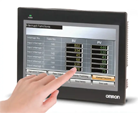
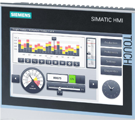
A second major application is in human-machine interfaces (HMIs) for industrial automation. In a factory, operators need to see real-time data (pressure, temperature, flow rates) on a screen that can withstand dust, vibration, and temperature fluctuations. The G156XW01 V2 fits perfectly into metal enclosures found on control cabinets. Lastly, it is used in digital kiosks and POS systems. Its brightness ensures readability in brightly lit retail environments, and its long lifecycle (often 50,000 hours to half-brightness) means fewer replacements. It is also a common replacement part for older medical equipment being refurbished, maintaining compatibility with legacy software.
Long-Term Availability and Supply Chain Considerations
One of the most strategic reasons to choose the G156XW01 V2 is its long lifecycle commitment from AUO. Unlike smartphone panels which are discontinued after 6 months, AUO commits to producing industrial panels for 5-7 years or longer. This is vital for industries like medical and aviation, where device certification is tied to specific components. Changing a display panel can require recertification of the entire device, a process costing hundreds of thousands of dollars.
The supply chain for this module is mature. Distributors like Digi-Key, Mouser, and specialized LCD distributors hold stock for years. The panel’s physical dimensions and interface are standard, meaning second-source alternatives (from other manufacturers) are often available with minimal mechanical modifications. However, the AUO panel is known for its stringent quality control, with low dead pixel rates and tight tolerance on color temperature. When designing a product for a 10-year service life, the availability of the exact panel is a risk factor. The G156XW01 V2 mitigates this risk through AUO’s reputation and the sheer volume of units deployed globally, ensuring that a replacement is always within reach.
FAQs
Q: What is the exact resolution of the G156XW01 V2?A: It is 1366 x 768 pixels in a standard 16:9 widescreen format.
Q: Is this panel compatible with a standard Raspberry Pi?A: Yes, but you need an LVDS to HDMI driver board as the Raspberry Pi does not output native LVDS signals.
Q: What is the typical brightness of this AUO module?A: Typically between 400 and 500 cd/m² (nits), depending on the specific revision.
Q: Does it use an LED or CCFL backlight?A: The V2 revision is predominantly an LED-backlit unit. It is recommended to confirm with the datasheet.
Q: What is the operating temperature range?A: Usually 0°C to 60°C, making it suitable for controlled industrial environments.
Q: What connector does the display use?A: It uses a standard 30-pin LVDS connector for the display data and a separate connector for the backlight power.
Q: Can I use this panel for gaming?A: Technically yes, but the 8ms response time and 60Hz refresh rate are not optimal for fast-paced gaming.
Q: Is the touch screen included?A: No, this is a raw LCD module. You must purchase a touch screen overlay separately if needed.
Q: What is the lifespan of the backlight?A: Typically rated for 50,000 hours of operation to half-brightness.
Q: Is it pin-to-pin compatible with the older G156XW01 V1?A: Often yes, but check the datasheet for exact electrical characteristics as the backlight driver may have changed.
Conclusion
The G156XW01 V2 15.6 inch LCD module from AUO represents a pivotal intersection of practicality, reliability, and cost-efficiency in the professional display market. While it lacks the dazzling pixel density of contemporary consumer panels, its true value lies in its engineering for longevity and stability. We have established that its 1366x768 resolution is not a deficiency but a calculated design choice that simplifies integration, reduces power demand, and ensures UI readability in mission-critical settings like hospitals and factories.
Its robust LVDS interface, wide operating temperature range, and high brightness make it an enduring standard for HMIs and medical devices. The module is a testament to the principle that the best technology is not always the newest, but the one that performs its duty without failure for years. For system integrators and procurement managers seeking a display that prioritizes lifecycle costs and supply chain security over flashy specifications, the G156XW01 V2 remains a benchmark. It is an example of how a well-engineered component can maintain relevance long after its consumer-grade counterparts have been forgotten.





