

















- Industrie-LCD-Display
-
Industrial Products
- DC Servo Drive
- AC Servo Drive
- PCB
- Siemens
- Switch Sensor
- Näherungsschalter
- Temperaturregler
- Schutzrelais
- Fiber Optic Sensor
- Encoder
- Fan
- other
- Heidelberg
- MITSUBISHI
- FANUC
- Siemens adapter
- Fujitsu connector
- Der Aufsichtsrat
- Board
- Contactor
- Circuit
- Omron
- Relais.
- Motortreiber
- power supply
- Cable
- Transformator
- HMI Touch-Glas
-
HMI-Vollautomat Ganze Einheit
- OMRON HMI Touch Panel
- Siemens HMI Touch Panel
- Mitsubishi HMI Touch Panel
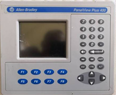
- Allen-Bradley Automatisierung HMI Touch
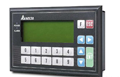
- DELTA HMI Touch Panel
- EVIEW DELTA HMI Touch Panel
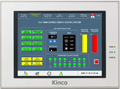
- KINCO DELTA HMI Touch Panel
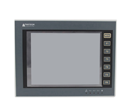
- HITECH HMI Touch Panel
- WEINTECK HMI Touch Panel
- TECVIEW HMI Touch Panel
- WEINVIEW HMI Touch Panel
- PANASONIC HMI Touch Panel
- KYOCERA HMI Touch Panel
- SCHNEIDER HMI Touch Panel
- Module
- LCD Wechselrichter
- Membran Tastenfeld Schalter
- Winni Touch Screens
- Frequenzumrichter
- Servo Motor
- PLC
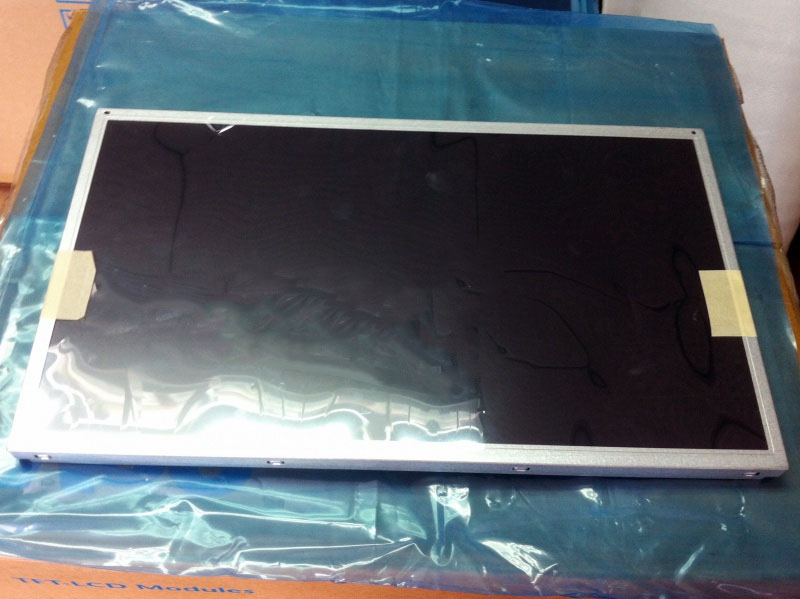
The landscape of industrial displays demands robustness, clarity, and longevity—qualities that separate commodity consumer screens from mission-critical hardware. At the heart of this specialized domain sits the AUO G156XW01 V0, a 15.6-inch LCD display module engineered for environments where reliability is non-negotiable. This article serves as a deep technical and practical examination of this particular panel, moving beyond basic specifications to explore its architectural design, optical performance, interface protocols, and application suitability. While 15.6-inch panels are ubiquitous in the consumer laptop market, the G156XW01 V0 belongs to a different lineage: the industrial and embedded display ecosystem. We will dissect why this module is frequently selected for medical carts, human-machine interfaces (HMIs), and digital signage in challenging lighting conditions. We will investigate its limitations, its comparative advantages over newer technologies like OLED, and the critical role of its timing controller. By the end of this analysis, you will possess a granular understanding of whether this AUO module is the correct engineering choice for your next project, moving past marketing hype to focus on data-sheet realities and real-world behavior.
Optical Architecture and Visual Performance Metrics
The G156XW01 V0 is built on a Twisted Nematic (TN) liquid crystal mode, a deliberate choice for industrial applications over In-Plane Switching (IPS) or Vertical Alignment (VA) technologies. TN panels offer faster response times, typically in the range of 5 to 8 milliseconds, which is critical for reducing motion artifacts in dynamic content. However, the trade-off is narrower viewing angles—typically 80 degrees horizontal and 60 degrees vertical at a contrast ratio of 10:1. This is acceptable in single-user operator panels but becomes problematic in public-facing kiosks.
The module delivers a standard luminance of 400 cd/m² (nits), placing it in the "high-brightness" category suitable for well-lit indoor environments. For outdoor or direct sunlight applications (requiring 1000+ nits), this panel is insufficient without an external backlight upgrade. The contrast ratio is specified at 1000:1, which is excellent for a TN panel, ensuring deep blacks in dimly lit control rooms. Color gamut is limited to 65% NTSC (CIE1931), which is adequate for icons, text, and basic industrial graphics but deficient for color-critical medical imaging (like radiology). The surface treatment is anti-glare (AG) with a haze value of approximately 25%, effectively diffusing ambient light sources to reduce reflections on the operator's screen.
Interface Architecture and LVDS Signal Integrity
The G156XW01 V0 utilizes a Single-Channel LVDS (Low-Voltage Differential Signaling) interface, operating at a standard 6-bit depth (262K colors). This is a defining characteristic of the panel's vintage and target market. Single-channel LVDS transmits pixel data over four differential pairs, supporting resolutions up to 1366 x 768 (WXGA). This interface is chosen for its simplicity and noise immunity over long cables, which is common in embedded systems where the display controller is physically distant from the panel.
Engineers must pay close attention to the timing requirements. The panel requires a pixel clock of approximately 70 MHz, with specific horizontal and vertical blanking periods. A common field failure occurs when a custom carrier board provides an incompatible DE (Data Enable) signal timing, resulting in a "shifted" or "rolling" image. The LVDS connector is a standard 30-pin JAE FI-XB30S-HF10 or compatible, with a defined pinout that must be strictly followed. We highly recommend using twisted-pair cabling with proper impedance matching (100 Ohms differential) to maintain signal integrity over distances exceeding 30 centimeters. The module also integrates a spread-spectrum clocking option to reduce EMI emissions in sensitive medical or industrial environments.
Power Management and Backlight Design Considerations
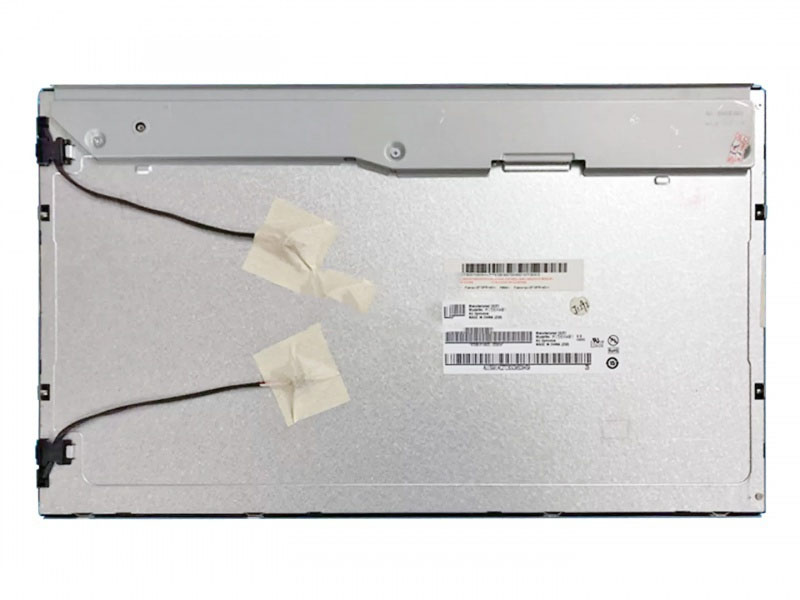
Power delivery is a critical factor in system reliability. The G156XW01 V0 separates logic power from backlight power. The logic section requires a stable 3.3V DC input at approximately 0.9 Amperes (typical). The backlight system is a CCFL (Cold Cathode Fluorescent Lamp) assembly, requiring a much higher and non-steady voltage—typically 600V to 800V AC at high frequency for ignition, then stabilizing around 300V to 400V AC for continuous operation. This is a significant distinction from modern LED-backlit panels.
The CCFL backlight necessitates an external inverter board, which adds cost, space, and a potential failure point. Inverters generate high-voltage AC and substantial heat (~3.5W). A failing CCFL will exhibit flickering or a pinkish hue before extinguishing completely. While CCFL life is rated at 50,000 hours to half-brightness, real-world performance degrades faster than white LED equivalents. For new designs, it is often recommended to replace this module with an LED-backlit variant (e.g., G156XW01 V1 or similar) to avoid CCFL inverter obsolescence. However, for legacy system maintenance, keeping a stock of compatible inverters (e.g., AMBIT T875 or similar) is mandatory.
Mechanical Integration and Thermal Management
With an active area of 344.23 mm x 193.54 mm and an overall module thickness of approximately 12.5 mm, the G156XW01 V0 fits into standard 15.6-inch industrial mounting bezels. The module uses a metal frame with four M3 threaded mounting holes on the sides, requiring careful torque control (3-4 kgf·cm) to avoid twisting the LC cell and causing permanent mura (uneven brightness). The panel is designed for landscape orientation only; portrait mounting requires special consideration for gravity-driven liquid crystal sagging.
Thermal performance is a critical, often overlooked aspect. The CCFL backlight generates significant heat in the bottom area. The storage temperature range is -20°C to +60°C, but the operating temperature is narrower: 0°C to +50°C. Operating below 0°C will cause severe response time slowdown and potential LC fluid crystallization. Above 50°C, accelerated aging of the polarizer films and CCFL cathodes occurs. We recommend active cooling via a small fan or conductive heat sinking to the chassis if the ambient temperature frequently exceeds 40°C. The panel is also sensitive to altitude; CCFL ignition becomes unreliable above 3000 meters due to lower air pressure.
Comparative Positioning: Industrial Reliability vs. Modern Consumer Panels
Why choose a decade-old CCFL TN panel over a modern IPS LED panel? The answer lies in supply chain stability and certification. The G156XW01 V0 carries a full industrial temperature rating and is manufactured by AUO against strict IPC-6012 standards for high-reliability electronics. Consumer panels are often discontinued after 12-18 months; AUO maintains production and long-term availability (LTA) for this module for 3-5 years, sometimes longer. This is invaluable for medical device companies that require FDA approval on a fixed BOM (Bill of Materials).
Additionally, the TN technology offers a deterministic latency profile. For real-time control systems (e.g., CNC machine controllers), the predictable pixel response prevents visual lag. Furthermore, the 6-bit color depth simplifies the color calibration process in monochrome or pseudo-color imaging applications. While an IPS panel offers better aesthetics, the G156XW01 V0 offers better stability, longer product life, and lower unit cost in volume. The cost of switching an approved medical device to a different display panel can exceed $100,000 in re-certification fees, making this module a practical, if not technically superior, choice.
Failure Analysis and Troubleshooting Common Field Issues
Engineers often encounter specific failure modes with the G156XW01 V0. The most common complaint is a "dim" or "no backlight" scenario with logic power present. This almost always points to a failed CCFL inverter or a broken CCFL tube. The CCFL tube is extremely fragile; mechanical shock during shipping or installation can cause internal fractures detectable only by the lack of illumination. Testing with a known-good inverter is the first step. If the inverter is functional but the lamp does not ignite, the tube is likely broken, requiring panel replacement (as panel disassembly to replace the tube is not practical in the field).
A second common issue is "ghost images" or "shadowing"—thin vertical lines that persist on the screen. This is often caused by a defective gate driver IC bonded to the LCD glass tape (TAB). This is an irreversible defect, usually caused by ESD (Electrostatic Discharge) or physical pressure. Prevention requires proper ESD protection on the LVDS cable and a clean, flat mounting surface. A third issue is "flickering at low brightness". Since CCFL brightness is controlled by pulse width modulation (PWM) on the inverter, very low duty cycles can cause visible flicker to sensitive users. Using a minimum brightness setting of 20% often resolves this.
Frequently Asked Questions (FAQs)
Q: Can I replace a G156XW01 V0 with a standard laptop 15.6-inch panel? No. Laptop panels use different electrical interfaces (eDP) and different mechanical mounting. The G156XW01 V0 uses LVDS and requires a separate inverter.
Q: What is the maximum cable length between the mainboard and this panel? With standard LVDS cabling, you should keep the length under 50cm to maintain signal integrity. For longer runs, use a repeater board.
Q: Does this panel support touch screen functionality? No, the base model is non-touch. You can add an external touch overlay (resistive, capacitive, or IR) on top of the module, which is common in industrial HMIs.
Q: What is the difference between G156XW01 V0 and G156XW01 V1? The V1 is the LED-backlit successor to the V0's CCFL. The V1 is brighter (450 nits vs 400 nits), uses less power, and has a thinner profile, but requires a different power supply (12V vs 3.3V for logic).
Q: How do I calculate the required inverter wattage? A standard 15.6-inch CCFL requires an inverter output of approximately 6-8W at 6-8mA. Using a higher-wattage inverter can damage the CCFL.
Q: Can I run this panel at 0°C without a heater? The panel is specified to start at 0°C, but performance will be sluggish. For reliable startup below 5°C, an external heater or pre-warming cycle is strongly recommended.
Q: Is the G156XW01 V0 RoHS compliant? Yes, AUO manufactured this module as RoHS compliant, meaning it is free of lead, mercury, and other restricted substances, except the CCFL which contains a small amount of mercury.
Q: What resolution is native for this panel? The true native resolution is 1366 x 768 (WXGA). Running it at 1920x1080 will result in blurred interpolation. It supports only 6-bit color depth (262,144 colors).
Q: Why is my image shifted to one side? This is usually a timing parameter issue. Check your VESA timing settings. The front porch, back porch, and sync width must match the AUO data sheet exactly.
Q: Can I use this panel in a portable battery-powered device? Not efficiently. The CCFL inverter is power-hungry and requires a heavy 12V step-up converter. A modern LED-backlit panel is far superior for portable applications.
Conclusion: A Niche Contender in a Commoditized Market
The AUO G156XW01 V0 is not a revolutionary product; it is a mature, reliable workhorse tailored for a specific subset of the industrial display market. Its strength lies not in cutting-edge optical performance—where it is clearly outclassed by modern IPS LED panels—but in its industrial-grade reliability, long product lifecycle, and predictable behavior. For engineers maintaining legacy medical carts, factory floor HMIs, or military communication terminals, this panel offers a known quantity that minimizes re-engineering risk. The CCFL backlight is its primary liability, presenting challenges in power supply design, thermal management, and long-term replacement sourcing. However, for applications where a stable, single-channel LVDS interface and a 1366x768 resolution are sufficient, the G156XW01 V0 remains a viable and cost-effective choice. Our final recommendation is to evaluate your project's longevity requirements: if you need a panel that will remain orderable and repairable for another five years, this AUO module fits the bill. If you can afford a BOM change, migrate to the V1 or a modern IPS-LED equivalent for better efficiency and aesthetics.





