













































- Industrie-LCD-Display
-
Industrial Products
- DC Servo Drive
- AC Servo Drive
- PCB
- Siemens
- Switch Sensor
- Näherungsschalter
- Temperaturregler
- Schutzrelais
- Fiber Optic Sensor
- Encoder
- Fan
- other
- Heidelberg
- MITSUBISHI
- FANUC
- Siemens adapter
- Fujitsu connector
- Der Aufsichtsrat
- Board
- Contactor
- Circuit
- Omron
- Relais.
- Motortreiber
- power supply
- Cable
- Transformator
- HMI Touch-Glas
-
HMI-Vollautomat Ganze Einheit
- OMRON HMI Touch Panel
- Siemens HMI Touch Panel
- Mitsubishi HMI Touch Panel
- Allen-Bradley Automatisierung HMI Touch
- DELTA HMI Touch Panel
- EVIEW DELTA HMI Touch Panel
- KINCO DELTA HMI Touch Panel
- HITECH HMI Touch Panel
- WEINTECK HMI Touch Panel
- TECVIEW HMI Touch Panel
- WEINVIEW HMI Touch Panel
- PANASONIC HMI Touch Panel
- KYOCERA HMI Touch Panel
- SCHNEIDER HMI Touch Panel
- Module
- LCD Wechselrichter
- Membran Tastenfeld Schalter
- Winni Touch Screens
- Frequenzumrichter
- Servo Motor
- PLC
The modern gaming landscape is no longer confined to a stationary desktop setup. Gamers, content creators, and IT professionals increasingly demand high-refresh-rate, low-latency solutions that extend their digital workspace or battlefield into portable form factors. At the heart of this revolution lies the display panel itself—a component often overlooked but critical to the user experience. The INNOLUX G156HCE-LN1 is a 15.6-inch LCD panel that has emerged as a prime candidate for gaming monitors, portable secondary screens, and embedded gaming systems. This article provides a deep technical and practical analysis of the G156HCE-LN1, exploring its architecture, performance characteristics, ideal use cases, and competitive positioning. We will move beyond surface-level specifications to examine how this panel translates raw data into tangible visual experiences, addressing the needs of both hardware integrators and discerning end-users seeking high-speed, color-accurate displays in a compact 15.6-inch form factor.
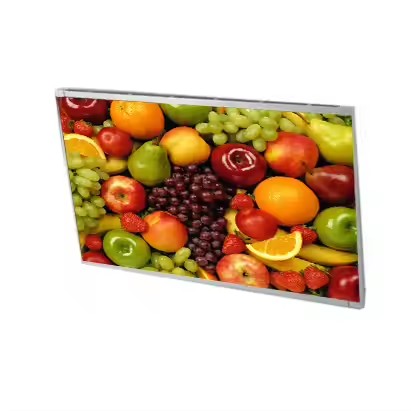
Understanding the Architecture: A TN Panel Built for Speed
To appreciate the G156HCE-LN1, one must first understand its foundational technology—Twisted Nematic (TN). While In-Plane Switching (IPS) panels dominate the desktop market for their superior color accuracy and viewing angles, TN technology remains the champion of raw speed. The G156HCE-LN1 leverages a specially optimized TN+Film architecture to achieve a native 144Hz refresh rate with a reported 3ms (G to G) response time. This is not merely a marketing number; the liquid crystal alignment in a TN panel requires less physical twisting to change states, allowing for faster voltage discharge and pixel transition. For dynamic gaming scenarios—first-person shooters, racing simulators, or fast-paced MOBAs—this translates to drastically reduced motion blur and ghosting artifacts. The architecture also supports a 1920 x 1080 (Full HD) resolution, which is a deliberate choice. At 15.6 inches, this pixel density (roughly 141 PPI) strikes a balance between sharpness and performance, allowing the GPU to push higher frame rates without the substantial bandwidth overhead of 4K, ensuring the 144Hz capabilities are fully utilized.

Evaluating Performance Metrics: Response Time, Refresh Rate, and Input Lag
Performance in a gaming display is a trifecta of refresh rate, response time, and input lag. The G156HCE-LN1 excels in the first two metrics. Its 144Hz refresh rate means the panel redraws the image every 6.94 milliseconds, a significant improvement over standard 60Hz (16.67ms). However, the refresh rate is only as good as the pixel response. The panel’s 3ms response time ensures that pixels transition from one color state to another within that critical window, preventing “smearing” on fast-moving objects. Critically, the panel appears to use a technology closely related to Overdrive (OD), which applies a higher voltage momentarily to push crystals faster. Accurate OD tuning is crucial; too little leads to motion blur, too much creates “inverse ghosting” (bright trails). The G156HCE-LN1 is known for a well-timed overdrive implementation. Regarding input lag, we are dealing with panel latency, not total system lag. The G156HCE-LN1 typically adds less than 1ms of processing lag on the display level, making it a superb choice for competitive play where every millisecond can be the difference between a kill and a death.
Color Accuracy and Viewing Angles: The TN Compromise
This is the most critical trade-off of the G156HCE-LN1. TN panels historically suffer from narrow viewing angles and less vibrant color reproduction compared to IPS or VA technology. The G156HCE-LN1, however, is a high-grade TN panel that offers competitive specifications. It typically covers approximately 72% NTSC (CIE 1931) color gamut, which is roughly equivalent to sRGB. This is sufficient for modern games and general multimedia consumption, but it is not suitable for professional color grading or HDR content creation (which requires DCI-P3 coverage of 90% or more). The brightness is rated at 300 cd/m² (typical), which is adequate for indoor use and competitive in the portable gaming monitor segment. The viewing angles remain the weakest link. While the panel holds up reasonably well for a single user directly in front of the screen, color shifting (loss of contrast and accuracy) becomes noticeable at angles beyond 30-40 degrees horizontally and significantly more so vertically. For a personal gaming laptop or a portable monitor used within a 1-meter distance, this is rarely a problem. However, it makes the panel unsuitable for applications requiring multiple viewers or where the device is mounted in a variable position.
Key Connectivity and Technical Compatibility
Understanding the electrical interface is vital for integrators and DIY enthusiasts. The G156HCE-LN1 utilizes a standard LVDS (Low-Voltage Differential Signaling) interface, specifically 30-pin, 2-channel configuration. This is a mature, widely supported standard found in many gaming laptops and portable monitors. However, there are critical nuances. First, the panel requires a specific voltage supply—typically 3.3V for logic and a separate voltage (often 9V-12V) for the backlight, which is LED based. It is not an eDP (Embedded DisplayPort) panel; therefore, it requires a compatible LVDS controller board to convert HDMI or DisplayPort signals. Second, the panel’s backlight driver is integrated into the panel itself, but the control input is via LVDS. Integrators must ensure their driver board supports the correct resolution (1920x1080) and refresh rate (144Hz) over the LVDS bus. Many generic driver boards are limited to 60Hz. A high-bandwidth LVDS controller is mandatory to achieve the full 144Hz refresh rate. Furthermore, the physical connector is a standard 30-pin JAE FI-SE30P or compatible, making cable selection straightforward yet requiring attention to pin mapping.
Ideal Use Cases and Competitive Positioning
The G156HCE-LN1 occupies a specific and highly valuable niche: the high-refresh-rate portable gaming monitor. It is not the best panel for color-critical work, nor is it the cheapest 15.6-inch display. Its optimal use scenarios include:
Competitive eSports Laptops: Replacing a slower 60Hz panel in a laptop for a 144Hz upgrade is a primary application.
Handheld Console Docks: Paired with a driver board, it creates an excellent external display for the Steam Deck, ROG Ally, or Nintendo Switch (via HDMI adapter) for docked 1080p120/144 mode.
Portable Monitors for LAN Parties: Its slim bezel and low power consumption (typically <8W at 300 nits) make it ideal for a lightweight secondary screen.
Industrial Gaming Kiosks: Where touch response (if used with a touch overlay) and high frame rates are required without premium cost.
Competitively, it sits below premium IPS 144Hz panels (which cost more but offer better color) and above cheap 60Hz panels. It competes with other high-speed TN panels from brands like AU Optronics and BOE. Its advantage is INNOLUX’s established reputation for reliability and consistent quality control, making it a safe choice for integrators.
FAQs: 10 Common Questions About the G156HCE-LN1
Is the INNOLUX G156HCE-LN1 compatible with any laptop?No. It requires a 30-pin LVDS connector and a compatible motherboard/display cable. Most gaming laptops have LVDS, but exact pin mapping and voltage must match.
What is the exact color gamut coverage?It typically covers 72% NTSC (equivalent to ~100% sRGB). It is not a wide-gamut panel for Adobe RGB or DCI-P3.
Can I use this panel with a Raspberry Pi?Yes, but only through a compatible LVDS-to-HDMI driver board. The Pi’s native HDMI output must be configured for 1080p at 60Hz.
Does this panel support G-Sync or FreeSync?It is a passive panel. It does not have a built-in FPGA for variable refresh rate. However, if used with a controller board that supports FreeSync, it can work if the panel’s scan rate is flexible.
What is the actual response time (GTG) at different refresh rates?At 144Hz, it is <3ms GTG. At 60Hz, response time is often slower (approx. 5-8ms) due to longer charging times per frame.
Is the backlight replaceable?The LEDs are embedded in the panel. Replacing them is not practical for end-users; it is a full-panel replacement.
Can I use this panel in a portrait orientation?Yes, but viewing angles on TN will be poor. Colors will shift significantly in portrait mode.
What is the typical backlight lifespan (MTBF)?LED backlights typically last 30,000 to 50,000 hours of continuous use.
Does the panel have any built-in anti-glare coating?Yes, it typically has a matte anti-glare surface, which helps reduce reflections in bright environments.
Where can I find the specific data sheet for the G156HCE-LN1?Official datasheets are available from INNOLUX distribution partners like Panelook or Displazone. Always verify revision number (e.g., Rev. C1).
Conclusion: A Specialized Tool for the Fastest Gamers
The INNOLUX G156HCE-LN1 is a testament to the philosophy that one panel cannot do everything perfectly, but it can do one thing exceptionally well. It is engineered for speed—pure, uncompromised pixel response and frame rate delivery. For the competitive gamer, the mobile eSports enthusiast, or the hardware integrator building a high-refresh-rate portable solution, this panel offers an outstanding cost-to-performance ratio. It acknowledges the TN limitations (color and viewing angles) but turns them into a strength by focusing on what matters most in fast-paced gaming: eliminating motion blur and minimizing input delay. If your priority is achieving the highest possible frame rate with the least ghosting in a 15.6-inch form factor, the G156HCE-LN1 remains a reliable, well-engineered, and benchmark choice. It is not a general-purpose display, but for its specific mission, it delivers precisely what is required.





