























In the intricate ecosystem of modern display technology, the seamless visual experience we often take for granted hinges on a critical, yet frequently overlooked, component: the controller board. At the heart of many industrial, commercial, and specialized display solutions lies a specific model that serves as a vital interface and brain—the G101EVN01.0 display LCD module controller board. This specialized piece of hardware is far more than a simple connector; it is the essential translator and commander, orchestrating the complex dialogue between a video source and the liquid crystal display panel itself.

Understanding the G101EVN01.0 is crucial for engineers, product designers, procurement specialists, and technical enthusiasts involved in integrating displays into larger systems. This article delves deep into this specific controller board, moving beyond basic specifications to explore its architecture, core functionalities, and the pivotal role it plays within a display module. We will unpack its technical capabilities, examine its typical applications, and provide practical insights for selection, integration, and troubleshooting, offering a comprehensive resource for anyone working with this key display component.

Decoding the G101EVN01.0: Architecture and Core Function
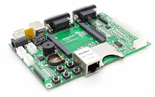
The G101EVN01.0 is a dedicated controller board designed to drive TFT-LCD panels with a resolution of 1024x600 (WSVGA), commonly paired with a 10.1-inch diagonal screen. Its primary function is to bridge the gap between a host system's video output (typically via LVDS or other interfaces) and the native timing and signaling requirements of the LCD panel. At its architectural core, the board features a main controller IC, which acts as the central processor for display data.
This IC receives low-voltage differential signaling (LVDS) data from a source, such as a single-board computer or an embedded system. It then processes this signal, converting it into the precise timing controls (pixel clock, horizontal/vertical sync) and voltage levels needed to activate each individual sub-pixel on the LCD matrix. The board also integrates power regulation circuits to generate the various voltages required by the panel, including logic voltage, gate driver voltage (VGH), and common electrode voltage (VCOM). Essentially, it transforms a standard video signal into a language the specific LCD panel can understand and display accurately.
Technical Specifications and Signal Interface Breakdown
A practical understanding of the G101EVN01.0 begins with its key technical parameters. The board is engineered for a 10.1-inch LCD module with an aspect ratio of 16:9 and a resolution of 1024 x 600 pixels. Its most common input interface is a single-channel 18-bit or 24-bit LVDS, accepting a standard signal format compatible with many graphics controllers. The typical input voltage for the board is 3.3V or 5V DC, which it then regulates internally.
The output connection is a direct, proprietary ribbon cable interface that mates precisely with the specific LCD panel it is designed for, ensuring correct pin-to-pin mapping. Critical specifications include the supported color depth (often 262K or 16.7M colors), the pixel clock frequency (around 45MHz for this resolution), and the precise timing values for horizontal and vertical blanking. These specs must match between the video source's output and the controller's input for a stable image. The board may also feature simple on-board controls for adjustments like brightness via PWM dimming.
Typical Applications and Integration Scenarios
The G101EVN01.0 controller board finds its niche in applications where reliability and specific form-factor integration are paramount. It is seldom a consumer-facing product but is instead embedded within larger systems. A primary application is in industrial human-machine interfaces (HMIs) for factory automation, machine control, and test equipment, where the 10.1-inch size offers a good balance between information density and panel footprint.
Other common integration scenarios include point-of-sale (POS) systems, kiosks and digital signage, in-vehicle infotainment or monitoring displays, and portable medical devices. In these environments, the display module, complete with its bonded controller board, is treated as a single component. Engineers select it to guarantee compatibility and reduce development time, as the complex signaling and power design is already resolved. The board's role is to enable a "plug-and-play" display solution for embedded developers, provided the host system's output aligns with the LVDS input standard.
Critical Considerations for Selection and Sourcing
Selecting a compatible and reliable G101EVN01.0 board requires attention beyond the basic screen size. First and foremost is interface compatibility. The host device must output an LVDS signal that matches the board's bit lane (18/24), voltage swing, and timing requirements. Secondly, mechanical compatibility is essential—the board's dimensions, mounting hole positions, and the physical connector to the LCD panel must fit within the product's enclosure and align with the panel.
Sourcing presents its own challenges. This board is often part of a specific LCD module (e.g., a branded module like Innolux N101I6-L01) and may not be widely sold as a standalone item by original manufacturers. Procurement typically occurs through specialized display module distributors or on B2B electronic component platforms. Key considerations include verifying the supplier's authenticity to avoid counterfeit parts, ensuring stable long-term availability for product lifecycle planning, and understanding the support (like datasheets and reference designs) offered.
Common Integration Challenges and Troubleshooting
Even with careful selection, integrating the G101EVN01.0 can present hurdles. A frequent issue is no display or a blank screen. This often traces back to power (incorrect input voltage or poor connections), mismatched LVDS settings (bit mode, clock polarity), or incorrect backlight power. Another common problem is display artifacts such as flickering, ghosting, or color distortion. These usually point to signal integrity issues—poor cable shielding, excessive cable length, or incorrect timing parameters in the host's display configuration.
A systematic troubleshooting approach is vital. Start by verifying all power rails with a multimeter. Confirm the host's LVDS output configuration against the board's datasheet requirements. Inspect the LVDS cable for secure seating and integrity. For backlight issues (too dim or not turning on), check the inverter or LED driver circuit and the PWM dimming signal. Using an LVDS pattern generator can help isolate whether the fault lies with the source or the controller/panel assembly.
The Role in Display Technology and Ecosystem
The G101EVN01.0 represents a specific node in the broader display technology ecosystem. It exemplifies the standardized interface model that allows panel manufacturers to produce screens en masse, while system integrators can source compatible controllers to create functional modules. This decoupling accelerates innovation and manufacturing efficiency.
However, this model also highlights an industry trend: the gradual move towards more integrated solutions. Newer systems-on-a-chip (SoCs) often drive displays directly via MIPI-DSI or embedded DisplayPort, bypassing the need for a separate LVDS controller board. Yet, for legacy systems, industrial upgrades, and applications where display choice is highly specific, dedicated controller boards like the G101EVN01.0 remain indispensable. They extend the life and utility of existing panels and provide a critical adaptation layer in a world of evolving video standards.
FAQs: G101EVN01.0 Display Controller Board
1. What LCD panel is the G101EVN01.0 controller board designed for?It is typically designed for 10.1-inch TFT-LCD panels with a resolution of 1024x600 (WSVGA) and a specific LVDS panel interface.
2. What is the main input signal for this board?The primary input is a single-channel 18-bit or 24-bit LVDS (Low-Voltage Differential Signaling) video signal.
3. Can I use this board with any 10.1-inch LCD?No, it is specifically designed for panels with a matching pinout, voltage requirements, and timing profile. It is not universally compatible.
4. What are the common applications?Industrial HMIs, POS systems, kiosks, digital signage, in-vehicle displays, and portable medical or test equipment.
5. My screen is blank. What should I check first?Verify the input power (3.3V/5V), ensure the LVDS cable is securely connected, and confirm your video source's output settings match the board's required LVDS format.
6. How do I control the display brightness?Brightness is usually controlled via a PWM (Pulse Width Modulation) dimming signal provided to the board's backlight circuit.
7. Where can I source this controller board?Through specialized display module distributors, electronic component B2B platforms, or as part of a complete LCD module from manufacturers.
8. Is a datasheet available for the G101EVN01.0?Yes, but it may be labeled under the complete LCD module's model number (e.g., from Innolux, AUO). Distributors or the module manufacturer are the best sources.
9. Can it support touchscreen functionality?The G101EVN01.0 itself handles video control only. Touch functionality requires a separate touch controller (e.g., for resistive or capacitive touch) that integrates with the host system.
10. Is this technology becoming obsolete?While newer interfaces like MIPI-DSI are rising, LVDS and boards like the G101EVN01.0 remain critical for industrial, legacy, and specific integration scenarios, ensuring long-term relevance.
Conclusion
The G101EVN01.0 display LCD modules controller board is a quintessential example of the specialized engineering that powers our visual interfaces. Far from being a mere accessory, it serves as the critical interpreter and power manager, enabling a standardized video signal to bring a specific LCD panel to life. Its value lies in providing a reliable, pre-engineered solution that significantly reduces development complexity for system integrators across industrial, commercial, and embedded fields.
Understanding its architecture, compatibility requirements, and integration nuances is key to successfully deploying display solutions. As display technology continues to evolve towards higher integration, components like the G101EVN01.0 underscore the enduring importance of robust interface standards and adaptable hardware in bridging the gap between innovation and practical implementation. For anyone involved in embedded display design, a deep knowledge of such controller boards remains an invaluable asset.





