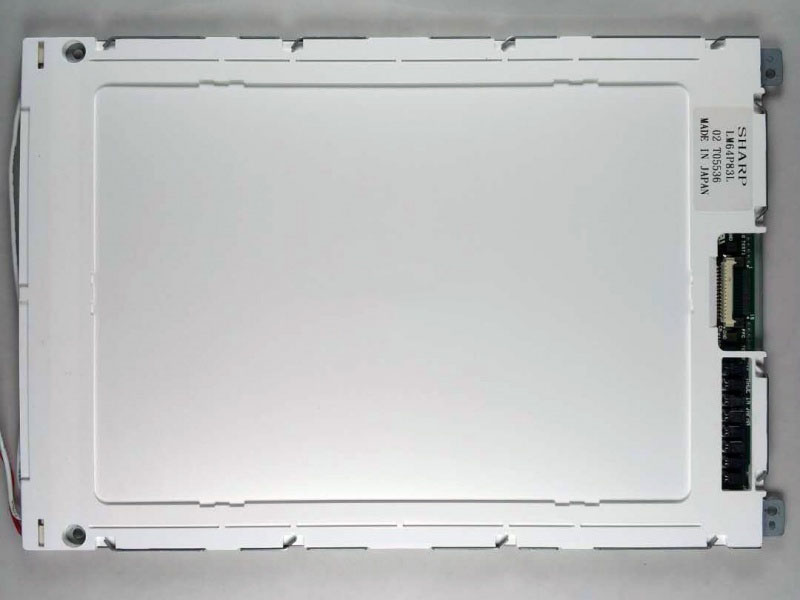
In the intricate world of electronic components, the display panel often serves as the critical interface between machine and user. Among the myriad of options available to engineers and product designers, the 9.4-inch screen LM64P83L LCD module stands out as a specialized solution for applications demanding a specific balance of size, resolution, and reliability. Characterized by its 640 x 480 pixel (VGA) resolution on a 9.4-inch diagonal, this TFT LCD module represents a mature yet persistently relevant technology in industrial, medical, and embedded systems.
This article delves into a comprehensive technical and application-focused analysis of the LM64P83L display module. We will move beyond basic specifications to explore its underlying architecture, key performance parameters, and the unique advantages it offers in a landscape increasingly dominated by higher-resolution screens. By understanding its core competencies and ideal use cases, design engineers and procurement specialists can make informed decisions on whether this robust display module is the optimal component for their next project, ensuring both performance and cost-effectiveness.

Technical Architecture and Core Specifications
At its heart, the LM64P83L is an active-matrix TFT (Thin-Film Transistor) LCD module. The 640 x 480 VGA resolution translates to a pixel density suitable for a 9.4-inch screen, ensuring clear and legible character and graphic display without the excessive power draw or processing overhead of higher-resolution panels. The module typically incorporates a built-in controller, often supporting standard interfaces like RGB or LVDS, which simplifies integration with a host of microprocessors and FPGAs.
Key specifications defining its performance include its brightness (often in the range of 300-500 nits for indoor use), contrast ratio, viewing angles (commonly 70/70/50/70 degrees in all directions), and operating temperature range. The physical construction is designed for durability, frequently featuring a robust metal frame and surface treatments to resist dust and mild moisture. Understanding this architecture is the first step in appreciating its suitability for environments where consistent performance trumps cutting-edge pixel count.
Advantages in Modern Embedded Applications
While consumer electronics chase ever-increasing resolutions, the LM64P83L finds its strength in reliability, stability, and lower total system cost. Its VGA resolution is more than sufficient for displaying sensor data, machine control interfaces, diagnostic information, and basic graphical user interfaces (GUIs). This lower resolution demands less from the system's graphical processing unit, allowing for the use of more economical main controllers and reducing overall power consumption—a critical factor in battery-operated or energy-sensitive devices.
Furthermore, the technology behind this resolution and size is mature and well-understood, leading to high manufacturing yield, consistent supply chains, and extensive documentation. For long-lifecycle products common in industrial and medical fields, this stability is invaluable, mitigating the risk associated with rapidly evolving consumer display technologies that may become obsolete quickly.
Critical Performance Parameters and Evaluation
Selecting a display module requires careful evaluation of parameters beyond size and resolution. For the LM64P83L, optical performance is paramount. Engineers must assess the uniformity of backlighting across the entire screen, the consistency of color temperature, and the absence of dead pixels. The response time is another crucial factor, especially for applications involving dynamic data or basic animation; a slower response time can lead to visible smearing.
Electrical compatibility and interface selection are equally critical. The chosen interface (e.g., parallel RGB vs. LVDS) must seamlessly match the host controller's capabilities. Additionally, the module's power sequence requirements must be meticulously followed to prevent permanent damage. Thorough testing under the product's intended environmental conditions—including temperature extremes and voltage fluctuations—is essential to validate its performance claims.
Integration Challenges and Design Considerations
Successfully integrating the LM64P83L module into a final product involves navigating several design considerations. Mechanical integration is the first hurdle, requiring precise cutouts, secure mounting to withstand vibration, and careful design of the bezel. Electromagnetic Interference (EMI) management is also vital; the display's drivers and backlight circuit can be noise sources, necessitating proper shielding and PCB layout practices to avoid interfering with sensitive analog sensors or communication lines.
The backlight system, typically composed of LEDs, requires a constant-current driver circuit for stable illumination and long life. Thermal management of these LEDs and the display's own power dissipation must be planned to prevent overheating, which can degrade performance and longevity. Finally, the software driver development for initializing the display controller and writing frame buffer data is a non-trivial task that requires deep understanding of the controller's register set.
Primary Industrial and Commercial Use Cases
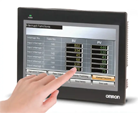
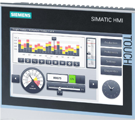
The LM64P83L is not designed for smartphones or tablets. Its niche lies in B2B and industrial environments. A primary application is in industrial human-machine interfaces (HMIs) for factory automation, process control, and test equipment, where its readability and robustness are key. The medical device field utilizes such displays in portable diagnostic equipment, patient monitoring systems, and laboratory instruments, benefiting from their reliability and stable supply.
Other significant use cases include point-of-sale (POS) systems, kiosks, transportation information displays, and embedded consoles in specialized machinery. In these applications, the display serves as a functional tool rather than a media consumption device, making the balance of cost, clarity, and endurance offered by the 9.4-inch VGA module highly attractive.
Comparison with Alternative Display Technologies
Placing the LM64P83L in context requires comparison with alternatives. Against newer higher-resolution panels (e.g., 1280x800 on a similar size), it offers lower cost and simpler system integration but less detail. Compared to smaller displays with the same VGA resolution, it provides a larger viewing area but with a lower pixel density. When evaluated against monochrome or segment displays, it offers full graphical and color capability at a higher power and cost point.
The most relevant comparison is often with other industrial-grade TFT modules in the 8 to 10-inch range. Here, the decision hinges on the specific resolution requirement, interface availability, optical performance, and most importantly, the supplier's reputation for quality and long-term support. The LM64P83L's value proposition is strongest when the application explicitly does not require HD resolution but does demand industrial ruggedness and proven technology.
FAQs: 9.4-inch LM64P83L LCD Module
Q1: What is the primary resolution of the LM64P83L module?A1: It features a VGA resolution of 640 pixels horizontally by 480 pixels vertically.
Q2: What is the most common interface for this display?A2: It commonly supports parallel RGB or LVDS interfaces, with the specific type depending on the manufacturer's version.
Q3: Is this display suitable for outdoor use?A3: Standard versions are for indoor use. Outdoor readability requires a high-brightness version (typically >1000 nits) and an optical bonding service.
Q4: What is the typical operating temperature range?A4: Industrial-grade modules typically operate from -20°C to 70°C, but always check the specific datasheet.
Q5: Can it display video content smoothly?A5: It can handle basic video, but its response time and refresh rate are optimized for industrial GUIs, not high-motion video.
Q6: Does it have a touch screen option?A6: Often, yes. It is frequently available with a resistive or capacitive touch panel overlay as an option.
Q7: Why choose VGA resolution when HD is available?A7: For lower system cost, reduced processing power needs, lower power consumption, and compatibility with legacy systems.
Q8: How is the backlight driven?A8: By an LED backlight system, which requires an external constant-current driver circuit for proper operation.
Q9: What are key mechanical integration points?A9: Focus on precise cutout dimensions, secure mounting to handle vibration, and managing heat from the backlight.
Q10: Is this module suitable for new designs?A10: Yes, particularly for cost-sensitive, long-lifecycle industrial, medical, or embedded applications where high resolution is not a priority.
Conclusion
The 9.4-inch LM64P83L LCD module, with its steadfast 640x480 resolution, exemplifies how appropriateness trumps sheer specification in the professional engineering world. In an era obsessed with pixel counts, this display carves out a vital niche by offering a proven, reliable, and cost-effective visual solution for a wide array of embedded and industrial systems. Its value lies not in being the most advanced, but in being the most fit-for-purpose for applications where clarity, durability, and system simplicity are paramount.
For designers navigating the selection process, a deep understanding of its technical attributes, integration requirements, and ideal use cases—as outlined in this analysis—is crucial. By aligning the module's strengths with project requirements, one can build robust and effective human-machine interfaces that stand the test of time, proving that in specialized technology, strategic choice often outweighs raw performance.