


















- Industrie-LCD-Display
-
Industrial Products
- DC Servo Drive
- AC Servo Drive
- PCB
- Siemens
- Switch Sensor
- Näherungsschalter
- Temperaturregler
- Schutzrelais
- Fiber Optic Sensor
- Encoder
- Fan
- other
- Heidelberg
- MITSUBISHI
- FANUC
- Siemens adapter
- Fujitsu connector
- Der Aufsichtsrat
- Board
- Contactor
- Circuit
- Omron
- Relais.
- Motortreiber
- power supply
- Cable
- Transformator
- HMI Touch-Glas
-
HMI-Vollautomat Ganze Einheit
- OMRON HMI Touch Panel
- Siemens HMI Touch Panel
- Mitsubishi HMI Touch Panel
- Allen-Bradley Automatisierung HMI Touch
- DELTA HMI Touch Panel
- EVIEW DELTA HMI Touch Panel
- KINCO DELTA HMI Touch Panel
- HITECH HMI Touch Panel
- WEINTECK HMI Touch Panel
- TECVIEW HMI Touch Panel
- WEINVIEW HMI Touch Panel
- PANASONIC HMI Touch Panel
- KYOCERA HMI Touch Panel
- SCHNEIDER HMI Touch Panel
- Module
- LCD Wechselrichter
- Membran Tastenfeld Schalter
- Winni Touch Screens
- Frequenzumrichter
- Servo Motor
- PLC
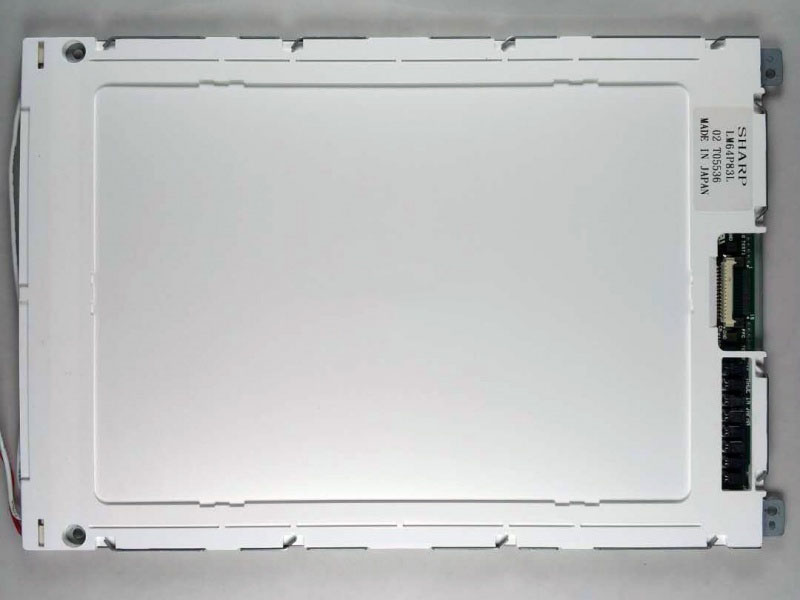
In the intricate world of electronic components, the display panel often serves as the critical interface between machine and user. Among the myriad of options available to engineers and product designers, the 9.4-inch screen LM64P83L LCD module stands out as a specialized solution for applications demanding a specific balance of size, resolution, and reliability. Characterized by its 640 x 480 pixel (VGA) resolution on a 9.4-inch diagonal, this TFT LCD module represents a mature yet persistently relevant technology in industrial, medical, and embedded systems.
This article delves into a comprehensive technical and application-focused analysis of the LM64P83L display module. We will move beyond basic specifications to explore its underlying architecture, key performance parameters, and the unique advantages it offers in a landscape increasingly dominated by higher-resolution screens. By understanding its core competencies and ideal use cases, design engineers and procurement specialists can make informed decisions on whether this robust display module is the optimal component for their next project, ensuring both performance and cost-effectiveness.

Technical Architecture and Core Specifications
Key specifications defining its performance include its brightness (often in the range of 300-500 nits for indoor use), contrast ratio, viewing angles (commonly 70/70/50/70 degrees in all directions), and operating temperature range. The physical construction is designed for durability, frequently featuring a robust metal frame and surface treatments to resist dust and mild moisture. Understanding this architecture is the first step in appreciating its suitability for environments where consistent performance trumps cutting-edge pixel count.
Advantages in Modern Embedded Applications
Furthermore, the technology behind this resolution and size is mature and well-understood, leading to high manufacturing yield, consistent supply chains, and extensive documentation. For long-lifecycle products common in industrial and medical fields, this stability is invaluable, mitigating the risk associated with rapidly evolving consumer display technologies that may become obsolete quickly.
Critical Performance Parameters and Evaluation
Electrical compatibility and interface selection are equally critical. The chosen interface (e.g., parallel RGB vs. LVDS) must seamlessly match the host controller's capabilities. Additionally, the module's power sequence requirements must be meticulously followed to prevent permanent damage. Thorough testing under the product's intended environmental conditions—including temperature extremes and voltage fluctuations—is essential to validate its performance claims.
Integration Challenges and Design Considerations
The backlight system, typically composed of LEDs, requires a constant-current driver circuit for stable illumination and long life. Thermal management of these LEDs and the display's own power dissipation must be planned to prevent overheating, which can degrade performance and longevity. Finally, the software driver development for initializing the display controller and writing frame buffer data is a non-trivial task that requires deep understanding of the controller's register set.
Primary Industrial and Commercial Use Cases
Other significant use cases include point-of-sale (POS) systems, kiosks, transportation information displays, and embedded consoles in specialized machinery. In these applications, the display serves as a functional tool rather than a media consumption device, making the balance of cost, clarity, and endurance offered by the 9.4-inch VGA module highly attractive.
Comparison with Alternative Display Technologies
The most relevant comparison is often with other industrial-grade TFT modules in the 8 to 10-inch range. Here, the decision hinges on the specific resolution requirement, interface availability, optical performance, and most importantly, the supplier's reputation for quality and long-term support. The LM64P83L's value proposition is strongest when the application explicitly does not require HD resolution but does demand industrial ruggedness and proven technology.
FAQs: 9.4-inch LM64P83L LCD Module
Q10: Is this module suitable for new designs?A10: Yes, particularly for cost-sensitive, long-lifecycle industrial, medical, or embedded applications where high resolution is not a priority.





