













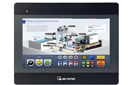




- Industrie-LCD-Display
-
Industrial Products
- DC Servo Drive
- AC Servo Drive
- PCB
- Siemens
- Switch Sensor
- Näherungsschalter
- Temperaturregler
- Schutzrelais
- Fiber Optic Sensor
- Encoder
- Fan
- other
- Heidelberg
- MITSUBISHI
- FANUC
- Siemens adapter
- Fujitsu connector
- Der Aufsichtsrat
- Board
- Contactor
- Circuit
- Omron
- Relais.
- Motortreiber
- power supply
- Cable
- Transformator
- HMI Touch-Glas
-
HMI-Vollautomat Ganze Einheit
- OMRON HMI Touch Panel
- Siemens HMI Touch Panel
- Mitsubishi HMI Touch Panel
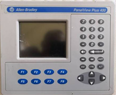
- Allen-Bradley Automatisierung HMI Touch
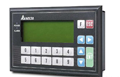
- DELTA HMI Touch Panel
- EVIEW DELTA HMI Touch Panel
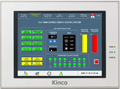
- KINCO DELTA HMI Touch Panel
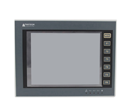
- HITECH HMI Touch Panel
- WEINTECK HMI Touch Panel
- TECVIEW HMI Touch Panel
- WEINVIEW HMI Touch Panel
- PANASONIC HMI Touch Panel
- KYOCERA HMI Touch Panel
- SCHNEIDER HMI Touch Panel
- Module
- LCD Wechselrichter
- Membran Tastenfeld Schalter
- Winni Touch Screens
- Frequenzumrichter
- Servo Motor
- PLC
In the intricate world of industrial automation and machinery upkeep, the display interface serves as the critical nexus between human operators and complex systems. For professionals maintaining or repairing Mitsubishi equipment, the specification AA104XF17 represents more than just a part number—it signifies a vital 10.4-inch LCD display screen engineered for reliability and precision. This component is not a generic off-the-shelf panel but a tailored solution designed to meet the exacting electrical, mechanical, and environmental standards of its host machinery.


This article delves into a comprehensive exploration of the AA104XF17 display module. We will dissect its core technical specifications, understand its typical applications within the Mitsubishi ecosystem, and outline the critical considerations for sourcing a compatible replacement. Beyond simple identification, we aim to provide a resource that empowers engineers, procurement specialists, and technicians with the knowledge to make informed decisions, ensuring seamless integration and sustained operational integrity in demanding industrial settings.
Decoding the AA104XF17: Technical Specifications Unveiled
Beyond the screen itself, the module integrates a CCFL (Cold Cathode Fluorescent Lamp) backlighting system. This technology, though now succeeded by LED in many consumer applications, remains specified for its specific luminance characteristics and longevity in certain industrial designs. Understanding these specs—the exact pinout, voltage requirements for the backlight inverter, and signal timing—is paramount. A mismatch here can lead to complete incompatibility or premature failure, underscoring that this display is a precisely engineered subsystem, not merely a "screen."
Primary Applications in Mitsubishi Systems
Additionally, this display module may be integrated into specialized industrial computers, diagnostic equipment, or even within certain CNC (Computer Numerical Control) interfaces for machine tools. In these contexts, the display acts as the window into the machine's soul, presenting real-time operational data, alarm states, and production metrics. Its failure directly impacts operational visibility, making timely and correct replacement a mission-critical task to minimize costly downtime.
The Criticality of Compatibility and Direct Replacement
More crucially, a true direct replacement mirrors the electrical characteristics and firmware communication protocol. Using a physically similar but electrically different panel can damage the main controller board or simply not function. Therefore, the part number (AA104XF17) is the primary key. However, one must also be aware of potential sub-variants or manufacturer revisions (like AA104XF17-01) that, while similar, may have subtle differences in backlight connector or inverter voltage
.
Sourcing Strategies: OEM vs. Third-Party Suppliers
Reputable third-party suppliers have emerged as a vital resource. They often manufacture or refurbish high-fidelity compatible modules for legacy industrial displays. The key is to vet suppliers thoroughly: they should provide explicit compatibility guarantees, detailed datasheets for their replacement module, and offer technical support. They may also provide upgraded alternatives, such as modules with modern LED backlights for improved longevity and lower power consumption, provided the interface and form factor remain compatible.
Installation Precautions and Best Practices
Carefully document the disassembly process, noting cable routing and connector orientations. The LVDS cable and backlight connector are often delicate; use even pressure to disconnect and reconnect them, never pulling on the wires. Ensure the module is seated evenly in its frame before securing it with all original screws. Post-installation, perform a thorough functional test of all display elements and touch functions (if applicable) before final reassembly.
Future-Proofing and Alternative Considerations
For systems undergoing broader modernization, a more significant upgrade path might involve replacing the entire HMI unit with a contemporary model. This offers advantages like higher resolution, brighter displays, advanced connectivity, and updated software features. The decision hinges on a cost-benefit analysis weighing the immediate need for a simple screen replacement against the long-term value of a system-wide upgrade.
FAQs: AA104XF17 10.4" LCD Display Screens
10. What if the AA104XF17 is discontinued by OEM?Specialized third-party industrial display suppliers are the primary source for compatible replacements for legacy modules.





