



















- Industrial display
-
Industrial Products
- DC Servo Drive
- AC Servo Drive
- Industrial board
- Siemens
- Switch Sensor
- Proximity Switch
- Temperature Controller
- Protection Relay
- Fiber Optic Sensor
- Encoder
- Fan
- other
- Heidelberg
- MITSUBISHI
- FANUC
- Siemens adapter
- Fujitsu connector
- Motherboard
- Board
- Contactor
- Circuit
- OMRON
- Relay
- Motor Driver
- power supply
- Cable
- Transformer
- HMI Touch Glass
-
HMI Full Machine Whole unit
- OMRON HMI Touch Panel
- Siemens HMI Touch Panel
- Mitsubishi HMI Touch Panel
- Allen-Bradley automation HMI Touch Panel
- DELTA HMI Touch Panel
- Proface HMI Touch Panel
- KINCO DELTA HMI Touch Panel
- HITECH HMI Touch Panel
- WEINTEK HMI Touch Panel
- TECVIEW HMI Touch Panel
- WEINVIEW HMI Touch Panel
- PANASONIC HMI Touch Panel
- KYOCERA HMI Touch Panel
- SCHNEIDER HMI Touch Panel
- Module
- lcd inverter
- Membrane Keypad Switch
- Zhiyan Customized Touch Screens
- Frequency Inverter
- Servo Motor
- PLC
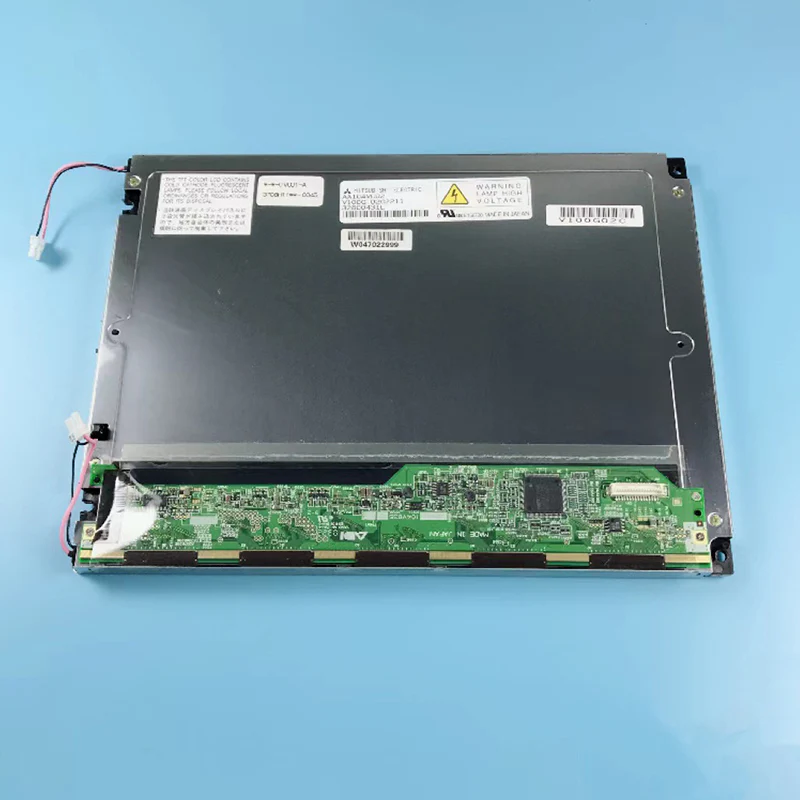
In the intricate world of industrial and embedded computing, the display often serves as the critical bridge between complex machine operations and human oversight. Among the myriad of components, the AA104VC14 10.4-inch LCD screen emerges as a specific and vital module, designed not for consumer entertainment but for demanding professional environments. This article delves deep into this particular display, moving beyond basic specifications to explore its architectural significance, technological underpinnings, and the precise applications it enables.
We will dissect what makes the AA104VC14 more than just a "screen." It represents a convergence of rugged engineering, precise interface technology, and optimized optical performance tailored for systems where reliability is non-negotiable. From its fundamental panel characteristics to its integration challenges and future trajectory, this exploration is crafted for engineers, procurement specialists, and technology integrators seeking to understand how this component can form the robust visual core of their next-generation industrial, medical, or point-of-sale solutions.
Decoding the AA104VC14: More Than Just Dimensions
The designation AA104VC14 is a key to its identity. Typically, such codes break down into the screen's diagonal size (10.4 inches), panel type, and revision or feature set. This module commonly features a 1024 x 768 (XGA) resolution with a 4:3 aspect ratio, a format that remains prevalent in industrial and legacy systems for its efficient display of control panels, data dashboards, and diagnostic interfaces. The 4:3 ratio offers more vertical space compared to widescreen formats, which is advantageous for scrolling through logs or viewing multiple lines of code or data.
Fundamentally, it is an LCD (Liquid Crystal Display) module, often utilizing a-Si TFT (Thin-Film Transistor) technology. This provides active-matrix addressing, ensuring each pixel is controlled independently for stable image quality. Crucially, the AA104VC14 is a bare panel or module, meaning it includes the LCD glass and connected driver boards but lacks a standalone casing, power supply, or controller—it is designed to be embedded into a larger system. Understanding this is the first step in appreciating its role as a component, not a finished product.
The Core Technology: Panel Composition and Optical Performance
At the heart of the AA104VC14 lies its optical stack. The quality of the image is determined by the backlight system, polarizers, and liquid crystal cell. Industrial versions often employ LED backlighting for its longevity, uniform brightness, and lower power consumption compared to older CCFL technology. A typical brightness specification ranges from 300 to 1000 nits, allowing for clear visibility in brightly lit factory floors or outdoor kiosks.
Equally important are the viewing angles, specified as 80/80/80/80 (Left/Right/Up/Down) or better. Consistent color and contrast across wide angles are essential for devices viewed by multiple operators or from non-perpendicular positions. Many industrial variants also incorporate optical bonding techniques, where a protective glass or touch panel is laminated directly to the LCD with a resin. This process reduces internal reflection, enhances contrast in high-ambient light, prevents condensation, and significantly improves durability by eliminating an air gap that could collect dust or moisture.
Interface and Signal Integration: The Critical Connection
The functionality of the AA104VC14 is unlocked through its interface. The most common interface for this class of display is LVDS (Low-Voltage Differential Signaling). LVDS is a serial communication standard prized in industrial applications for its robustness, noise immunity, and ability to transmit high-speed data over relatively long cable lengths within a device. The specific pinout and connector type (e.g., 20-pin, 30-pin) are vital details for integration.
Some modules may offer alternative interfaces like TTL (Transistor-Transistor Logic) or, in more modern iterations, eDP (Embedded DisplayPort). The choice dictates the required controller board or system-on-chip (SoC) output. Integrators must match the screen's interface, voltage requirements (often 3.3V or 5V for logic, 12V or similar for backlight), and timing parameters with their host system. Mismatches here are a primary source of integration failure, making the interface the most critical technical specification after the physical dimensions.
Ruggedization for Demanding Environments
The defining characteristic of industrial displays like the AA104VC14 is their built-in resilience. Unlike consumer screens, they are engineered to withstand harsh operating conditions. This involves a multi-faceted approach to ruggedization. The module itself is designed to tolerate a wider operating temperature range, often from -20°C to 70°C or beyond, ensuring functionality in unheated warehouses or under the heat of machinery.
To combat physical stress, the construction utilizes reinforced connectors and often a sturdy metal frame. As mentioned, optical bonding adds structural integrity and protects against vibration and shock. Furthermore, the surface is typically treated with anti-glare coatings to diffuse ambient light, and models intended for wash-down or high-humidity environments may feature IP65 or higher-rated front panels when fully assembled into an enclosure. This focus on endurance directly translates to system uptime and reduced maintenance costs.
Primary Applications and Industry Verticals
The specific attributes of the AA104VC14 make it ideal for a range of specialized applications. In industrial automation and Human-Machine Interfaces (HMIs), it serves as the primary window into PLC-controlled processes, displaying control buttons, real-time graphs, and alarm statuses on factory floors. The 4:3 ratio is perfectly suited for these often-vertical software layouts.
In the medical field, it can be found in diagnostic equipment, patient monitoring systems, and surgical devices where consistent color representation and reliability are paramount. Point-of-Sale (POS) terminals and kiosks for retail, hospitality, and transportation utilize these screens for their durability in high-traffic public use. Other niches include vehicle telematics, test and measurement equipment, and legacy system upgrades, where the XGA 4:3 format remains a standard.
Sourcing, Compatibility, and the Road Ahead
Procuring a display like the AA104VC14 requires attention beyond a simple part number. It is often produced by multiple panel manufacturers (e.g., AUO, Innolux, BOE) with slight variations. Therefore, securing a detailed datasheet and ensuring mechanical, electrical, and interface compatibility with your existing design is essential. Working with reputable distributors or module integrators who can provide technical support is highly advised.
Looking forward, the trajectory for such industrial panels involves gradual evolution rather than revolution. While consumer markets chase higher resolutions and OLED technology, the industrial sector prioritizes longevity, supply stability, and backward compatibility. We can expect to see wider adoption of eDP interfaces for higher bandwidth, improved power efficiency, and integration of In-Cell or On-Cell touch technology for slimmer, more robust designs. However, the core virtues of reliability and clarity embodied by modules like the AA104VC14 will remain the cornerstone of embedded display solutions.
FAQs: AA104VC14 10.4-Inch LCD Screen
1. What does "AA104VC14" mean?It is a model number typically denoting a 10.4-inch diagonal LCD panel with specific characteristics like XGA resolution, a 4:3 aspect ratio, and an LVDS interface.
2. What is the resolution and aspect ratio?The standard resolution is 1024 x 768 pixels (XGA) with a 4:3 aspect ratio.
3. What is the most common interface for this screen?LVDS (Low-Voltage Differential Signaling) is the predominant interface, valued for its noise resistance and reliability in industrial settings.
4. Is this a standalone monitor?No. The AA104VC14 is a bare LCD module. It requires integration with a power supply, controller board, and enclosure to function.
5. What is optical bonding, and why is it important?It's a process that laminates the cover glass directly to the LCD. It improves readability in bright light, enhances durability, and prevents internal fogging or dust ingress.
6. What are typical applications for this screen?Industrial HMIs, medical devices, point-of-sale systems, kiosks, transportation telematics, and test/measurement equipment.
7. What is the operating temperature range?Industrial-grade versions commonly support a wide range, such as -20°C to 70°C, but always check the specific manufacturer's datasheet.
8. Can I replace a CCFL-backlit version with an LED version?Physically, they may be similar, but the power requirements for the backlight differ entirely. You must ensure your system's inverter (for CCFL) or LED driver circuit is compatible.
9. How do I ensure compatibility with my system?Match the interface type (LVDS pinout), voltage requirements (logic and backlight), physical dimensions, and mounting hole patterns precisely.
10. Is this panel type becoming obsolete?Not in the industrial sector. The 10.4-inch XGA 4:3 format remains in high demand due to legacy software and hardware compatibility, with ongoing production focused on LED backlighting and improved interfaces.
Conclusion
The AA104VC14 10.4-inch LCD screen exemplifies the engineering philosophy that drives industrial technology: optimized performance, unwavering reliability, and focused application. It is far more than a simple display; it is a system-critical component whose value is measured in years of continuous, fault-free operation under challenging conditions. Its enduring design, centered on the practical XGA 4:3 format and robust LVDS communication, continues to support vital infrastructure across manufacturing, healthcare, and commerce.
For integrators and engineers, success lies in a deep understanding of its technical
nuances—from interface protocols and optical bonding benefits to precise environmental specifications. By treating it as the sophisticated module it is, rather than a commodity, one can fully leverage its capabilities to build systems that are not only functional but truly resilient. In a world of rapid technological change, the AA104VC14 stands as a testament to the enduring importance of purpose-built, dependable hardware.





