



















- Industrie-LCD-Display
-
Industrial Products
- DC Servo Drive
- AC Servo Drive
- PCB
- Siemens
- Switch Sensor
- Näherungsschalter
- Temperaturregler
- Schutzrelais
- Fiber Optic Sensor
- Encoder
- Fan
- other
- Heidelberg
- MITSUBISHI
- FANUC
- Siemens adapter
- Fujitsu connector
- Der Aufsichtsrat
- Board
- Contactor
- Circuit
- Omron
- Relais.
- Motortreiber
- power supply
- Cable
- Transformator
- HMI Touch-Glas
-
HMI-Vollautomat Ganze Einheit
- OMRON HMI Touch Panel
- Siemens HMI Touch Panel
- Mitsubishi HMI Touch Panel
- Allen-Bradley Automatisierung HMI Touch
- DELTA HMI Touch Panel
- EVIEW DELTA HMI Touch Panel
- KINCO DELTA HMI Touch Panel
- HITECH HMI Touch Panel
- WEINTECK HMI Touch Panel
- TECVIEW HMI Touch Panel
- WEINVIEW HMI Touch Panel
- PANASONIC HMI Touch Panel
- KYOCERA HMI Touch Panel
- SCHNEIDER HMI Touch Panel
- Module
- LCD Wechselrichter
- Membran Tastenfeld Schalter
- Winni Touch Screens
- Frequenzumrichter
- Servo Motor
- PLC
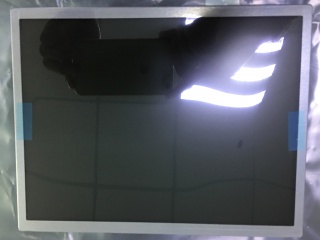
In the intricate world of industrial and embedded display solutions, specific components become the unsung heroes of reliability and performance. One such component is the AA104VC04, a 10.4-inch TFT-LCD module manufactured by Mitsubishi Electric. This article delves deep into this precise display technology, moving beyond basic specifications to explore its architectural significance, inherent strengths, and the specific application ecosystems where it excels. We will dissect why, in an era of ultra-high-density screens, a module with a resolution of 640(RGB)×480 (VGA) and a pixel density of 76 PPI remains not just relevant, but often the optimal choice for demanding environments.

The journey begins with an understanding of its core identity within Mitsubishi's lineup, progresses through a technical analysis of its a-Si TFT and LCM construction, and evaluates its optical and electrical characteristics. We will contextualize its seemingly modest resolution, explore the critical aspect of interface and compatibility, and finally, map its real-world industrial applications. This comprehensive exploration aims to provide engineers, procurement specialists, and technology integrators with the insights needed to evaluate the AA104VC04 for their mission-critical projects.

Unpacking the AA104VC04: Core Identity and Heritage
The AA104VC04 is more than a part number; it is a product of Mitsubishi Electric's legacy in precision engineering and industrial-grade electronics. As an LCM (LCD Module), it represents a complete, self-contained display subsystem, integrating the TFT-LCD panel, driver electronics, backlight unit, and often a controller into a single, ready-to-use package. This designation signifies a product built for integration, not consumer retail.
Its heritage is rooted in the proven a-Si (amorphous Silicon) TFT process, a mature and highly reliable technology for active-matrix displays. Mitsubishi's expertise in this field ensures consistent manufacturing quality, long-term stability, and excellent performance across a wide temperature range—a non-negotiable requirement in industrial settings. The module's identity is firmly tied to robustness and predictability, offering a known quantity in system design where failure is not an option.
A Technical Deep Dive: a-Si TFT and LCM Construction
At the heart of the AA104VC04 lies its a-Si TFT (Thin-Film Transistor) active matrix. Each of the 640x480x3 (RGB) sub-pixels is controlled by an individual transistor, enabling fast, precise switching and superior image stability compared to passive matrix designs. The amorphous silicon technology offers a compelling balance of performance, manufacturing yield, and cost-effectiveness for this screen size and class.
The LCM (Liquid Crystal Module) construction is key to its durability. The module encapsulates the delicate LCD glass with a sturdy metal or plastic frame, protecting it from physical stress and environmental contaminants. It includes a CCFL (Cold Cathode Fluorescent Lamp) or, in some versions, an LED backlight system, providing uniform illumination. This integrated approach simplifies the supply chain for OEMs, as they source a fully characterized display unit rather than assembling disparate components.
Resolution in Context: The Enduring Relevance of VGA (640x480)
In a market obsessed with 4K and beyond, the VGA (640x480) resolution of the AA104VC04 demands explanation. With a pixel density of 76 PPI, it is not designed for viewing high-definition multimedia or rendering fine text. Instead, its value is strategic and functional. This resolution aligns perfectly with legacy industrial software, machine control interfaces, and diagnostic systems built around VGA standards, ensuring seamless compatibility without costly software overhaul.
Furthermore, the lower pixel count reduces the computational load on the connected controller or single-board computer (SBC), freeing processing resources for core application tasks. The larger, more distinct pixels also enhance readability in challenging viewing conditions, such as from a distance or under vibration. In essence, it prioritizes functional clarity, system efficiency, and legacy support over raw pixel count.
Optical and Electrical Performance Characteristics
The performance profile of the AA104VC04 is tailored for visibility and reliability. It typically offers a brightness level sufficient for indoor industrial environments (e.g., 300-400 nits) and a contrast ratio that ensures legibility for GUI elements and data readouts. The viewing angles, while not matching premium IPS panels, are adequate for the typical fixed-position mounting of industrial equipment.
Electrically, the module is designed for straightforward integration. It operates on standard voltage supplies (e.g., 3.3V or 5V for logic, a higher voltage for the backlight) and features a simple, direct RGB interface that parallels the digital color data for each pixel. This interface, often paired with standard sync signals (HSYNC, VSYNC), provides a direct and low-latency connection to embedded graphics controllers, a crucial factor for real-time monitoring and control applications.
Interface and Compatibility: Connecting to Embedded Systems
The interface strategy of the AA104VC04 is a cornerstone of its design philosophy. By utilizing a parallel RGB digital interface, it maintains a direct, "dumb-terminal" style connection to the host controller. This avoids the complexity and potential latency of more advanced interfaces like LVDS or eDP, which, while offering higher bandwidth, are overkill for a VGA-resolution display.
This design choice simplifies driver development and hardware interfacing. Engineers can connect it directly to the GPIOs of an FPGA or the native LCD controller of many microprocessors and SBCs. For systems requiring a standard VGA analog output, a simple RGB-to-VGA converter chip can be implemented on the main board. This flexibility ensures the module can be adapted to both modern embedded platforms and legacy systems with minimal friction.
Primary Application Ecosystems and Use Cases
The AA104VC04 finds its true home in environments where reliability trumps novelty. Its primary application ecosystems are defined by harsh conditions and long product lifecycles. Key use cases include:
Industrial Automation: Human-Machine Interface (HMI) panels for PLCs, CNC machine controls, and factory floor monitoring stations.
Medical Equipment: Displays for diagnostic devices, patient monitoring systems, and laboratory instruments where consistent performance is critical.
Test and Measurement: Interfaces for oscilloscopes, spectrum analyzers, and other bench-top or portable instrumentation.
Transportation and Aerospace: On-board information displays, control unit readouts, and ground support equipment.
Point-of-Sale and Kiosks: Reliable displays for transactional systems that operate continuously.
In these fields, the module's long-term availability, temperature tolerance, and robust construction are more valuable than cutting-edge resolution.
Frequently Asked Questions (FAQs)
Q1: What does "LCM" stand for in AA104VC04?A1: LCM stands for Liquid Crystal Module, indicating it's a complete display assembly including panel, drivers, and backlight.
Q2: Is the AA104VC04 a touch screen?A2: The standard AA104VC04 is a display-only LCM. Touch panels (resistive or capacitive) can typically be added as an optional overlay.
Q3: Why choose a 76 PPI display in the modern era?A3: For legacy compatibility, reduced system load, enhanced readability in industrial settings, and cost-effectiveness in non-consumer applications.
Q4: What is the typical backlight type and lifespan?A4: Early versions used CCFL backlights, but LED-backlit versions are now common, offering longer lifespan (50,000+ hours) and lower power consumption.
Q5: What interface does it use?A5: It uses a parallel digital RGB interface, making it compatible with many embedded controllers and FPGAs without complex protocol conversion.
Q6: Can it be used outdoors?A6: The standard module is for indoor use. Outdoor use requires careful consideration of brightness (needs high-brightness version), heating, cooling, and waterproof sealing.
Q7: Is this module still in production?A7: Mitsubishi has a long product lifecycle policy for industrial parts. However, for current status, checking with authorized distributors or Mitsubishi directly is essential.
Q8: What are the common failure modes?A8: Backlight failure (especially in CCFL versions) is most common. Other issues can include connector damage or, rarely, LCD cell degradation.
Q9: How do I replace the backlight?A9: It requires careful disassembly of the LCM. For LED versions, it often involves replacing an LED strip. For CCFL, replacing the lamp and inverter. ESD precautions are mandatory.
Q10: Are there direct equivalent modules from other manufacturers?A10: Yes, other manufacturers like AUO, Innolux, and Sharp produce similar 10.4" VGA modules, but mechanical, electrical, and optical specifications must be matched precisely for a drop-in replacement.
Conclusion
The Mitsubishi AA104VC04 exemplifies the principle that in specialized engineering, the "best" technology is not always the one with the highest specifications, but the one that most reliably and efficiently fulfills a specific set of requirements. Its enduring value lies in its robust a-Si TFT LCM construction, the strategic utility of its VGA resolution, and its straightforward integration path for embedded systems.
This analysis reveals that its 76 PPI is not a limitation but a design feature for clarity and compatibility, and its parallel interface is a virtue for simplicity and real-time performance. For engineers designing HMIs for factory floors, medical devices, or test equipment, the AA104VC04 represents a proven, dependable choice that mitigates risk and ensures long-term operational stability. It stands as a testament to the importance of tailored solutions in a world of generic, consumer-grade technology.





