


















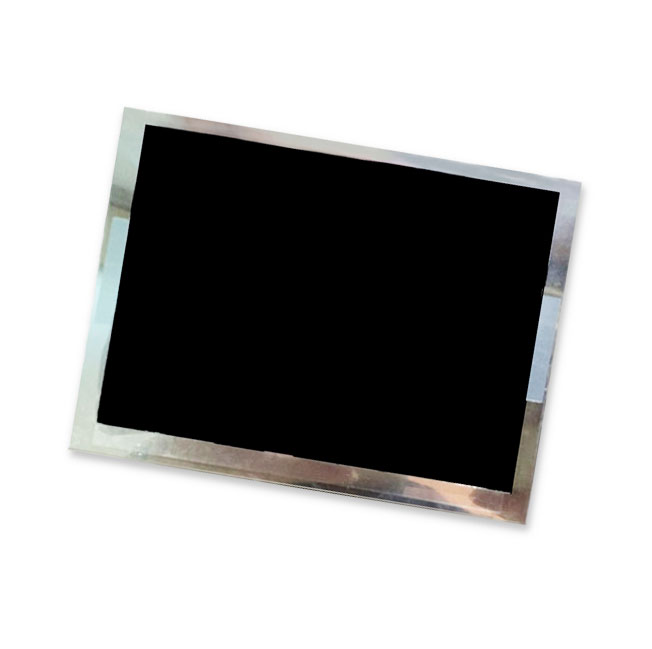
In the intricate world of industrial and embedded display solutions, the choice of a screen module is a critical determinant of an end product's performance, reliability, and user experience. Among the myriad of options, the AA057VF12 from Mitsubishi Electric stands out as a quintessential example of engineering tailored for demanding applications. This 5.7-inch a-Si TFT-LCD module (LCM) is not merely a component; it is a sophisticated interface solution built to deliver consistent clarity and robust operation in environments where ordinary consumer displays would falter.
This article delves into a comprehensive analysis of the Mitsubishi AA057VF12. We will move beyond basic specifications to explore its underlying technology, the significance of its VGA resolution and pixel density in context, and the unique value proposition offered by its integrated LCM design. Our exploration will cover its optimal application landscapes, the crucial electrical and mechanical interface considerations for system integrators, and a forward-looking perspective on its place in the evolving market of industrial human-machine interfaces (HMIs).
Deconstructing the Core Technology: a-Si TFT and LCM Integration
The foundation of the AA057VF12's performance lies in its use of amorphous Silicon (a-Si) Thin-Film Transistor (TFT) technology. Unlike the low-temperature polycrystalline silicon (LTPS) found in high-end smartphones, a-Si TFT is renowned for its manufacturing maturity, cost-effectiveness for larger panels, and exceptional long-term stability. This makes it the industry-standard workhorse for industrial, medical, and automotive applications where a decades-long operational life is paramount. The technology ensures uniform switching of each pixel, providing the consistent and reliable image quality required for critical monitoring and control tasks.
Furthermore, Mitsubishi delivers the AA057VF12 as a complete LCD Module (LCM). This means it is not just a bare glass panel but an integrated unit that includes the TFT-LCD glass, the driver ICs, the backlight unit (CCFL in this case), and a built-in interface board. This level of integration drastically simplifies the design-in process for engineers. They receive a fully functional, pre-tested display subsystem, reducing development time, minimizing risks associated with signal timing and backlight driving, and ensuring optimal performance as intended by the manufacturer.
The Visual Proposition: Analyzing 640x480 VGA and 141 PPI
The display's resolution of 640 (RGB) x 480 pixelsaligns with the classic VGA standard. In an era of 4K and beyond, this might seem modest. However, its strategic value is undeniable in its target markets. The VGA format is deeply embedded in industrial computing architectures, offering broad compatibility with legacy and modern single-board computers, PLCs, and embedded controllers without requiring complex scaling or signal conversion. It provides sufficient pixel real estate to display complex HMI graphics, diagnostic data, and control menus with clarity.
The calculated pixel density of 141 Pixels Per Inch (PPI) is a key figure. For a 5.7-inch diagonal screen, this density strikes a deliberate balance. It offers sharp enough detail for reading text and numerals—a common need in industrial settings—without pushing the processing power and cost requirements associated with driving ultra-high-density panels. The sub-pixel arrangement (RGB stripe) is optimized for displaying crisp lines and computer-generated graphics, which are more prevalent in these applications than photographic content.
Defining the Application Ecosystem
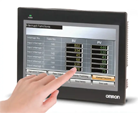
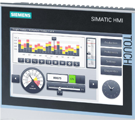
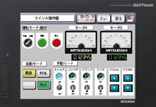
The technical attributes of the AA057VF12 directly map to a well-defined spectrum of professional and industrial applications. Its robustness and reliability make it a prime candidate for Factory Automation and HMI panels on machine tools, packaging equipment, and assembly line controllers, where it must withstand vibration, temperature fluctuations, and continuous operation.
In the Medical Equipmentfield, this display finds use in diagnostic devices, patient monitoring systems, and laboratory instruments. Its stable performance and consistent color rendition (often a calibrated white point for CCFL) are crucial for displaying vital signs and diagnostic imagery accurately. Additionally, it serves Transportation and Infrastructure systems, such as in-vehicle information displays for public transit, control panels for HVAC and building management, and interfaces for test and measurement equipment, where longevity and readability under various lighting conditions are essential.
Electrical and Interface Specifications for System Integration
Successful integration of the AA057VF12 requires careful attention to its electrical and signaling parameters. The module operates on a single +5.0V power supply for both the logic and the backlight inverter, simplifying power design. The interface is analog RGB, accepting standard VGA timing signals (HSYNC, VSYNC, CLK). Engineers must ensure the source provides clean, stable analog signals with proper impedance matching to avoid image ghosting or noise.
A critical component is the CCFL (Cold Cathode Fluorescent Lamp) backlight. With a typical lifetime of 50,000 hours, it offers excellent brightness uniformity and a wide operating temperature range. However, it requires a high-voltage AC inverter for operation, which is already integrated into the module but must be considered in the system's EMI/EMC design. The module also provides adjustable backlight control via a PWM or analog voltage signal, allowing for power saving and readability adaptation in dark environments
.
Mechanical Design and Environmental Considerations
The mechanical footprint and environmental resilience of the AA057VF12 are as important as its electronic specs. The module features a compact outline with predefined mounting hole positions, designed for secure fixation into larger enclosures to resist shock and vibration. The surface of the screen typically incorporates an anti-glare treatment, which diffuses ambient light to maintain readability under bright factory or outdoor lighting.
While specific ratings for the AA057VF12 should be verified in its datasheet, modules of this class are generally engineered for an extended operating temperature range (e.g., -20°C to +70°C for the panel). This ensures functionality in unheated industrial environments or in enclosed spaces that experience heat buildup. The holistic mechanical design underscores its purpose: to be a dependable visual interface component within a larger, often harsh, operational ecosystem.
The Competitive Landscape and Future Trajectory
In today's market, the AA057VF12 coexists with newer technologies. The most direct comparison is with TFT modules using LED backlights, which offer lower power consumption, thinner profiles, and mercury-free designs. However, the CCFL in the AA057VF12 can still hold advantages in certain areas like extreme temperature performance and cost for specific brightness requirements.
Its future trajectory is not one of obsolescence but of sustained relevance in niche applications. For upgrade or replacement cycles in long-lifecycle equipment (where changing a display type necessitates a complete requalification), the availability of stable, long-term supply for modules like the AA057VF12 is critical. It represents a proven, reliable node in the display technology spectrum, serving applications where cutting-edge pixel density is less important than unwavering reliability, compatibility, and total cost of ownership over a 10-15 year product life.
Frequently Asked Questions (FAQs)
Q1: What does "LCM" stand for in AA057VF12?A1: LCM means LCD Module. It indicates a complete, integrated unit containing the LCD panel, driver circuits, backlight, and often an interface board.
Q2: Is the VGA resolution sufficient for modern applications?A2: Yes, for its target industrial, medical, and control applications, VGA (640x480) provides ample clarity for HMI graphics, data readouts, and menus without unnecessary processing overhead.
Q3: What is the advantage of a CCFL backlight over LED?A3: CCFL can offer excellent brightness uniformity, wide temperature range operation, and a specific white point, though it typically consumes more power and is thicker than LED solutions.
Q4: What is the typical operating temperature range?A4: While always check the datasheet, similar industrial TFT-LCMs commonly operate from -20°C to +70°C or similar.
Q5: Does it support touch functionality?A5: The AA057VF12 is a display module only. Touch panels (resistive or capacitive) can be added as a separate front-end component.
Q6: What is the main power supply requirement?A6: It requires a single +5.0V DC power supply for both the logic and the integrated CCFL inverter.
Q7: Is this display suitable for outdoor use?A7: It has an anti-glare surface for readability in bright light, but for direct outdoor use, considerations for waterproofing, sunlight readability enhancement, and wider temperature tolerance are needed.
Q8: Can it directly replace an older 5.7-inch CCFL module?A8: Potentially, but careful cross-referencing of mechanical dimensions, mounting holes, interface pinouts, and power requirements is absolutely essential.
Q9: What is the expected lifetime of the backlight?A9: The CCFL backlight typically has a half-brightness lifetime of approximately 50,000 hours.
Q10: Who is the typical user of this display?A10: System integrators, OEM engineers, and product designers in industrial automation, medical device manufacturing, and transportation equipment.
Conclusion
The Mitsubishi AA057VF12 5.7-inch TFT-LCD module exemplifies a philosophy of purpose-built reliability. Its value proposition is not rooted in being the most advanced consumer display, but in being an exceptionally dependable industrial component. Through its mature a-Si TFT technology, integrated LCM design, and the strategically chosen VGA/141 PPI visual format, it addresses the core needs of stability, longevity, and integration ease in critical applications.
For engineers and product developers, selecting a display like the AA057VF12 is a decision that impacts product lifecycle, maintenance costs, and end-user trust. It serves as a reminder that in the professional technology sphere, the optimal solution is often the one that masters the fundamentals of performance under pressure, ensuring seamless interaction between human operators and complex machines for years on end.





