













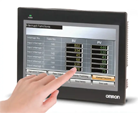
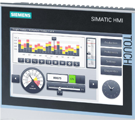





In the demanding world of industrial automation, medical instrumentation, and ruggedized portable devices, the display is far more than a simple output window. It is a critical interface that must perform with unwavering reliability under conditions that would cripple consumer-grade screens. This article delves into the specifics of one such component: the LQ057Q3DC03, a 5.7-inch industrial LCD module with a resolution of 320x240 pixels. We will move beyond basic datasheet parameters to explore the engineering philosophy behind its design, the significance of its feature set in real-world applications, and the tangible value it delivers to engineers and system integrators.
Understanding this display is not merely about knowing its dimensions and pinout; it's about appreciating how its combination of a transflective TFT panel, robust construction, and versatile interface addresses the core challenges of industrial environments. From extreme temperature tolerance to flawless readability in both dark factories and sun-drenched outdoor settings, the LQ057Q3DC03 embodies the principles of durability and functionality. This deep dive aims to provide system designers with the insights needed to evaluate its suitability for their next-generation industrial projects, ensuring that the human-machine interface is the last component to cause concern.


Decoding the Model: Anatomy of the LQ057Q3DC03
The model name LQ057Q3DC03 is a compact descriptor of the display's core identity. Breaking it down, "LQ" typically denotes the manufacturer's series, "057" indicates the 5.7-inch diagonal screen size, and "Q3DC03" specifies the detailed design revision, panel type, and interface configuration. The fundamental specification of 320 x 240 pixels defines its Quarter VGA (QVGA) resolution. In an industrial context, this resolution is a strategic choice rather than a limitation. It provides sufficient detail for displaying critical data, menus, and schematics while minimizing the processing power and bandwidth required from the host controller, which is often a low-power MCU or an embedded system.
This pixel grid, when paired with the 5.7-inch form factor, results in a pixel pitch that offers clear, legible characters and graphics without excessive granularity. The module's outline dimensions and mounting hole pattern are standardized for integration into industrial enclosures. Understanding this nomenclature and baseline specification is the first step in recognizing that this display is engineered for functional clarity and system efficiency, not for multimedia consumption. Its value proposition is built on stability and integration simplicity, setting the stage for its more advanced features.
The Transflective TFT Advantage: Readability Anywhere
At the heart of the LQ057Q3DC03's performance is its Transflective TFT technology. This hybrid display architecture is a game-changer for applications subject to varying ambient light. Unlike purely transmissive displays that rely on a strong backlight (and become washed out in sunlight) or reflective displays that need external light to function (failing in the dark), a transflective LCD provides a versatile solution. It incorporates a partial reflector behind the liquid crystal layer.
In bright environments, such as outdoor field operations or well-lit factory floors, ambient light passes through the LC layer, reflects off this internal layer, and passes back to the viewer, creating a bright, vivid image without taxing the backlight. In low-light or nighttime conditions, the integrated LED backlight activates, transmitting light through the LC layer and the partially reflective surface to ensure perfect readability. This dual-mode operation guarantees a consistently viewable display across the widest possible range of lighting scenarios, drastically reducing operator eye strain and error potential while optimizing power consumption.
Built for the Battlefield: Industrial Durability Features
The LQ057Q3DC03 is not housed in a consumer plastic frame. It is built to withstand the harsh realities of industrial life. Its operational temperature range, typically spanning from -20°C to +70°C or wider, ensures functionality in unheated warehouses, near industrial ovens, or in vehicular applications exposed to climatic extremes. The module is designed to resist vibrations and shocks common in manufacturing, transportation, and heavy machinery, preventing disconnections and screen damage.
Furthermore, the surface often features a hardened coating to protect against scratches, chemical splashes, and abrasion from frequent use. The electrical components and connectors are selected for long-term reliability and stable signal integrity, even in environments with electromagnetic interference (EMI). This ruggedization means the display has a significantly longer Mean Time Between Failures (MTBF) than commercial counterparts, reducing total cost of ownership by minimizing downtime, maintenance, and replacement cycles over the lifespan of the host equipment.
The Interface Landscape: Parallel RGB and System Integration
Communication between the host controller and the LQ057Q3DC03 is typically facilitated through a parallel RGB interface. This mature, direct interface is highly favored in industrial settings for its simplicity, low latency, and deterministic performance. It allows the controller to directly manipulate the frame buffer, sending pixel data over dedicated data lines for red, green, and blue, along with essential control signals like clock, horizontal sync, and vertical sync.
This approach offers several advantages. It places minimal processing overhead on the host, as no complex protocol encoding/decoding is required. It provides real-time screen updates, which is critical for monitoring fast-changing parameters. For system integrators, this means easier debugging, more straightforward driver development (often leveraging standard LCD controller IP), and predictable timing. The interface choice reinforces the module's role as a dependable, "no-surprises" component within a larger, mission-critical system.
Backlight Longevity and Control
The LED backlight system in an industrial display is a key factor in its longevity and power management profile. The LQ057Q3DC03 utilizes a long-life LED backlight array, engineered for tens of thousands of hours of operation. This endurance is crucial for devices expected to run 24/7 for years. Beyond mere longevity, the module usually supports backlight dimming control, often through a Pulse-Width Modulation (PWM) signal.
This feature allows the host system to dynamically adjust backlight intensity based on ambient light sensors or power-saving policies. In a dark control room, the brightness can be lowered to reduce power consumption and improve operator comfort. In bright conditions, it can be driven at higher power to compensate. Intelligent backlight management not only extends the backlight's service life by reducing thermal stress but also contributes to the overall energy efficiency of the end product, a consideration increasingly important in modern industrial design.
Application Scenarios: Where This Screen Excels
The specific attributes of the LQ057Q3DC03 make it an optimal choice for a well-defined set of challenging applications. In Industrial Human-Machine Interfaces (HMIs), it serves as the primary touchpoint for operators to monitor and control PLCs, CNC machines, and process lines, where its readability and durability are paramount. Within the medical device field, it finds use in portable diagnostic equipment, patient monitors, and laboratory instruments, where reliability and clear data presentation can be a matter of critical importance.
Furthermore, it is ideal for transportation and vehicular systems—think of dashboard displays for agricultural, construction, or utility vehicles exposed to dust, vibration, and temperature swings. Test and measurement equipment and ruggedized portable terminals for logistics and field service complete the picture. In each scenario, the display is selected not for its pixel density, but for its proven ability to deliver a flawless, failure-free visual interface where it is needed most.
FAQs: LQ057Q3DC03 Industrial Display
Q1: What is the primary advantage of a transflective display?A1: Superior readability in both very bright (sunlight) and very dark conditions without excessive backlight power.
Q2: What does the 320x240 resolution mean for my application?A2: It provides sufficient detail for industrial UIs while being easy to drive with low-power microcontrollers, simplifying system design.
Q3: What is the typical operating temperature range?A3: It is designed for a wide range, commonly from -20°C to +70°C, ensuring reliability in harsh environments.
Q4: What type of interface does this module use?A4: It typically uses a parallel RGB interface, offering simple, direct, and low-latency control.
Q5: Is the backlight user-replaceable?A5: Usually, the LED backlight is integrated and not designed for field replacement; its long lifespan (often 50,000+ hours) mitigates this.
Q6: Can this display be used with a touch panel?A6: Yes, it is commonly available with optional resistive or capacitive touchscreen overlays for interactive applications.
Q7: How does it compare to a standard commercial LCD?A7: It is far more robust, with wider temperature tolerance, stronger construction, and features like transflective mode for industrial use.
Q8: What is the power supply requirement?A8: It typically requires a single +3.3V or +5.0V power supply for logic, with a separate supply or driver for the LED backlight.
Q9: Is it suitable for outdoor use?A9: Yes, its transflective technology makes it one of the best choices for outdoor readability, though a protective front seal may be needed.
Q10: Where can I find technical documentation and drivers?A10: Full datasheets, application notes, and reference driver code are typically available from authorized distributors or the manufacturer's website.
Conclusion
The Sharp LQ057Q3DC03 5.7-inch industrial display module exemplifies a component designed with a clear purpose: to provide a supremely reliable and readable visual interface in environments where failure is not an option. Its value is not defined by high resolution or color gamut, but by its transflective TFT technology, exceptional ruggedness, and system-friendly parallel interface. These features collectively solve the fundamental challenges of industrial design—ensuring visibility under any lighting, surviving physical and thermal stress, and integrating seamlessly with embedded control systems.
For engineers and product developers, selecting a display like the LQ057Q3DC03 is a strategic decision that reduces project risk. It moves the HMI from a potential point of vulnerability to a cornerstone of product reliability. By understanding the depth of engineering behind this specific module, one gains insight into the broader principles of industrial component selection, where longevity, clarity, and deterministic performance ultimately drive value far beyond the initial unit cost.





