













































- Industrie-LCD-Display
-
Industrial Products
- DC Servo Drive
- AC Servo Drive
- PCB
- Siemens
- Switch Sensor
- Näherungsschalter
- Temperaturregler
- Schutzrelais
- Fiber Optic Sensor
- Encoder
- Fan
- other
- Heidelberg
- MITSUBISHI
- FANUC
- Siemens adapter
- Fujitsu connector
- Der Aufsichtsrat
- Board
- Contactor
- Circuit
- Omron
- Relais.
- Motortreiber
- power supply
- Cable
- Transformator
- HMI Touch-Glas
-
HMI-Vollautomat Ganze Einheit
- OMRON HMI Touch Panel
- Siemens HMI Touch Panel
- Mitsubishi HMI Touch Panel
- Allen-Bradley Automatisierung HMI Touch
- DELTA HMI Touch Panel
- EVIEW DELTA HMI Touch Panel
- KINCO DELTA HMI Touch Panel
- HITECH HMI Touch Panel
- WEINTECK HMI Touch Panel
- TECVIEW HMI Touch Panel
- WEINVIEW HMI Touch Panel
- PANASONIC HMI Touch Panel
- KYOCERA HMI Touch Panel
- SCHNEIDER HMI Touch Panel
- Module
- LCD Wechselrichter
- Membran Tastenfeld Schalter
- Winni Touch Screens
- Frequenzumrichter
- Servo Motor
- PLC
In the intricate world of industrial and embedded systems, the display panel is far more than a simple output window; it is the critical touchpoint of human-machine interaction. For users and integrators of TIMAMA devices, selecting the right display component is a decision that directly impacts usability, reliability, and overall system performance. This article delves into a specific and vital component: the TM035KDH03 3.5-inch LCD display panel. Designed as a compatible module for TIMAMA equipment, this panel represents a nexus of precise engineering and practical application.
Our exploration will move beyond basic specifications to uncover the technical nuances, integration challenges, and strategic advantages of this display solution. We will examine its role within larger systems, the technology that drives its clarity and responsiveness, and the key considerations for successful implementation. Whether you are a maintenance engineer, a system designer, or a procurement specialist, understanding the depth of this component will empower you to make informed decisions, optimize your TIMAMA-based systems, and ensure seamless operational workflows.
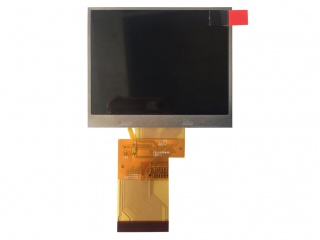
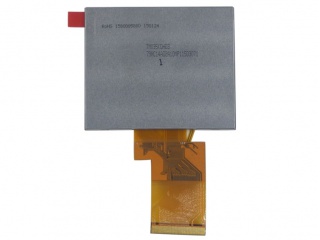
Decoding the TM035KDH03: Core Specifications and Interface
The TM035KDH03 is a 3.5-inch diagonal TFT LCD module, typically offering a resolution of 320 x 240 pixels (QVGA). This resolution provides a balanced compromise between detail clarity and the processing power required for refresh and rendering, making it ideal for industrial control interfaces, diagnostic tools, and portable instrumentation. The panel commonly utilizes a parallel RGB or LVDS interface, which are standard, robust protocols for transmitting video data from a host controller.
Understanding its electrical and physical interface is paramount. The pinout configuration, voltage requirements (often 3.3V or 5V for logic and a higher voltage for the backlight), and signal timing are non-negotiable details for integration. The module usually incorporates a driver IC, which interprets the incoming signals to control each individual pixel. This section of the system is where compatibility is truly determined; mismatched voltage levels or incorrect timing can lead to display failure, image distortion, or permanent damage.
The Role of the Display in TIMAMA System Ecosystems
Within a TIMAMA device—which could range from industrial automation controllers to specialized testing equipment—the display panel serves as the primary conduit for information. It is not an isolated component but a deeply integrated subsystem. Its performance affects how operators receive alerts, interpret real-time data graphs, input parameters, and navigate complex menus. A high-quality, reliable display like the TM035KDH03 minimizes interaction errors and reduces operator fatigue.
The panel's role extends to system diagnostics and maintenance. Many TIMAMA devices use the display to show status codes, error logs, and self-test results. Therefore, the panel's readability under various lighting conditions (aided by a bright LED backlight) and its operational temperature range are critical. A failure here doesn't just mean a blank screen; it can cripple the usability of the entire machine, turning a simple visual fault into a major operational downtime event.
Technical Deep Dive: LCD Technology and Performance Characteristics
At its heart, the TM035KDH03 employs Thin-Film Transistor (TFT) active-matrix technology. Each pixel is controlled by one to four transistors, allowing for faster response times, better contrast, and wider viewing angles compared to older passive-matrix displays. The panel's viewing angle, typically specified as 6 o'clock or 12 o'clock direction, dictates from which orientations the screen content remains visible without color inversion or severe contrast loss—a key factor in mounted equipment.
Other vital performance metrics include brightness (measured in nits), contrast ratio, and color gamut. For industrial environments, high brightness is essential to combat ambient glare. The response time, or how quickly a pixel can change state, affects the smoothness of dynamic content. Furthermore, the construction includes layers such as polarizers, color filters, and the liquid crystal matrix itself, all sealed within a sturdy mechanical frame to protect against dust, moisture, and physical shock common in field applications.
Integration Challenges and Compatibility Considerations
Integrating a replacement or upgrade panel like the TM035KDH03 is seldom a plug-and-play affair. The primary challenge lies in ensuring electrical and mechanical compatibility. Even if the form factor matches, the connector type, pin assignment, and power sequencing must align perfectly with the TIMAMA device's mainboard. A mismatch can necessitate custom adapter cables or even board-level modifications.
Software and firmware compatibility is the second major hurdle. The device's operating system or embedded software must have the correct driver or initialization routine for the panel's specific controller. This involves configuring parameters like pixel clock, horizontal/vertical sync pulses, and backlight control method (PWM or analog). Integrators must often work with timing controller (T-CON) settings or source code provided by TIMAMA or the panel manufacturer to achieve a stable, flicker-free image.
Strategic Advantages for Maintenance and Supply Chain
Procuring a known, reliable component like the TM035KDH03 offers significant strategic advantages. For maintenance teams, it standardizes spares inventory, reducing the number of unique parts to stock. This simplifies troubleshooting and repair, as technicians become familiar with the common failure modes and replacement procedures for this specific panel, leading to faster mean-time-to-repair (MTTR).
From a supply chain perspective, identifying a stable source for this OEM-compatible module mitigates the risk of obsolescence. Original TIMAMA parts may become discontinued or face long lead times. A well-documented alternative from a reputable distributor ensures business continuity for operators of critical equipment. It also provides potential cost savings without sacrificing quality, as compatible modules often come at a lower price point than branded OEM parts, while meeting or exceeding the original specifications.
Future-Proofing and Potential Upgrade Paths
While the TM035KDH03 meets current needs, forward-thinking integrators should consider the evolution of display technology. Potential upgrade paths might involve panels with identical form factors and interfaces but enhanced features, such as higher brightness, wider temperature ranges, or optical bonding. Optical bonding, where the touchscreen (if present) is laminated directly to the LCD, reduces internal reflection, improves sunlight readability, and enhances durability.
Another consideration is the long-term industry shift towards more efficient interfaces and touch technologies. While the current panel may use resistive touch, future iterations for TIMAMA systems might migrate to capacitive multi-touch or incorporate USB interfaces for simplified connectivity. Evaluating the TM035KDH03 within this context means not just solving today's replacement need, but also assessing whether the current system architecture can accommodate incremental upgrades that extend the operational lifespan and capability of the entire TIMAMA device.
FAQs: TM035KDH03 3.5" LCD Panel for TIMAMA
Q1: What is the exact resolution of the TM035KDH03 panel?A: It is typically a QVGA (320 x 240 pixel) resolution TFT LCD.
Q2: What type of interface does this display panel use?A: It commonly uses a parallel RGB or LVDS digital interface for video signal transmission.
Q3: Is this a direct replacement for my original TIMAMA display?A: It is designed as a compatible replacement, but you must verify electrical, mechanical, and firmware compatibility with your specific device model.
Q4: What are the critical voltage requirements?A: Check the datasheet, but logic is often 3.3V/5V, with a separate higher voltage (e.g., 12-20V) required for the LED backlight.
Q5: Does it include a touchscreen?A: The TM035KDH03 is primarily an LCD module. Touch functionality (usually resistive) may be a separate overlay; confirm the exact product variant.
Q6: What is the typical brightness level?A: Brightness varies, but industrial panels often range from 250 to 500 nits for good visibility in various lighting.
Q7: How do I handle backlight control?A: Backlight is usually controlled via PWM (Pulse Width Modulation) for dimming; ensure your controller supports the correct signal.
Q8: What is the operating temperature range?A: Standard industrial grade panels often operate from -20°C to 70°C; confirm with the manufacturer's specifications.
Q9: Where can I find the pinout diagram?A: The pinout should be provided in the technical datasheet from the panel supplier or manufacturer.
Q10: Can I upgrade to a higher-resolution panel with the same footprint?A: Possibly, but it requires verifying interface bandwidth, controller support, and firmware/driver compatibility—a complex upgrade.
Conclusion
The TM035KDH03 3.5-inch LCD panel is a specialized component that embodies the intersection of hardware precision and practical utility within TIMAMA systems. Our analysis has shown that its value extends far beyond a simple list of specs; it is integral to user interaction, system diagnostics, and operational reliability. Successful deployment hinges on a thorough understanding of its technical interfaces, performance under environmental stress, and seamless integration into the existing electronic and software framework.
For engineers and procurement professionals, treating this display as a strategic component rather than a commodity part is key. It offers a path to standardized maintenance, supply chain resilience, and informed future-proofing. By mastering the details of the TM035KDH03, you ensure that the human-machine interface—a vital link in any industrial process—remains a source of clarity and control, not a point of failure.





