


















- Industrie-LCD-Display
-
Industrial Products
- DC Servo Drive
- AC Servo Drive
- PCB
- Siemens
- Switch Sensor
- Näherungsschalter
- Temperaturregler
- Schutzrelais
- Fiber Optic Sensor
- Encoder
- Fan
- other
- Heidelberg
- MITSUBISHI
- FANUC
- Siemens adapter
- Fujitsu connector
- Der Aufsichtsrat
- Board
- Contactor
- Circuit
- Omron
- Relais.
- Motortreiber
- power supply
- Cable
- Transformator
- HMI Touch-Glas
-
HMI-Vollautomat Ganze Einheit
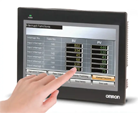
- OMRON HMI Touch Panel
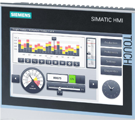
- Siemens HMI Touch Panel
- Mitsubishi HMI Touch Panel
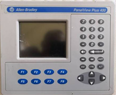
- Allen-Bradley Automatisierung HMI Touch
- DELTA HMI Touch Panel
- EVIEW DELTA HMI Touch Panel
- KINCO DELTA HMI Touch Panel
- HITECH HMI Touch Panel
- WEINTECK HMI Touch Panel
- TECVIEW HMI Touch Panel
- WEINVIEW HMI Touch Panel
- PANASONIC HMI Touch Panel
- KYOCERA HMI Touch Panel
- SCHNEIDER HMI Touch Panel
- Module
- LCD Wechselrichter
- Membran Tastenfeld Schalter
- Winni Touch Screens
- Frequenzumrichter
- Servo Motor
- PLC
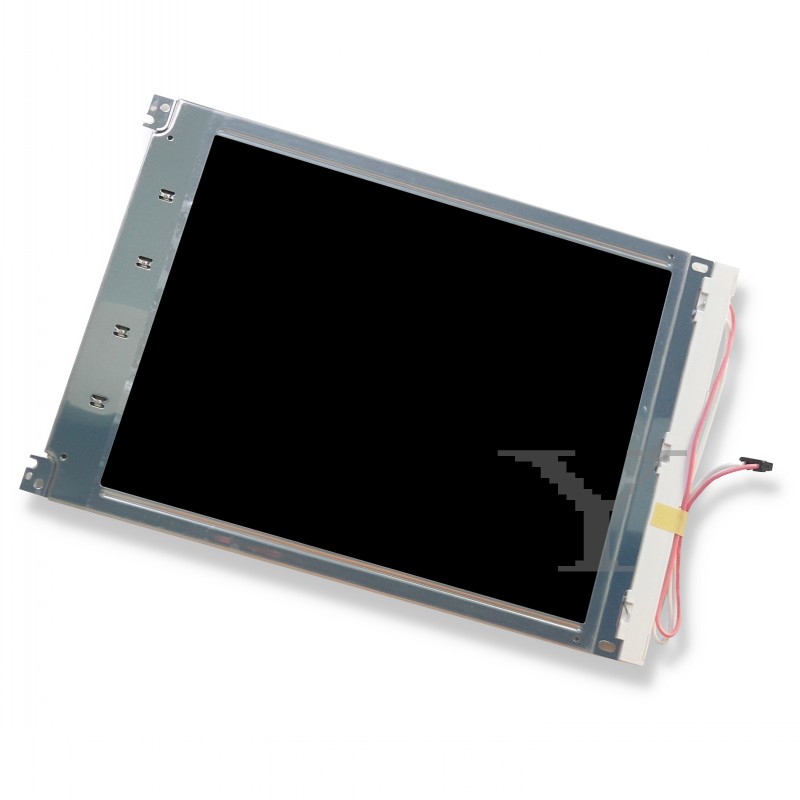
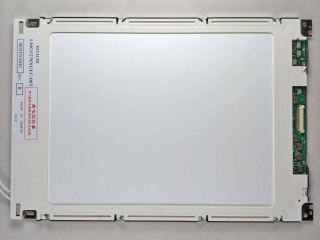
In the intricate world of electronic components, where specifications often blur into a sea of alphanumeric codes, the LMG5278XUFC-00T KOE 9.4" FSTN-LCD LCM stands out as a remarkably specific and capable module. This component is far more than just a screen; it is a fully integrated LCD Module (LCM) engineered for applications where reliability, clarity, and precise visual communication are non-negotiable. With a resolution of 640×480 pixels (VGA) spread across a 9.4-inch diagonal, it delivers a sharp pixel density of 84 PPI, making it a cornerstone for industrial, medical, and instrumentation interfaces.
This article delves deep into the architecture and application of this specialized display. We will move beyond the part number to explore the technology of its FSTN (Film-compensated Super-Twisted Nematic) layer, which is key to its performance. We will analyze its electrical and mechanical integration, its optimal use cases, and the critical design considerations engineers must address. Our goal is to transform this string of characters—LMG5278XUFC-00T—into a clear understanding of a powerful tool for human-machine interaction.
Decoding the Specification: Anatomy of an LCM
The part number LMG5278XUFC-00T is a structured data sheet in itself. Breaking it down reveals the module's identity: likely a manufacturer's internal code denoting series, size, and revision. The core specifications, however, are universal. The 9.4-inch diagonal size places it in a niche between smaller handheld devices and larger panels, ideal for embedded systems requiring substantial but not oversized data display. The 640×480VGA resolution is a timeless standard, ensuring broad software and controller compatibility while providing ample space for complex graphical user interfaces (GUIs), schematics, or multi-parameter monitoring screens.
Perhaps the most critical figure is the 84 PPI (Pixels Per Inch). This pixel density is a deliberate engineering choice. It prioritizes readability and icon distinction over the ultra-high density found in consumer smartphones. In an industrial setting where an operator may view the screen from a moderate distance or for extended periods, this PPI reduces eye strain and ensures individual pixels and graphical elements are clearly discernible, contributing to fewer operational errors.
The FSTN Advantage: Clarity and Readability Engineered
At the heart of this LCM's performance is its FSTN (Film-compensated Super-Twisted Nematic) technology. To appreciate FSTN, one must understand its predecessor, STN. Standard STN LCDs introduced a higher twist angle in the liquid crystal cells, improving contrast over older TN types, but they suffered from a pronounced color shift (often a blue or yellow tint) and inherent optical retardation that caused background coloration.
FSTN solves this by adding a precise compensating film layer. This film negates the optical retardation effect of the STN layer. The result is a display with a neutral, high-contrast black-on-white (or white-on-black) appearance. This translates to superior monochrome readability, wider viewing angles, and a more stable image across temperature variations. For the target applications of the LMG5278XUFC-00T—where displaying text, numbers, and grayscale graphics with utmost clarity is paramount—FSTN is the enabling technology.
Electrical and Mechanical Integration: The Module as a System
The term LCM (LCD Module) signifies that this product is a complete subsystem. It integrates the FSTN glass panel, the driver ICs, the backlight unit (likely an LED array for longevity and low power consumption), and the interface connector into a single, ready-to-install package. This dramatically reduces design complexity and time-to-market for OEMs.
Electrically, the module accepts standard digital video signals. The controller, typically integrated into the module's drivers, manages the pixel matrix. Designers must provide the correct power supply (often 3.3V or 5V logic with a separate higher voltage for the backlight) and ensure signal timing compatibility. Mechanically, the module is designed for robust integration, featuring a rigid frame with mounting holes. The UFC in the part number may indicate a specific mechanical form factor or connector type, crucial for physical interfacing with the host device's chassis and mainboard.

Ideal Application Landscapes: Where This LCM Excels
The specific attributes of the LMG5278XUFC-00T make it unsuitable for a consumer tablet but perfect for demanding professional environments. Its primary domain is industrial automation and control. Here, it serves as the face of PLCs (Programmable Logic Controllers), CNC machine interfaces, and test/measurement equipment, displaying control parameters, real-time graphs, and system status with unwavering clarity.
Another critical field is medical instrumentation. Devices such as patient monitors, diagnostic equipment, and laboratory analyzers require displays that are highly readable under various lighting conditions and from different angles, a strength of the FSTN technology. Furthermore, the module's reliability and stable performance across environmental stresses align with the stringent requirements of medical devices. Other applications include specialized POS/kiosk systems, vehicle telematics, and legacy equipment upgrades where VGA compatibility is essential.
Critical Design Considerations for Implementation
Successfully integrating this LCM requires careful planning beyond simple pin connection. Thermal management is vital; while FSTN is stable, extreme temperatures can affect response time and contrast. Ensuring adequate airflow or heat sinking around the module is necessary, especially in sealed enclosures. Backlight longevity is another factor; operating the LED backlight at its recommended current, potentially implementing dimming controls, will define the module's operational lifespan.
From a software perspective, the 84 PPI density must be accounted for in GUIdesign. Font sizes, button dimensions, and icon details must be designed for this specific physical pixel grid to avoid blurry upscaling or illegibly small elements. Furthermore, designers must verify the viewing angle direction (6 o'clock, 12 o'clock, etc.) specified for this module to ensure it matches the end-user's typical sight line in the final product.
The Future Context: Niche Durability in a High-DPI World
In an era dominated by ultra-high-resolution OLED and IPS screens, the 9.4" VGA FSTN module represents a philosophy of purpose-built, durable performance. Its value proposition is not in showcasing multimedia, but in delivering critical information reliably for a decade or more in harsh conditions. The technology is mature, which translates to stable supply chains and well-understood failure modes.
Its future is not about becoming obsolete but about continuing to serve its niche with potential incremental improvements. We may see enhancements in power efficiency through advanced LED backlights, wider operating temperature ranges, or the integration of touch panels (resistive or projected capacitive) tailored for industrial use. The core virtues of readability, robustness, and VGA-system compatibility will ensure its relevance in specialized embedded systems for the foreseeable future.
FAQs: LMG5278XUFC-00T KOE 9.4" FSTN-LCD LCM
1. What does "FSTN" mean and why is it important?FSTN stands for Film-compensated Super-Twisted Nematic. It's a display technology that provides high-contrast, monochrome images with neutral backgrounds and wide viewing angles, crucial for readability in industrial settings.
2. Is 84 PPI considered a high-resolution display?No, by modern consumer standards it is low. However, for its intended industrial/instrumentation use, 84 PPI is optimal for clear, distinguishable graphics and text without unnecessary processing overhead.
3. What is the main advantage of using an LCM over a bare LCD panel?An LCM is a complete, pre-assembled subsystem including the panel, drivers, backlight, and connector. This significantly reduces design complexity, testing, and manufacturing time for the end-product manufacturer.
4. What type of interface does this module likely use?It typically uses a parallel digital RGB interface (matching its VGA resolution) with standard control signals (HSYNC, VSYNC, CLK, DE). The exact pinout and connector type are defined in the datasheet.
5. Can this display show colors?The base FSTN technology is monochrome, typically showing black/white or grayscale. Color can be added using a static color filter overlay (e.g., for status LEDs) but it does not produce full-color images like a TFT.
6. What are typical backlight options and their lifespan?It almost certainly uses an LED backlight. Lifespan is often rated at 50,000 hours or more to half-brightness, making it suitable for always-on or high-uptime equipment.
7. Is this module suitable for outdoor use?Not directly. While robust, it likely lacks the high-brightness and anti-glare treatment needed for sunlight readability. It would require a protective, shaded enclosure for outdoor applications.
8. How does temperature affect this LCM?FSTN performs well across a broad industrial temperature range (e.g., -20°C to 70°C). However, extreme cold can slow response time, and extreme heat can reduce contrast. Operating within the datasheet specifications is key.
9. Can I replace a failing module with this exact part number easily?Yes, as an LCM, it is designed as a field-replaceable unit. Ensuring the mechanical dimensions, connector, and electrical interface match is crucial for a drop-in replacement.
10. Where can I find the complete technical datasheet?The datasheet must be obtained from the manufacturer or an authorized distributor. It contains critical information on pin definitions, power sequences, timing diagrams, mechanical drawings, and absolute maximum ratings.
Conclusion
The LMG5278XUFC-00T KOE 9.4" FSTN-LCD LCM is a testament to the enduring need for specialized, reliable display solutions in the professional world. Its value lies not in chasing the latest consumer trends, but in its focused execution of a specific task: presenting critical data with uncompromising clarity and durability. From its FSTN technology that ensures wide-angle readability to its integrated modular design that simplifies engineering, every aspect is tailored for embedded industrial, medical, and instrumentation systems.
For designers and engineers, understanding this module is about recognizing the right tool for the job. In environments where failure is not an option and information must be instantly comprehensible, this LCM stands as a robust and trustworthy interface between complex machines and their human operators. It embodies the principle that in technology, optimal performance is always defined by context, and in its specific context, this module remains an excellent and relevant choice.





