














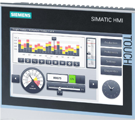
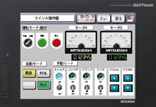





- Industrial display
-
Industrial Products
- DC Servo Drive
- AC Servo Drive
- Industrial board
- Siemens
- Switch Sensor
- Proximity Switch
- Temperature Controller
- Protection Relay
- Fiber Optic Sensor
- Encoder
- Fan
- other
- Heidelberg
- MITSUBISHI
- FANUC
- Siemens adapter
- Fujitsu connector
- Motherboard
- Board
- Contactor
- Circuit
- OMRON
- Relay
- Motor Driver
- power supply
- Cable
- Transformer
- HMI Touch Glass
-
HMI Full Machine Whole unit
- OMRON HMI Touch Panel
- Siemens HMI Touch Panel
- Mitsubishi HMI Touch Panel
- Allen-Bradley automation HMI Touch Panel
- DELTA HMI Touch Panel
- Proface HMI Touch Panel
- KINCO DELTA HMI Touch Panel
- HITECH HMI Touch Panel
- WEINTEK HMI Touch Panel
- TECVIEW HMI Touch Panel
- WEINVIEW HMI Touch Panel
- PANASONIC HMI Touch Panel
- KYOCERA HMI Touch Panel
- SCHNEIDER HMI Touch Panel
- Module
- lcd inverter
- Membrane Keypad Switch
- Zhiyan Customized Touch Screens
- Frequency Inverter
- Servo Motor
- PLC
In the intricate world of industrial automation and specialized display solutions, the precise matching of components is paramount. At the heart of many Mitsubishi Human Machine Interface (HMI) units, programmable logic controller (PLC) interfaces, and specialized medical or industrial equipment lies a critical component: the AC121SA01. This 12.1-inch LCD display module, with its specific 800 x 600 (SVGA) resolution, is far more than a simple screen; it is a dedicated interface engineered for reliability, clarity, and seamless integration within demanding environments.

This article delves into a comprehensive analysis of the AC121SA01 LCD module. We will explore its core technical specifications and the rationale behind its design choices, moving beyond basic part numbers to understand its role within larger systems. For engineers, procurement specialists, and maintenance professionals, a deep understanding of this panel's characteristics, compatible applications, and sourcing considerations is essential for ensuring system longevity, performance, and cost-effective maintenance. Our exploration will provide the insights needed to make informed decisions regarding this pivotal component.
Decoding the AC121SA01: Technical Specifications and Design Philosophy
The AC121SA01 is defined by a set of precise engineering parameters tailored for functional durability over consumer-grade aesthetics. Its 12.1-inch diagonal active area typically utilizes a TFT (Thin-Film Transistor) LCD, providing a stable and controllable image. The 800 x 600 pixel SVGA resolution is a key identifier. In an era of high-definition displays, this resolution was strategically chosen for industrial applications where legibility of text, schematic symbols, and interface buttons is more critical than photographic detail. It ensures sharp, block-free rendering of classic HMI software graphics.
Further specifications include its aspect ratio of 4:3, the standard for monitors and interfaces during its design period, perfectly framing traditional control software layouts. The module incorporates a CCFL (Cold Cathode Fluorescent Lamp) backlighting system, known for its even brightness and long operational life under continuous use. Critical interface details involve a standard LVDS (Low-Voltage Differential Signaling) connector, which ensures robust, low-noise signal transmission from the controller board. Understanding these specs is the first step in recognizing its intended application sphere.
The Ideal Application Ecosystem for Mitsubishi Display Panels
The AC121SA01 was not designed for general-purpose computing but for embedded integration within controlled environments. Its primary home is in Mitsubishi's own industrial automation products. It is commonly found as the display core in Mitsubishi GOT (Graphic Operation Terminal) series HMIs, such as certain GOT1000 models, and as part of interfaces for PLCs and CNC systems. These environments demand 24/7 operational reliability, resistance to temperature fluctuations, and minimal downtime.
Beyond factory floors, this module's characteristics make it suitable for specialized medical devices (where stable grayscale performance is key for imaging), transportation vehicle consoles, and point-of-sale or kiosk systems. The common thread is the need for a dependable, standardized display that interfaces reliably with a dedicated controller. The panel acts as the faithful output device, presenting crucial data and controls without the overhead or fragility of a consumer-grade monitor.
Interface and Compatibility: The Critical Link to System Controllers
Integration is where the AC121SA01 proves its engineered value. The module typically features a single, defined LVDS interface pinout. This is not a plug-and-play HDMI or VGA port; it is a direct, board-to-board connection requiring a matching controller board (often called a timing controller or T-Con board) that generates the correct LVDS signal protocol and power for the panel.
Compatibility, therefore, hinges on exact electrical and signal matching. The interface defines the voltage, data lane configuration, and clocking. For engineers designing a system or technicians replacing a faulty screen, ensuring the controller's LVDS output matches the panel's input requirements is non-negotiable. Using an incompatible signal can, at best, result in a distorted image and, at worst, damage the module. This underscores the importance of sourcing the exact module or a verified, pin-to-pin compatible alternative.
Performance in Harsh Environments: Durability and Longevity Factors
Industrial panels like the AC121SA01 are built to specifications that transcend typical office equipment. Longevity and stability are the foremost design goals. The CCFL backlight, while consuming more power than modern LEDs, is chosen for its proven track record of consistent output over tens of thousands of hours. The operating temperature range is significantly wider than that of consumer laptops or monitors, allowing functionality in unheated warehouses or near machinery that generates heat.
The panel's construction often includes reinforced mounting points and a robust metal or rigid plastic frame to withstand vibration—a common occurrence in manufacturing settings. Furthermore, the surface is usually a durable polycarbonate or treated glass that resists scratches and chemical exposure. These features collectively ensure that the display remains the most reliable part of the human-machine interface, outlasting countless cycles of operation.
Sourcing and Replacement: Navigating the Supply Chain
As the original equipment for which the AC121SA01 was designed ages, the landscape shifts from OEM installation to the replacement and repair market. Sourcing this module requires careful navigation. Options include original Mitsubishi service channels (often at a premium), specialized industrial electronic component distributors, and third-party manufacturers producing compatible panels.
Key considerations when sourcing include: verifying the exact model number and revision, ensuring the physical dimensions and mounting hole patterns match, and critically, confirming the interface pinout and voltage requirements are identical. While "compatible" panels can offer cost savings, due diligence is required to avoid compatibility issues. Reputable suppliers will provide detailed datasheets and compatibility guarantees, which are invaluable for maintenance engineers tasked with keeping critical equipment operational.
Future-Proofing and Legacy System Support
The discussion of the AC121SA01 inevitably touches on the broader challenge of supporting legacy industrial systems. Many factories run machines for decades, and the display interface is a common point of failure. The continued availability of modules like this one is crucial for minimizing costly system upgrades or production halts. This creates a niche market dedicated to reverse-engineering and manufacturing legacy components.
Looking forward, the trend is toward LED-backlit, higher-resolution panels. However, for existing systems, a direct "drop-in" replacement that matches the old panel's physical, electrical, and optical characteristics is the ideal solution. The industry's ability to provide these parts, whether original or high-quality compatibles, is a testament to the long lifecycle philosophy of industrial design and the ongoing need to bridge technological generations.
Frequently Asked Questions (FAQs)
Q1: What is the AC121SA01 LCD module primarily used for?A1: It is primarily used as the display component in Mitsubishi industrial HMIs (like GOT series), PLC interfaces, and other embedded systems requiring a reliable 12.1" SVGA screen.
Q2: What does "800*600" resolution mean for this panel?A2: It refers to the screen having 800 pixels horizontally and 600 pixels vertically (SVGA). This is optimal for clear text and simple graphics in industrial control interfaces.
Q3: Is the AC121SA01 compatible with any 12.1-inch monitor?A3: No. It requires a specific LVDS signal from a compatible controller board. Its physical mounting, interface, and power requirements are designed for embedded integration, not standard PC use.
Q4: What type of backlight does it use?A4: It typically uses a CCFL (Cold Cathode Fluorescent Lamp) backlight system, known for long life and even illumination.
Q5: Can I replace a broken AC121SA01 with a different brand panel?A5: Yes, but only with a panel that is a verified pin-to-pin compatible replacement, matching the exact interface, voltage, dimensions, and mounting points.
Q6: Where can I source a replacement AC121SA01 module?A6: From Mitsubishi authorized parts distributors, specialized industrial electronic component suppliers, or reputable third-party manufacturers of compatible display modules.
Q7: What are the main signs of failure for this LCD module?A7: Common signs include a dim or flickering backlight, horizontal/vertical lines, a completely blank screen (with power indicator on), or distorted color and image.
Q8: Is it difficult to install a replacement module?A8: For technicians familiar with electronics, it involves careful disassembly, disconnecting the LVDS cable and power, and reversing the process with the new panel. Static electricity precautions are mandatory.
Q9: Why is the 4:3 aspect ratio significant?A9: It was the standard for computer monitors and industrial software when this panel was designed, making it ideal for displaying traditional control software layouts without wasted space.
Q10: Are there modern equivalents with LED backlights?A10: Yes, many newer compatible panels offer LED backlights for lower power consumption and potentially longer life, but they must maintain the same form factor and interface to be a direct replacement.
Conclusion
The AC121SA01 12.1-inch LCD module exemplifies the specialized engineering behind industrial components. More than just a screen, it is a purpose-built interface designed for reliability, clarity, and seamless integration within Mitsubishi and other demanding control systems. Its SVGA resolution, CCFL backlighting, and robust LVDS interface are not arbitrary choices but deliberate decisions to ensure performance in environments where failure is not an option.
Understanding its technical DNA, application context, and compatibility requirements is crucial for anyone involved in specifying, maintaining, or repairing equipment that depends on it. As legacy systems continue to form the backbone of industry, the knowledge of how to source and integrate such specialized components becomes an invaluable skill, ensuring operational continuity and bridging the gap between proven technology and the evolving manufacturing landscape.





