















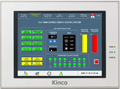
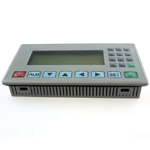




- Industrial display
-
Industrial Products
- DC Servo Drive
- AC Servo Drive
- Industrial board
- Siemens
- Switch Sensor
- Proximity Switch
- Temperature Controller
- Protection Relay
- Fiber Optic Sensor
- Encoder
- Fan
- other
- Heidelberg
- MITSUBISHI
- FANUC
- Siemens adapter
- Fujitsu connector
- Motherboard
- Board
- Contactor
- Circuit
- OMRON
- Relay
- Motor Driver
- power supply
- Cable
- Transformer
- HMI Touch Glass
-
HMI Full Machine Whole unit
- OMRON HMI Touch Panel
- Siemens HMI Touch Panel
- Mitsubishi HMI Touch Panel
- Allen-Bradley automation HMI Touch Panel
- DELTA HMI Touch Panel
- Proface HMI Touch Panel
- KINCO DELTA HMI Touch Panel
- HITECH HMI Touch Panel
- WEINTEK HMI Touch Panel
- TECVIEW HMI Touch Panel
- WEINVIEW HMI Touch Panel
- PANASONIC HMI Touch Panel
- KYOCERA HMI Touch Panel
- SCHNEIDER HMI Touch Panel
- Module
- lcd inverter
- Membrane Keypad Switch
- Zhiyan Customized Touch Screens
- Frequency Inverter
- Servo Motor
- PLC
In the intricate world of industrial and embedded display solutions, specific components become the unsung heroes of countless applications. One such component is the AC035QG01, a 3.5-inch TFT-LCD module manufactured by Mitsubishi Electric. This article delves deep into this particular display module, moving beyond basic datasheet specifications to explore its technological foundations, unique characteristics, and the practical considerations for its integration. As a-Si (Amorphous Silicon) TFT technology continues to be a reliable workhorse for many display needs, understanding the nuances of a module like the AC035QG01 is crucial for engineers, product designers, and procurement specialists.

We will dissect its core attributes, starting with its fundamental 240(RGB)×320 QVGA resolution and 3.5-inch diagonal, examining why this format remains persistently relevant. The discussion will then progress to its internal drive electronics and interface logic, which are pivotal for seamless system integration. Furthermore, we will analyze its optical performance, including brightness, contrast, and viewing angle, in the context of typical operating environments. The article will also address critical mechanical and reliability aspects, concluding with a forward-looking perspective on its application ecosystem and legacy in a rapidly evolving display market.
Decoding the Core Specifications: QVGA in a 3.5-Inch Form
The AC035QG01 is fundamentally defined by its 3.5-inch diagonal screen size and a native resolution of 240 horizontal pixels by 320 vertical pixels, commonly termed QVGA. This specific combination is not arbitrary; it represents a classic and highly optimized format for human-machine interface (HMI) applications. The 3.5-inch size offers a substantial viewing area for displaying critical information, icons, and basic graphics without occupying excessive panel space within a device enclosure.
The QVGA resolution, while considered low by modern consumer smartphone standards, provides a distinct advantage in embedded systems: lower complexity and cost. With only 76,800 active pixels per color (240x320), the demands on the display driver IC, system memory, and processing bandwidth are significantly reduced. This translates to lower power consumption, simpler controller design, and improved overall system reliability—paramount concerns in industrial, medical, and instrumentation contexts where the AC035QG01 is frequently deployed.
The Technology Behind the Display: a-Si TFT and LCM Integration
At the heart of the AC035QG01 lies a-Si (Amorphous Silicon) Thin-Film Transistor (TFT) technology. a-Si TFT is a mature, cost-effective, and highly reliable active-matrix technology that forms the switching element for each individual sub-pixel on the LCD panel. This technology allows for precise control of the liquid crystal material, enabling the sharp character and graphic display the module is known for.
It is critical to note that the AC035QG01 is not just a bare LCD panel; it is a full LCM (LCD Module). This means the a-Si TFT panel is fully integrated with its driver electronics, backlight unit (typically a side-lit LED array), and connecting interfaces (such as an RGB or LVDS interface) into a single, ready-to-use component. This LCM approach drastically simplifies the design-in process for engineers, as they receive a fully characterized and tested display subsystem, eliminating the need to source and qualify separate drivers, controllers, and backlights.
Electrical Interface and System Integration Logic
Successful integration of the AC035QG01 into a host system hinges on a clear understanding of its electrical interface. This module typically employs a parallel RGB or LVDS (Low-Voltage Differential Signaling) interface to receive video data from the host processor or graphics controller. The choice of interface has significant implications.
A parallel RGB interface, common in older or simpler microcontrollers, uses multiple data lines for each color (Red, Green, Blue) along with control signals like HSYNC, VSYNC, and DOTCLK. While straightforward, it requires more PCB traces and can be susceptible to noise in electrically noisy environments. An LVDS interface, on the other hand, serializes the data and transmits it differentially. This method uses fewer wires, is far more resistant to electromagnetic interference (EMI), and supports longer cable runs, making it preferable for robust industrial designs. Understanding the pinout, voltage levels, and timing requirements of these interfaces is a crucial step in the design process.
Optical Performance in Real-World Environments
The utility of any display is judged by its optical performance under real operating conditions. The AC035QG01 is engineered for readability in varied settings. Key parameters include its brightness, often rated in the range of 200-300 nits (cd/m²), which is sufficient for indoor use and many outdoor applications with controlled sunlight. The contrast ratio defines the difference between the brightest white and the darkest black, impacting text clarity and image depth.
Perhaps most important for HMIs where multiple operators may view the screen from different positions are the viewing angles. Specified in terms of left/right/up/down (e.g., 80/80/80/80 degrees), these angles indicate how much the image contrast and color shift when viewed off-axis. The AC035QG01, using standard TN (Twisted Nematic) or possibly improved technology, offers viewing angles suitable for most fixed-panel installations. Engineers must match these optical specs—including optional features like wide-temperature performance and anti-glare surface treatments—to the ambient light conditions of the target application.
Mechanical Design and Environmental Reliability
Beyond the electronic and optical specs, the mechanical construction and environmental robustness of the AC035QG01 are what qualify it for demanding industrial use. The module features a rigid mechanical outline with precise mounting hole locations, ensuring it can be securely fastened within a product chassis, often via a metal bezel. The thickness and weight are also key considerations for compact device design.
Reliability is tested against stringent environmental standards. This includes operating and storage temperature ranges, which for industrial-grade modules often span from -20°C or -30°C to +70°C or +80°C. Resistance to humidity, vibration, and shock are also critical factors. The backlight's lifespan, usually rated for 50,000 hours or more, is a major determinant of the module's overall longevity. These characteristics ensure that the display can perform consistently in factory floors, medical devices, transportation systems, and outdoor terminals where conditions are far from the benign environment of a consumer device.
Application Ecosystem and Modern Context
The AC035QG01 finds its home in a diverse ecosystem of applications that value reliability, longevity, and clarity over ultra-high resolution. Its primary domains include industrial automation (PLC interfaces, HMI panels, control systems), medical instrumentation (patient monitors, diagnostic equipment), point-of-sale terminals, handheld test and measurement devices, and various forms of transportation telematics.
In today's context, where high-resolution IPS panels dominate, the continued relevance of modules like the AC035QG01 is a testament to the principle of "right-tech." For many B2B and industrial products with a development cycle of years and an expected field life of a decade or more, the stability of supply, proven reliability, and cost-effectiveness of mature a-Si QVGA modules are irreplaceable advantages. They represent a known, low-risk component that performs a specific function excellently, allowing engineering resources to be focused on other system-level innovations.
FAQs
Q1: What does "a-Si TFT-LCD LCM" stand for?A: It stands for Amorphous Silicon Thin-Film Transistor Liquid Crystal Display Module. It describes the panel technology and the fact it's a complete module with drivers.
Q2: What is the screen resolution of the AC035QG01?A: The resolution is QVGA, or 240 pixels (horizontally) x 320 pixels (vertically).
Q3: What is a typical application for this display?A: It's commonly used in industrial HMIs, medical devices, instrumentation, and POS terminals where a reliable, clear, and cost-effective display is needed.
Q4: What type of interface does it use?A: It typically uses a parallel RGB interface or an LVDS interface. The exact type depends on the specific version/variant of the module.
Q5: How bright is this display module?A: Typical brightness values range from 200 to 300 nits (cd/m²), suitable for most indoor and some outdoor environments.
Q6: What are the key advantages of using an LCM?A: An LCM simplifies design, reduces development time, and ensures compatibility as the display, drivers, and backlight are pre-integrated and tested.
Q7: Is this module suitable for wide temperature environments?A: Industrial-grade versions often have a wide operating temperature range, such as -30°C to +80°C, but the exact specs must be verified in the datasheet.
Q8: What is the expected lifespan of the backlight?A: The LED backlight is typically rated for 50,000 hours or more, ensuring long-term operation.
Q9: Can this display show color graphics?A: Yes, as a color TFT-LCD, it can display full color graphics, icons, and text, limited by its QVGA resolution.
Q10: Is the AC035QG01 still a relevant choice for new designs?A: Yes, for applications prioritizing proven reliability, long-term supply, lower system cost, and sufficient clarity over high resolution, it remains a very relevant and pragmatic choice.
Conclusion
The Mitsubishi AC035QG01 3.5-inch a-Si TFT-LCD module exemplifies the enduring value of optimized, reliable technology in specialized fields. Its QVGA resolution on a 3.5-inch diagonal, powered by mature a-Si TFT technology and delivered as a fully integrated LCM, creates a solution that is greater than the sum of its parts. For engineers, the value lies in its simplification of the integration process, its robust mechanical and environmental specifications, and its predictable performance.
In an era obsessed with pixel density and cutting-edge panel tech, modules like the AC035QG01 serve as a crucial reminder that successful product design is about matching the component to the application's true requirements. For countless industrial, medical, and commercial devices, this module provides the perfect balance of readability, durability, and cost, securing its place as a trusted component in the embedded world for years to come.





