













































- Industrial display
-
Industrial Products
- DC Servo Drive
- AC Servo Drive
- Industrial board
- Siemens
- Switch Sensor
- Proximity Switch
- Temperature Controller
- Protection Relay
- Fiber Optic Sensor
- Encoder
- Fan
- other
- Heidelberg
- MITSUBISHI
- FANUC
- Siemens adapter
- Fujitsu connector
- Motherboard
- Board
- Contactor
- Circuit
- OMRON
- Relay
- Motor Driver
- power supply
- Cable
- Transformer
- HMI Touch Glass
-
HMI Full Machine Whole unit
- OMRON HMI Touch Panel
- Siemens HMI Touch Panel
- Mitsubishi HMI Touch Panel
- Allen-Bradley automation HMI Touch Panel
- DELTA HMI Touch Panel
- Proface HMI Touch Panel
- KINCO DELTA HMI Touch Panel
- HITECH HMI Touch Panel
- WEINTEK HMI Touch Panel
- TECVIEW HMI Touch Panel
- WEINVIEW HMI Touch Panel
- PANASONIC HMI Touch Panel
- KYOCERA HMI Touch Panel
- SCHNEIDER HMI Touch Panel
- Module
- lcd inverter
- Membrane Keypad Switch
- Zhiyan Customized Touch Screens
- Frequency Inverter
- Servo Motor
- PLC
In the intricate world of industrial and specialized display solutions, certain components stand out not merely as parts, but as benchmarks of reliability and performance. The Mitsubishi AA150XS01 is one such component—a 15-inch a-Si TFT-LCD LCM module that has carved a significant niche in applications where durability and clarity are non-negotiable. This article delves deep into this specific display module, exploring its technical DNA and the practical implications of its specifications.
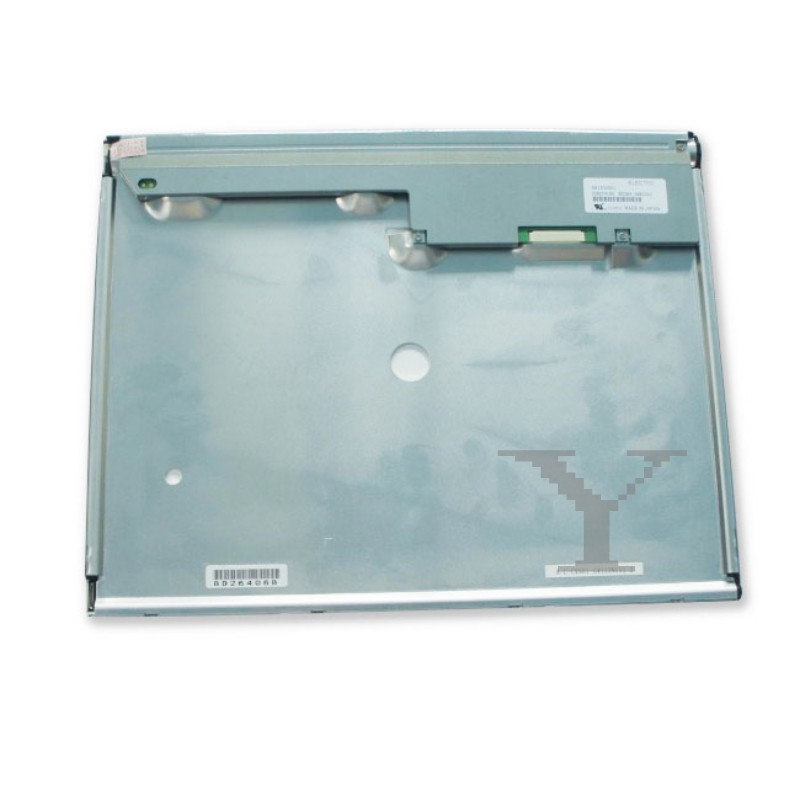
Beyond a simple part number, the AA150XS01 represents a convergence of mature, proven technology engineered for mission-critical environments. With its XGA (1024x768) resolution and 85 PPI pixel density, it occupies a specific segment of the display market, often overlooked in the consumer race for ultra-high definition. Our exploration will unpack its core technology, dissect its key performance parameters, examine its typical integration scenarios, and analyze its enduring value proposition in a rapidly evolving technological landscape. This is a detailed examination for engineers, procurement specialists, and anyone seeking to understand the sustained relevance of a high-quality industrial display component.

Deconstructing the Core Technology: a-Si TFT-LCD and LCM
At the heart of the AA150XS01 lies Amorphous Silicon (a-Si) Thin-Film Transistor (TFT) technology. This is the workhorse of the LCD industry, renowned for its excellent balance of performance, manufacturing maturity, and cost-effectiveness for standard-size panels. Each pixel is controlled by its own transistor, allowing for precise and fast switching, which translates into stable images with good response times.
The module is designated as an LCM (LCD Module), meaning it is a fully integrated unit that includes the TFT-LCD panel itself, the driver ICs, the backlight unit (typically a CCFL in this generation of module), and the interface connectors. This "ready-to-integrate" design significantly reduces engineering overhead for OEMs, as the complex tasks of display driving and backlight power management are already solved within the module's defined input parameters. This integration is crucial for its deployment in industrial settings.
Analyzing Key Specifications: Resolution, Pixel Density, and Form Factor
The module's native resolution is 1024 (RGB) x 768, known as XGA. This 4:3 aspect ratio format was once the standard for desktop monitors and remains highly relevant in industrial, medical, and point-of-sale systems where software interfaces are often designed for this ratio. The 85 Pixels Per Inch (PPI) density results in clearly defined, legible pixels, which is advantageous for displaying detailed schematics, text-based data, or control interfaces without the scaling issues that can plague higher-PPI displays in legacy systems.
The 15-inch diagonal size in a 4:3 aspect ratio provides substantial screen real estate within a predictable and robust form factor. Unlike widescreen displays, this squarer format is often more efficient for vertical data presentation and instrument panel layouts. The physical dimensions and mounting hole patterns are standardized, facilitating direct replacement or integration into existing chassis designed for this classic display size.
The Industrial Application Ecosystem
The AA150XS01 finds its true home in demanding non-consumer environments. Its design philosophy prioritizes longevity, consistent performance over wide temperature ranges, and high mean time between failures (MTBF). Typical applications include industrial human-machine interfaces (HMIs) on factory floors, medical monitoring devices (where specific certifications may be required separately), test and measurement equipment, and specialized point-of-sale or kiosk systems.
In these contexts, the display is not an entertainment device but a tool for data interpretation and system control. The XGA resolution provides sufficient detail for complex diagrams, while the high brightness and contrast ratios (typical of this module grade) ensure readability in varied lighting conditions, from dark control rooms to brightly lit laboratories.
Interface and Integration Considerations
Integrating a display module like the AA150XS01 requires careful attention to its electrical and signal interface. This module typically utilizes LVDS (Low-Voltage Differential Signaling) or similar parallel RGB interfaces, which are standard for robust, noise-resistant data transmission in industrial applications. The input voltage for the backlight and logic board must be precisely matched, and the timing characteristics of the input signal must conform to the module's datasheet specifications.
Successful integration also involves thermal and mechanical planning. Designers must ensure adequate heat dissipation, as excessive heat can shorten the backlight lifespan and affect LCD performance. Furthermore, understanding the module's viewing angle characteristics (typically specified for contrast ratio) is vital to ensure the display is mounted or oriented correctly for the end-user's typical line of sight.
Comparative Context: The Value of Mature Display Technology
In an era dominated by 4K OLEDs and high-refresh-rate gaming panels, a 15-inch XGA module might seem anachronistic. However, its value is contextual. For many industrial systems, the driving factors are reliability, supply longevity, compatibility, and total cost of ownership, not cutting-edge pixel density. The technology in the AA150XS01 is thoroughly proven, with well-understood failure modes and a vast history of field deployment.
This maturity translates into stability for OEMs. It allows for the maintenance of product lines for a decade or more without forced redesigns due to display panel end-of-life—a common headache with fast-cycling consumer panels. For maintenance and repair sectors, the availability of such standardized modules is critical for keeping critical equipment operational long after its original manufacture.
Sourcing, Lifecycle, and Future-Proofing
Procuring a specialized component like this requires sourcing from authorized distributors or specialist suppliers of industrial display panels. Key considerations include verifying the exact revision of the module, its grade (commercial, industrial, or medical), and its available warranty. Given its nature as a mature product, understanding its lifecycle status—whether in active production, nearing end-of-life, or available from stock—is paramount for project planning.
Future-proofing systems using this module involves designing with potential replacements in mind. While the AA150XS01 is a specific part, understanding its mechanical footprint, interface protocol, and power requirements allows engineers to plan for potential future upgrades to functionally compatible panels, perhaps with LED backlights or updated connectors, while maintaining the core system architecture.
FAQs: AA150XS01 Mitsubishi Display Module
1. What does "LCM" stand for in AA150XS01?LCM means "LCD Module," indicating it's a complete unit with panel, drivers, backlight, and interface.
2. What is the screen resolution and aspect ratio?It is XGA resolution: 1024 x 768 pixels, with a 4:3 aspect ratio.
3. What is the pixel density (PPI)?The pixel density is approximately 85 PPI (Pixels Per Inch).
4. What is a-Si TFT technology?Amorphous Silicon Thin-Film Transistor, a stable and mature technology for controlling individual LCD pixels.
5. What are typical applications for this display?Industrial HMIs, medical devices, test equipment, and specialized POS/kiosk systems.
6. What type of backlight does it use?This module generation typically uses a CCFL (Cold Cathode Fluorescent Lamp) backlight system.
7. What is the common interface for this module?It commonly uses an LVDS or parallel RGB interface for robust data transmission.
8. Why choose this over a newer, higher-resolution panel?For reliability, long-term supply, software compatibility with legacy systems, and lower total cost of ownership in industrial settings.
9. Is this module suitable for new designs?It can be, depending on lifecycle status and requirements. For new designs, verifying active production and exploring potential modern equivalents is advised.
10. Where can I source the AA150XS01?Through authorized electronic component distributors or specialized industrial display suppliers.
Conclusion
The Mitsubishi AA150XS01 15-inch XGA LCD module exemplifies how specialized, mature technology continues to deliver indispensable value in specific sectors. Its technical specifications—the 4:3 XGA format, 85 PPI density, and robust LCM construction—are not outdated metrics but deliberate choices that align perfectly with the demands of industrial, medical, and professional applications. In these environments, consistency trumps novelty, and longevity outweighs fleeting trends.
This deep dive underscores that component selection, especially for core interfaces like displays, is a strategic decision. The AA150XS01 represents a paradigm of reliability and integration-friendly design, offering system builders a known quantity that reduces risk and ensures operational stability. For those engineering solutions where performance is measured in decades of seamless service rather than frames per second, modules like the AA150XS01 remain a cornerstone of effective design.





