













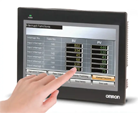
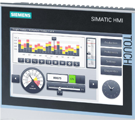
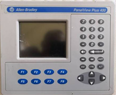





- Industrial display
-
Industrial Products
- DC Servo Drive
- AC Servo Drive
- Industrial board
- Siemens
- Switch Sensor
- Proximity Switch
- Temperature Controller
- Protection Relay
- Fiber Optic Sensor
- Encoder
- Fan
- other
- Heidelberg
- MITSUBISHI
- FANUC
- Siemens adapter
- Fujitsu connector
- Motherboard
- Board
- Contactor
- Circuit
- OMRON
- Relay
- Motor Driver
- power supply
- Cable
- Transformer
- HMI Touch Glass
-
HMI Full Machine Whole unit
- OMRON HMI Touch Panel
- Siemens HMI Touch Panel
- Mitsubishi HMI Touch Panel
- Allen-Bradley automation HMI Touch Panel
- DELTA HMI Touch Panel
- Proface HMI Touch Panel
- KINCO DELTA HMI Touch Panel
- HITECH HMI Touch Panel
- WEINTEK HMI Touch Panel
- TECVIEW HMI Touch Panel
- WEINVIEW HMI Touch Panel
- PANASONIC HMI Touch Panel
- KYOCERA HMI Touch Panel
- SCHNEIDER HMI Touch Panel
- Module
- lcd inverter
- Membrane Keypad Switch
- Zhiyan Customized Touch Screens
- Frequency Inverter
- Servo Motor
- PLC
In the demanding world of industrial technology, the interface between human and machine is paramount. At the heart of this critical interaction lies the industrial LCD display panel, a component engineered not for aesthetic appeal but for unwavering reliability and performance under duress. This article delves into the specifics of one such robust component: the 12.1-inch screen identified as the AA121TD02 industrial LCD module. Featuring a resolution of 1280 x 800 (WXGA), this panel represents a significant workhorse in applications where failure is not an option.

We will explore the defining characteristics that separate an industrial-grade display like the AA121TD02 from its commercial counterparts. Beyond mere specifications, the discussion will cover its optimal application environments, the critical importance of its mechanical and electrical interfaces, and the advanced technologies that ensure its longevity. Furthermore, we will provide practical guidance on integration challenges and considerations for sourcing and maintaining these vital components. This deep dive aims to equip engineers, procurement specialists, and system integrators with the knowledge to leverage this module effectively within their industrial ecosystems.

Defining the Industrial-Grade Display: Beyond Consumer Specs
The AA121TD02 is not a consumer laptop screen repurposed for factory use. Its "industrial" designation signifies a fundamental redesign for endurance. While the 1280x800 resolution offers a clear and sufficiently detailed workspace for HMIs and control dashboards, the core value lies beneath the surface. These modules are built to withstand extreme temperature fluctuations, often operating reliably from -20°C to 70°C or beyond, unlike commercial panels with a narrow 0-50°C range.
Furthermore, they are constructed with high-brightness LEDs (often 500 nits or more) to combat glare in sunlit warehouses or outdoor settings. The longevity of the backlight is also a key metric, rated for 50,000 to 100,000 hours of continuous operation. Robust construction mitigates the effects of vibration, shock, and humidity—common adversaries in industrial settings. Every material, from the glass to the polarizers, is selected for stability and resistance to degradation, ensuring consistent performance over a product lifecycle that may span a decade.
Ideal Application Environments for the 12.1" WXGA Module
The specific combination of a 12.1-inch form factor and 1280x800 resolution makes the AA121TD02 module exceptionally versatile. Its size provides ample screen real estate without being overly bulky, making it ideal for embedded systems. Primary applications include Human-Machine Interfaces (HMIs) for industrial automation, where it serves as the command center for PLCs, controlling machinery, robotics, and conveyor systems.
It is equally prevalent in transportation and logistics, integrated into fleet management terminals, forklift dashboards, and airport ground support equipment, where readability in all lighting conditions is crucial. The panel is also found in medical devices (diagnostic equipment, patient monitors), point-of-sale/kiosk systems in harsh retail environments, and utility and energy control stations. In each scenario, the display must present complex data reliably and respond to constant interaction, a task for which this industrial module is expressly designed.
Critical Interface and Connectivity Considerations
Successful integration of the AA121TD02 hinges on understanding its interface. Unlike consumer panels that may use LVDS (Low-Voltage Differential Signaling), many industrial modules like this one utilize standard interfaces such as LVDS or eDP (Embedded DisplayPort), but with industrial-grade connectors that resist corrosion and ensure a secure connection. The pinout and power requirements are detailed in the datasheet and must be meticulously followed.
The module typically requires a single power supply (e.g., 3.3V or 5V) for the logic and a higher voltage for the LED backlight driver. Timing controllers (T-CON) are integrated to manage signal processing. System designers must ensure the host controller's output signal matches the panel's native resolution, timing parameters, and interface type. Attention to these electrical and signal-level details in the design phase prevents flickering, ghosting, or complete failure in the field.
Enhancing Durability: Touch Technologies and Optical Bonding
Many deployments of the AA121TD02 require touch functionality. Industrial environments demand robust touch solutions. Projected Capacitive (PCAP) touchscreens, with excellent clarity and multi-touch support, are popular but can be fitted with thicker cover glass for physical protection. Resistive touch, while offering lower optical clarity, can be operated with gloves or a stylus and is highly resistant to surface liquids and contaminants.
A key technology for enhancing durability and readability is optical bonding. This process fills the air gap between the LCD and the cover glass/touch sensor with a clear optical resin. This eliminates internal condensation, reduces surface reflections dramatically, and makes the display more readable in high-ambient light. It also increases structural rigidity and protects against dust ingress. For any application subject to vibration, moisture, or bright lighting, optical bonding is a highly recommended enhancement.
Integration Challenges and Thermal Management
Integrating an industrial display is a mechanical and thermal engineering challenge as much as an electrical one. The module must be securely mounted within the host device's chassis, often using metal brackets, to dampen vibration. Care must be taken to avoid applying pressure to the fragile edges of the LCD glass.
Thermal management is critical. While the panel itself is designed for high temperatures, excessive heat can shorten the lifespan of the backlight and other components. Designers must consider airflow, heat sinks, or even active cooling in sealed enclosures. Electromagnetic Interference (EMI) is another concern; the metal bezel of the display and proper shielding of the host system are necessary to ensure compliance with industrial EMC standards and prevent interference with sensitive equipment.
Sourcing, Customization, and Lifecycle Management
Procuring a module like the AA121TD02 requires partnering with specialized distributors or manufacturers who understand the industrial supply chain. Key considerations include long-term availability—industrial projects have long lead times and maintenance cycles, and a display must remain available for years, even after a consumer model is discontinued.
Manufacturers often offer customization options such as specific mounting holes, modified firmware for the controller, tailored brightness levels, or integrated touch solutions. When sourcing, verifying certifications for specific industries (e.g., marine, medical, automotive) is crucial. Finally, a clear plan for lifecycle management, including potential second-sourcing or end-of-life buy recommendations, is an essential part of the procurement strategy to mitigate future supply chain risk.
FAQs: Industrial LCD Module AA121TD02
1. What is the AA121TD02?It is a 12.1-inch industrial-grade LCD module with a WXGA (1280 x 800) resolution, designed for reliability in harsh environments.
2. How is it different from a consumer 12.1" screen?It features a wider operating temperature range, higher brightness, longer lifespan, and more robust construction against vibration, shock, and humidity.
3. What are its typical applications?Industrial HMIs, transportation terminals, medical devices, ruggedized POS/kiosks, and utility control panels.
4. What interface does it use?It commonly uses standard interfaces like LVDS or eDP, but the exact specification must be confirmed with the manufacturer's datasheet.
5. Can I get it with a touchscreen?Yes, it is often available with integrated Projected Capacitive (PCAP) or Resistive touch panels.
6. What is optical bonding and do I need it?Optical bonding fills the air gap with resin. It is highly recommended for enhanced readability in bright light, improved durability, and moisture resistance.
7. What are the key integration challenges?Ensuring mechanical stability, proper thermal management, correct signal timing, and EMI shielding are primary concerns.
8. What is the typical brightness level?Industrial modules like this often start at 500 nits and can go much higher (1000+ nits) for sunlight-readable applications.
9. Why is long-term availability important?Industrial products have long lifecycles. A guaranteed supply for many years prevents costly redesigns due to component obsolescence.
10. Where should I source this module?From authorized distributors or manufacturers specializing in industrial display components who can provide technical support and lifecycle guarantees.
Conclusion
The 12.1-inch AA121TD02 industrial LCD module is far more than a simple screen; it is a precision-engineered component built for mission-critical visibility. Its value is defined not just by its 1280x800 resolution, but by its inherent ruggedness, extended operational parameters, and unwavering reliability in environments that would swiftly incapacitate a consumer display.
Selecting and integrating such a module requires a holistic understanding of its electrical interfaces, mechanical demands, and environmental enhancements like optical bonding. By appreciating these factors—from thermal management to long-term supply chain planning—engineers and integrators can ensure that this vital human-machine interface performs flawlessly, day in and day out, ultimately contributing to the resilience and efficiency of the larger industrial system it serves.





