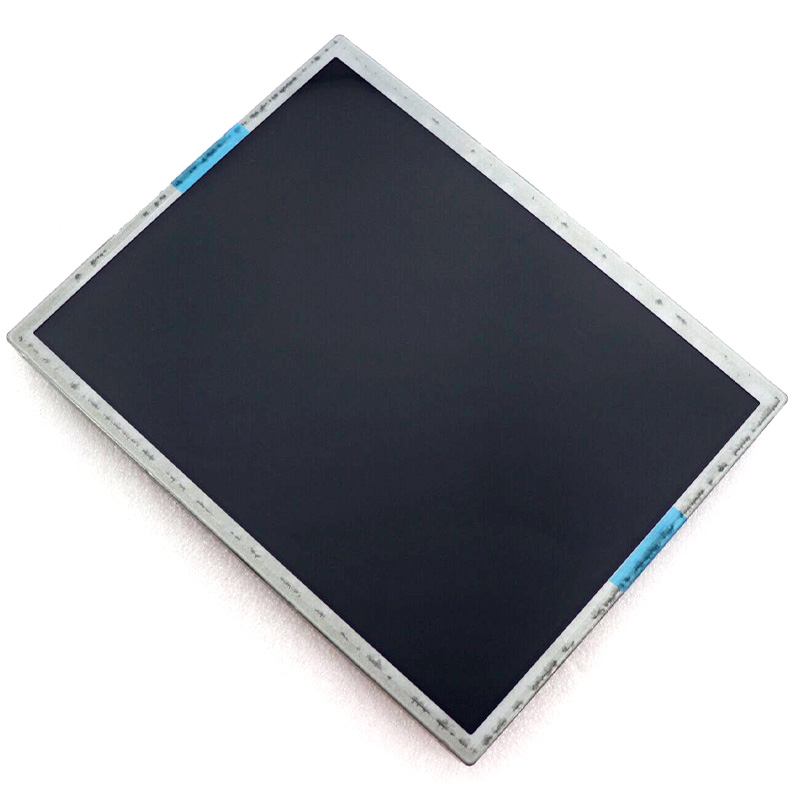
In the intricate world of electronic components, the display screen often serves as the critical bridge between a device's internal logic and its human user. Among the myriad of options available to engineers and product developers, the AA104XL12 10.4-inch TFT LCD display stands out as a mature, reliable, and highly specified module. Characterized by its 1024 x 768 (XGA) resolution, this screen represents a specific and enduring standard in industrial, medical, and embedded applications where clarity, compatibility, and robustness are non-negotiable.

This article delves into a comprehensive analysis of the AA104XL12 display. We will move beyond basic specifications to explore its underlying technology, the practical implications of its key parameters, and its ideal application environments. By understanding its strengths, limitations, and the nuances of its integration, designers and procurement specialists can make informed decisions about whether this display is the optimal interface solution for their next project.
Decoding the Core Technology: TFT LCD and XGA Resolution
At the heart of the AA104XL12 lies Thin-Film Transistor (TFT) Liquid Crystal Display technology. Unlike passive matrix displays, each pixel in a TFT LCD is controlled by one to four transistors, allowing for faster response times, superior color reproduction, and a sharper image with no "ghosting" effect. This active-matrix design is crucial for displaying dynamic content and complex graphical user interfaces (GUIs) commonly found in modern equipment.
The module's native resolution of 1024 x 768 pixels is defined as XGA (Extended Graphics Array). This 4:3 aspect ratio format was once the mainstream standard for desktop monitors and remains profoundly significant in specialized markets. The choice of XGA offers a distinct advantage: exceptional software and hardware compatibility. Countless legacy systems, operating systems, and application interfaces were designed for this resolution, ensuring that the AA104XL12 can seamlessly integrate into existing product lines or new designs that prioritize broad compatibility over widescreen formats.
The Significance of the 10.4-Inch Form Factor
The 10.4-inch diagonal measurement is not an arbitrary size but a carefully engineered standard within the industrial landscape. This form factor strikes a critical balance between informational density and physical practicality. It provides ample screen real estate to present multi-parameter data, schematic diagrams, or control dashboards without overwhelming the device's front panel or demanding excessive power.
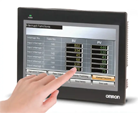
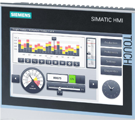
Physically, this size allows the display to fit into standardized enclosures and panels, often replacing older CRT or earlier-generation LCDs in equipment upgrades. For human-machine interface (HMI) applications, the 10.4-inch screen is large enough for effective touch interaction (when paired with a touch overlay) yet compact enough for use in space-constrained environments like factory floors, vehicle cockpits, or medical carts. Its dimensions make it a versatile choice for a "sweet spot" of usability.
Critical Performance Parameters and Their Impact
Evaluating a display requires looking beyond size and resolution. Key performance parameters of the AA104XL12 directly influence user experience and application suitability. Brightness, typically measured in nits (cd/m²), determines readability in high-ambient-light conditions such as outdoors or under bright factory lighting. A high-brightness version is often essential for these scenarios.
Contrast ratio defines the difference between the darkest black and the brightest white, impacting perceived depth and image quality. Viewing angle (often 140/120 degrees or better) dictates how far users can deviate from the screen's center without suffering color inversion or contrast loss—a vital feature for multi-operator stations. Additionally, response time affects motion clarity, which can be important for displaying rapidly updating data or video feeds.
Interface and Integration Considerations
The AA104XL12 typically features standard LVDS (Low-Voltage Differential Signaling) interfaces. LVDS has been the workhorse for display connectivity in embedded systems for years due to its robustness, noise immunity, and ability to transmit high-speed data over relatively long cables within a device. Understanding the pin configuration, power requirements (often 3.3V or 5V for logic and a higher voltage for the backlight), and the need for a compatible controller board is paramount for successful integration.
Developers must also consider the mechanical integration: mounting hole positions, bezel dimensions, and the potential addition of a resistive or capacitive touch panel. The choice of touch technology will add another layer to the interface, requiring a separate controller and driver but enabling intuitive direct interaction with the displayed content.
Ideal Application Environments and Use Cases
The AA104XL12 is not designed for consumer tablets or smartphones. Its value proposition shines in demanding, longevity-focused sectors. Industrial Automation is a primary domain, where it serves as an HMI for PLCs, controlling machinery, and monitoring production lines. Its ruggedness and stable performance under temperature fluctuations are key assets. In the Medical Device field, this display is found in patient monitors, diagnostic equipment, and surgical tools, where reliability and accurate color representation (for certain diagnostics) are critical. Other prominent applications include Transportation (in-vehicle information systems, marine navigation), Point-of-Sale (POS) systems, and Kiosks. In all these cases, the 4:3 XGA format often aligns perfectly with the interface design of professional software.
Comparative Analysis: XGA 4:3 vs. Modern Widescreen Formats
A crucial decision point is choosing between a traditional XGA display like the AA104XL12 and a modern widescreen (e.g., 1280x800 or 1920x1080) panel. The widescreen format offers more horizontal pixels, beneficial for side-by-side windows or cinematic content. However, the XGA's 4:3 ratio provides more vertical space, which is often more valuable for reading documents, viewing long lists of data, or operating legacy software that does not scale well to widescreen.
Furthermore, industrial and medical systems frequently have fixed panel cut-outs designed for 4:3 displays. Retrofitting a widescreen can be mechanically challenging and costly. The decision ultimately hinges on the specific application requirements: software compatibility, mechanical constraints, user interface layout, and whether the extra cost of a widescreen panel and potential software adaptation is justified.
FAQs: AA104XL12 10.4-Inch TFT LCD Display
Q1: What does the "AA104XL12" model number signify?A1: It is a manufacturer's part number identifying this specific 10.4-inch XGA TFT LCD module, detailing its size, resolution, and likely revision.
Q2: What is the primary advantage of the 1024x768 (XGA) resolution?A2: Excellent compatibility with a vast array of legacy and industrial software/hardware designed for the standard 4:3 aspect ratio.
Q3: Is this a touch screen display?A3: Typically, the AA104XL12 is a "bare" LCD panel. Touch functionality (resistive or capacitive) is usually added as a separate overlay component.
Q4: What interface does this display use?A4: It commonly uses an LVDS (Low-Voltage Differential Signaling) interface for reliable digital video transmission.
Q5: What are the typical brightness levels available?A5: They range from standard (~250-300 nits) to high-brightness versions (500-1000+ nits) for sunlight-readable applications.
Q6: In what environments is this display commonly used?A6: Industrial HMIs, medical devices, transportation systems, POS terminals, and various embedded/kiosk applications.
Q7: Can it display video content smoothly?A7: Yes, given a sufficient response time (e.g., 25ms or lower), it can handle standard video feeds, though it's optimized for GUI and data display.
Q8: What is the operating temperature range?A8: This varies by manufacturer specification but often falls within a commercial (0~50°C) or extended industrial (-20~70°C) range.
Q9: How does it compare to a widescreen display?A9: It offers superior vertical space and legacy compatibility, while widescreens provide more horizontal pixels for modern multimedia or multi-pane interfaces.
Q10: What do I need to drive this display in my product?A10: You will need an LVDS signal source (from an SBC, SoM, or dedicated controller board), appropriate power supplies for the logic and backlight, and a compatible cable.
Conclusion
The AA104XL12 10.4-inch XGA TFT LCD display is far more than a simple collection of specifications; it is a purpose-built component for professional and industrial applications. Its enduring relevance is a testament to the lasting value of the XGA standard, the practicality of the 10.4-inch form factor, and the proven reliability of TFT technology in challenging environments. For engineers and product managers, selecting this display is a decision weighted towards compatibility, reliability, and vertical usability over the latest consumer trends. It represents a strategic choice for upgrading existing systems or developing new equipment where software ecosystem, mechanical fit, and long-term stability are paramount. In a world racing towards higher resolutions and wider screens, the AA104XL12 confidently holds its ground as a specialized and indispensable solution for the embedded world.