


















- Industrial display
-
Industrial Products
- DC Servo Drive
- AC Servo Drive
- Industrial board
- Siemens
- Switch Sensor
- Proximity Switch
- Temperature Controller
- Protection Relay
- Fiber Optic Sensor
- Encoder
- Fan
- other
- Heidelberg
- MITSUBISHI
- FANUC
- Siemens adapter
- Fujitsu connector
- Motherboard
- Board
- Contactor
- Circuit
- OMRON
- Relay
- Motor Driver
- power supply
- Cable
- Transformer
- HMI Touch Glass
-
HMI Full Machine Whole unit
- OMRON HMI Touch Panel
- Siemens HMI Touch Panel
- Mitsubishi HMI Touch Panel
- Allen-Bradley automation HMI Touch Panel
- DELTA HMI Touch Panel
- Proface HMI Touch Panel
- KINCO DELTA HMI Touch Panel
- HITECH HMI Touch Panel
- WEINTEK HMI Touch Panel
- TECVIEW HMI Touch Panel
- WEINVIEW HMI Touch Panel
- PANASONIC HMI Touch Panel
- KYOCERA HMI Touch Panel
- SCHNEIDER HMI Touch Panel
- Module
- lcd inverter
- Membrane Keypad Switch
- Zhiyan Customized Touch Screens
- Frequency Inverter
- Servo Motor
- PLC
In the intricate world of industrial automation, medical equipment, and specialized human-machine interfaces (HMIs), the display module is far more than a simple window for information. It is the critical touchpoint between complex machine operations and human oversight. The Mitsubishi AA104SJ02-DE1 stands as a quintessential example of this vital component, engineered not for the consumer market but for environments where reliability, longevity, and clarity under demanding conditions are non-negotiable. This 10.4-inch a-Si TFT-LCD LCM (Liquid Crystal Module) represents a mature yet persistently relevant technology choice for system integrators.
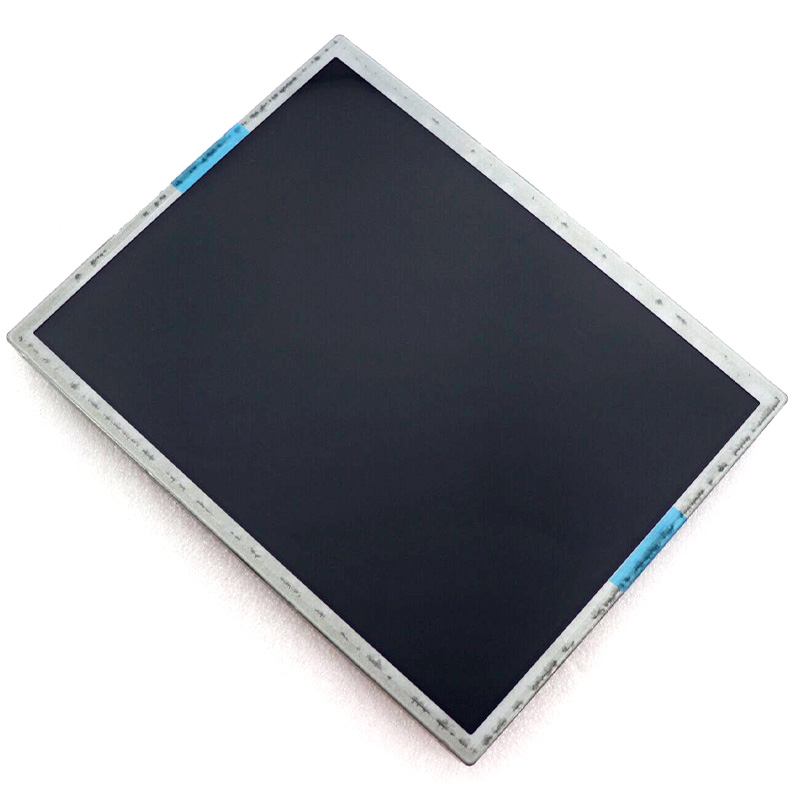
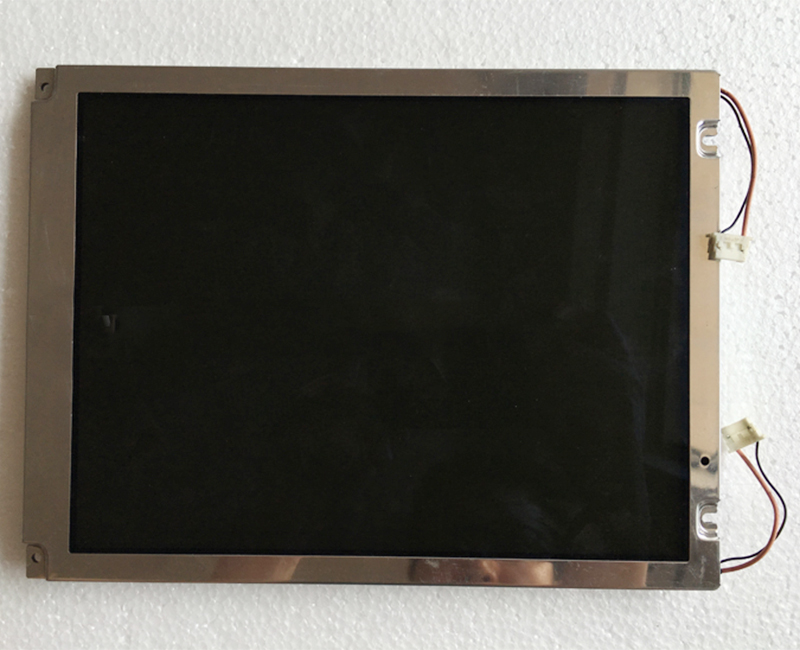
This article delves into a comprehensive technical and application-focused analysis of the AA104SJ02-DE1. We will move beyond basic datasheet specifications to explore the engineering rationale behind its SVGA (800x600) resolution at 96 PPI, the enduring advantages of amorphous Silicon (a-Si) TFT technology in industrial contexts, and the critical importance of its mechanical and interface design. Furthermore, we will examine its ideal application landscapes, compare it with potential technological alternatives, and provide practical guidance for integration and sourcing. Our goal is to provide system designers and procurement specialists with the depth of understanding needed to evaluate this module's fit for their next-generation or legacy-supporting projects.
Decoding the Core Specifications: SVGA Resolution and 96 PPI in Context
The AA104SJ02-DE1 features an SVGA (800 x 600 pixel) resolution with a pixel density of approximately 96 Pixels Per Inch (PPI). In an era dominated by high-PPI smartphone and monitor displays, these figures may seem modest. However, for its intended industrial and professional applications, this specification is a deliberate and optimal engineering choice. The 4:3 aspect ratio is perfectly suited for traditional machine control panels, diagnostic equipment interfaces, and data-entry terminals, where information is often arranged in lists, forms, and vertical data hierarchies.
A 96 PPI density on a 10.4-inch screen strikes a crucial balance. It ensures that text, numerical readouts, and schematic symbols are rendered with sharp legibility without being excessively small, reducing operator eye strain during long shifts. The lower pixel count, compared to higher-resolution panels, also places less computational load on the connected controller or embedded system, allowing for smoother graphical updates and enabling the use of more cost-effective processing hardware. This resolution is a standard in its field, ensuring broad software and driver compatibility.
The Enduring Relevance of a-Si TFT Technology
At the heart of this LCM is amorphous Silicon (a-Si) Thin-Film Transistor (TFT) technology. While newer technologies like LTPS (Low-Temperature Polycrystalline Silicon) or IGZO (Indium Gallium Zinc Oxide) offer higher electron mobility for potentially higher resolution or refresh rates, a-Si remains the workhorse for industrial displays. Its primary strengths are proven manufacturing maturity, exceptional cost-effectiveness at this screen size, and outstanding long-term reliability.
Industrial environments often subject components to wide temperature variations, continuous operation cycles, and voltage fluctuations. a-Si TFT technology is renowned for its stable performance over extended periods and high temperatures. The manufacturing processes for a-Si are well-understood and optimized, leading to high production yields and consistent quality. For an application where the display must perform flawlessly for a decade or more without degradation, the robust and predictable nature of a-Si TFTs, as utilized in the Mitsubishi AA104SJ02-DE1, is frequently the superior choice over newer, less field-proven alternatives.
Mechanical and Electrical Integration Design
The designation LCM (Liquid Crystal Module) indicates that the AA104SJ02-DE1 is a fully integrated unit containing the TFT glass, driver electronics, backlight system, and often a protective bezel or frame. This "module" approach is crucial for integration. Mitsubishi designs these modules with standardized mechanical footprints and mounting hole patterns, allowing engineers to design a single chassis cutout that can accommodate the module across product generations.
Electrically, the module accepts standard LVDS (Low-Voltage Differential Signaling) or similar video interfaces, which provide robust, noise-resistant data transmission—a necessity in electrically noisy industrial settings. The backlight system, typically a long-life CCFL (Cold Cathode Fluorescent Lamp) or an LED array in modern variants, is designed for consistent brightness and easy replacement in some designs. The integration of all these elements into one certified module drastically reduces development time, simplifies supply chain management, and ensures optical and electrical performance is guaranteed by the manufacturer.
Primary Application Landscapes and Use Cases
The AA104SJ02-DE1 finds its home in environments where performance trumps aesthetic novelty. Its primary application domains include:
Industrial Automation & Control: As the main HMI for PLCs (Programmable Logic Controllers) on factory floors, controlling assembly lines, robotic arms, and packaging machinery. Its readability and ruggedness are key.
Medical Diagnostic Equipment: In devices like ultrasound machines, patient monitors, and laboratory analyzers, where clear, accurate, and flicker-free display of data and images is critical.
Test & Measurement Instruments: For oscilloscopes, spectrum analyzers, and other bench-top equipment requiring stable and precise graphical output.
In these fields, the module is valued for its ability to deliver uninterrupted service, often 24/7, with minimal maintenance and maximum uptime.
Comparative Analysis: Positioning Against Alternative Technologies
Understanding the AA104SJ02-DE1 requires comparing it to other options. Against consumer-grade LCD panels, it wins on reliability, temperature range, and longevity but may lack wide viewing angles or high brightness. Compared to newer industrial-grade IPS or LTPS panels, it might offer a lower cost and proven track record at the expense of ultimate color gamut or resolution. Its 4:3 format is a specific advantage over widescreen 16:9 panels for vertical data presentation.
The key differentiator is total cost of ownership (TCO). While the initial unit price is competitive, the real value lies in reduced system failure rates, easier integration, and long-term availability from manufacturers like Mitsubishi, who often support such industrial components for many years beyond typical consumer product lifecycles. It represents a conservative, low-risk choice for critical systems.
Sourcing, Lifespan Considerations, and Future-Proofing
Sourcing the AA104SJ02-DE1 typically occurs through specialized industrial electronic component distributors or directly from Mitsubishi's authorized channels. Due to its use in long-lifecycle products, manufacturers often commit to extended production runs. However, for very old modules, the market may shift to reputable aftermarket suppliers or refurbished units.
When designing this module into a new product, engineers must consider the long-term availability of the exact model or plan for a future transition to a pin-compatible successor. Future-proofing involves securing adequate inventory for the product's service life or designing a display interface that is adaptable to similar-form-factor modules with minimal hardware changes. The robust, standard nature of the AA104SJ02-DE1's specifications makes such forward planning more manageable than with proprietary consumer displays.
FAQs: Mitsubishi AA104SJ02-DE1 Display Module
Q1: What does "LCM" stand for in AA104SJ02-DE1?A1: LCM stands for Liquid Crystal Module, meaning it's a complete, integrated display assembly including the panel, drivers, and backlight.
Q2: Is the 800x600 SVGA resolution sufficient for modern applications?A2: Yes, for its target industrial, medical, and instrumentation applications, this resolution provides excellent legibility for text and graphics while keeping system processing requirements low.
Q3: What is the advantage of a 4:3 aspect ratio?A3: The 4:3 ratio is ideal for displaying traditional data forms, lists, and control panels, offering more vertical space than widescreen formats.
Q4: What type of backlight does this module use?A4: Original specifications often used CCFL, but modern versions or equivalents may utilize LED backlights for longer life and lower power consumption.
Q5: What is the typical operating temperature range?A5: Industrial modules like this typically operate reliably from around -10°C to 60°C or better, but the exact spec should be verified from the official datasheet.
Q6: Is this module suitable for touch screen integration?A6: The AA104SJ02-DE1 is a display module. It can often be paired with a separate resistive or capacitive touch overlay to create a full touch-screen solution.
Q7: How does a-Si TFT compare to IPS technology?A7: a-Si is highly reliable and cost-effective. IPS offers wider viewing angles and better color consistency but may come at a higher cost and potentially different reliability profiles for continuous industrial use.
Q8: Where is the most common place to source this module?A8: Through specialized industrial electronic component distributors or authorized Mitsubishi Electric representatives.
Q9: Can this display be used to replace a failed unit in old equipment?A9: Yes, it is a common choice for direct replacement in legacy industrial and medical equipment due to its standard specifications and form factor.
Q10: What is the key consideration for system integration?A10: Ensuring electrical compatibility (e.g., LVDS interface voltage and pinout) and mechanical fit within the existing or new chassis are the primary integration concerns.
Conclusion
The Mitsubishi AA104SJ02-DE1 10.4-inch a-Si TFT-LCD module exemplifies the engineering principles that underpin professional-grade display technology: reliability, longevity, and optimized functionality over raw specifications. Its SVGA resolution and 96 PPI density are not limitations but carefully chosen attributes that ensure clarity and reduce system overhead in critical control and monitoring environments.
For designers and maintainers of industrial systems, medical devices, and specialized instrumentation, understanding the value proposition of such a module is essential. It represents a strategic component choice that prioritizes system stability and total cost of ownership. In a landscape increasingly focused on the new, the AA104SJ02-DE1 stands as a testament to the enduring importance of proven performance in the technologies that keep our foundational industries operating smoothly and reliably.





