


















- Industrial display
-
Industrial Products
- DC Servo Drive
- AC Servo Drive
- Industrial board
- Siemens
- Switch Sensor
- Proximity Switch
- Temperature Controller
- Protection Relay
- Fiber Optic Sensor
- Encoder
- Fan
- other
- Heidelberg
- MITSUBISHI
- FANUC
- Siemens adapter
- Fujitsu connector
- Motherboard
- Board
- Contactor
- Circuit
- OMRON
- Relay
- Motor Driver
- power supply
- Cable
- Transformer
- HMI Touch Glass
-
HMI Full Machine Whole unit
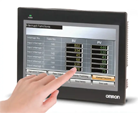
- OMRON HMI Touch Panel
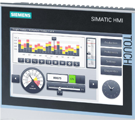
- Siemens HMI Touch Panel
- Mitsubishi HMI Touch Panel
- Allen-Bradley automation HMI Touch Panel
- DELTA HMI Touch Panel
- Proface HMI Touch Panel
- KINCO DELTA HMI Touch Panel
- HITECH HMI Touch Panel
- WEINTEK HMI Touch Panel
- TECVIEW HMI Touch Panel
- WEINVIEW HMI Touch Panel
- PANASONIC HMI Touch Panel
- KYOCERA HMI Touch Panel
- SCHNEIDER HMI Touch Panel
- Module
- lcd inverter
- Membrane Keypad Switch
- Zhiyan Customized Touch Screens
- Frequency Inverter
- Servo Motor
- PLC
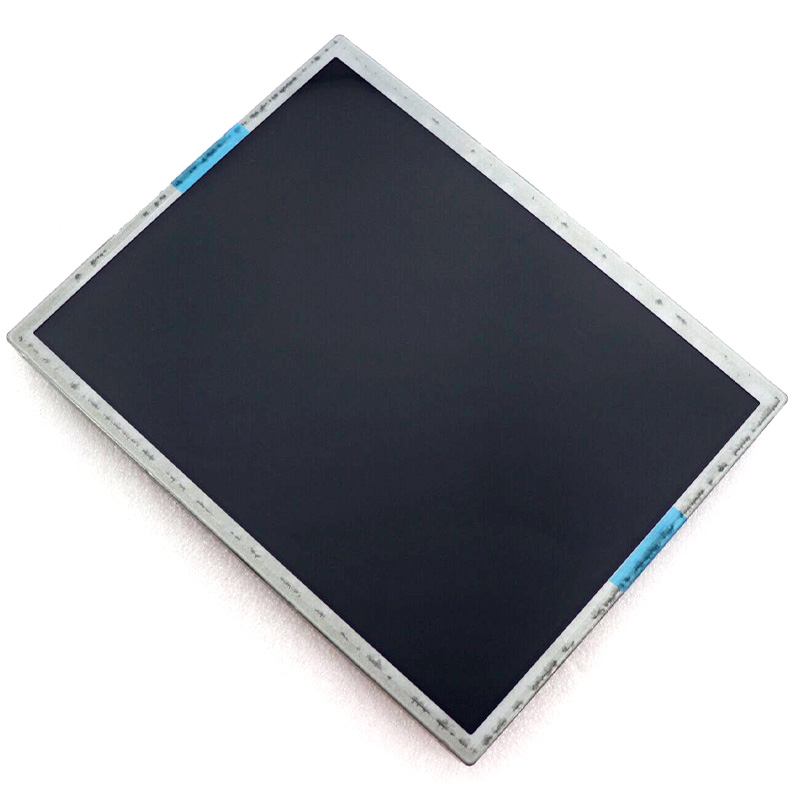
In the demanding world of industrial automation, medical equipment, and transportation systems, the display is far more than an interface—it is a critical component of reliability. At the heart of many such rugged applications lies a specific panel: the LCD display AA104SH02. This 10.4-inch screen, with its 800 x 600 SVGA resolution, represents a mature yet persistently vital technology engineered for environments where consumer-grade monitors would swiftly fail.
This article delves into the AA104SH02, moving beyond basic specifications to explore its architectural strengths and ideal application landscapes. We will dissect why this particular combination of size, resolution, and industrial design continues to be a preferred choice for engineers and system integrators. From its robust physical construction and compatibility features to its performance under duress and total cost of ownership, we provide a comprehensive analysis for professionals evaluating display solutions for mission-critical systems.


Defining the Industrial Display Niche
Unlike commercial off-the-shelf monitors, industrial displays like the AA104SH02 are built from the ground up for endurance and stability. The core philosophy shifts from maximizing color gamut and refresh rate for entertainment to ensuring long-term operational integrity. These panels are designed to withstand constant operation, often 24/7, for years on end. They must resist environmental challenges such as wide temperature fluctuations, high humidity, dust, and vibration—conditions commonplace on factory floors, in outdoor kiosks, or within medical carts.
The AA104SH02 enters this niche with a clear mandate: provide a reliable, readable, and interface-compatible visual output. Its 10.4-inch diagonal and 4:3 aspect ratio are not arbitrary; they are legacy-friendly dimensions that fit perfectly into control panels and equipment designed around earlier CRT or earlier-generation LCD form factors. This backward compatibility is a significant value proposition, allowing for seamless upgrades without costly system redesigns.
Anatomy of Robustness: Build and Interface
The resilience of the AA104SH02 is engineered into its physical and electronic architecture. The panel typically features a sturdy metal frame for structural rigidity and effective heat dissipation. The front surface is often a ruggedized glass or hard-coated polycarbonate to resist scratches and impacts. A critical component is the backlight system. Industrial units frequently employ high-grade, long-life CCFL (Cold Cathode Fluorescent Lamp) or robust LED arrays, calibrated for consistent brightness over tens of thousands of hours.
On the interface side, this panel commonly supports legacy analog RGB (VGA) inputs, which remain widespread in industrial PC and PLC systems. This direct compatibility eliminates the need for signal converters, simplifying installation and reducing potential points of failure. The focus is on a direct and reliable signal path. Power requirements are also designed for industrial DC power rails, ensuring stable operation within typical equipment power supplies.
The Strategic Rationale for SVGA Resolution
In an era of 4K and beyond, the 800 x 600 (SVGA) resolution of the AA104SH02 may seem anachronistic. However, in its target applications, this specification is a strategic advantage. First, it delivers excellent pixel density and clarity for its size, making text, numerical readouts, and schematic diagrams sharp and easily legible from a typical operating distance. There is no unnecessary detail that can clutter crucial control interfaces.
Second, lower resolution places significantly less computational load on the host system. Many embedded industrial computers or single-board controllers have limited graphics processing power. Driving an SVGA display is efficient, freeing system resources for core control tasks. Finally, this resolution is a longstanding standard, ensuring universal driver support and eliminating software compatibility issues that can arise with newer, exotic resolutions.
Operational Excellence in Harsh Environments
The true test of an industrial screen occurs where conditions are least forgiving. The AA104SH02 is specified to operate across an extended temperature range, often from -20°C to 70°C or wider. This allows deployment in unheated warehouses, next to hot machinery, or in refrigerated environments. Its construction minimizes the ingress of dust and moisture, protecting internal components.
Vibration and shock resistance are paramount in mobile or heavy machinery applications. The panel's secure mounting and internally stabilized components prevent connection loosening and image distortion. Furthermore, the optical bonding technique, often available for such panels, laminates the LCD layer directly to the cover glass. This eliminates an air gap, reducing internal condensation, improving sunlight readability by cutting glare, and enhancing structural durability against impacts.
Integration and Long-Term Value Proposition
Integrating the AA104SH02 into a system is typically straightforward due to its standardized form factor and mounting holes. Manufacturers often provide detailed mechanical drawings and pin-out diagrams for the LVDS (Low-Voltage Differential Signaling) or other internal interfaces, allowing custom cable design. The long-term value, however, is its most compelling argument.
The extended product lifecycle of industrial components like this display stands in stark contrast to the rapid obsolescence of consumer screens. Availability is guaranteed for many years, protecting OEMs from costly mid-production redesigns. When considering Total Cost of Ownership (TCO), factors like mean time between failures (MTBF), reduced downtime, and maintenance ease make a reliable, purpose-built display like the AA104SH02 a cost-effective choice over its entire service life, despite a potentially higher initial unit cost.
Ideal Application Scenarios and Use Cases
The AA104SH02 finds its home in sectors where failure is not an option. In industrial automation, it serves as the primary HMI (Human-Machine Interface) for CNC machines, PLC control stations, and test equipment monitoring. The medical field utilizes it in diagnostic devices, patient monitoring systems, and portable carts, where clarity and reliability directly impact care.
Transportation and logistics applications include vehicle telematics systems, forklift operator displays, and airport baggage handling controls. Its readability in various lighting conditions is crucial. Additionally, it is suited for specialized point-of-sale systems, building automation controllers, and ruggedized field instrumentation. In each case, the display acts as a dependable window into the system's core functions.
FAQs
Q: What is the typical lifespan of the AA104SH02 backlight?A: Industrial backlights, whether CCFL or LED, are rated for 50,000 hours or more of continuous operation.
Q: Is this a touch screen display?A: The AA104SH02 panel itself is typically LCD-only. Touch functionality (resistive or capacitive) is usually added as a separate overlay module.
Q: Can it display full-motion video adequately?A> While capable of displaying video, its strength is static or low-motion GUI interfaces. It is not optimized for high-frame-rate multimedia.
Q: What is the main advantage of the 4:3 aspect ratio?A: It maximizes the visible area for traditional control software, data logs, and legacy applications designed for older square screens.
Q: Does it support wide voltage input?A: Yes, industrial screens commonly accept a wide-range DC input (e.g., 12V ±10% or 24V), compatible with industrial power supplies.
Q: How does it perform in direct sunlight?A> With optical bonding and high-brightness options (often 1000 nits+), sunlight readability is significantly improved compared to standard panels.
Q: Is the AA104SH02 suitable for new designs, or is it just for replacements?A> It is suitable for both, especially in applications where reliability and environmental hardening are prioritized over ultra-high resolution.
Q: What does "industrial temperature range" mean?A> It signifies the panel is tested and guaranteed to operate reliably across an extreme temperature spectrum, often from -30°C to 80°C.
Q: What interface does it use to connect to a controller board?A> Internally, it most commonly uses an LVDS interface. A separate controller board (often called a LCD driver board) converts HDMI, VGA, or other signals to LVDS.
Q: Why choose this over a cheaper consumer monitor?A> For harsh environments, 24/7 operation, and long-term supply guarantees, the industrial screen ensures system reliability and lower lifetime costs, avoiding frequent failures.
Conclusion
The LCD display AA104SH02 exemplifies the engineering principles that distinguish industrial technology from its consumer counterparts. Its value is not defined by cutting-edge pixel counts, but by a proven formula of ruggedness, reliability, and seamless integration. The strategic choice of a 10.4-inch SVGA format addresses real-world needs for clarity, compatibility, and system efficiency.
For engineers and procurement specialists, selecting a component like this is a decision based on risk mitigation and total cost of ownership. It represents a commitment to operational continuity in critical systems. In a landscape increasingly driven by obsolescence, the enduring relevance of displays like the AA104SH02 underscores a fundamental truth: in industrial applications, dependability is the most advanced feature of all.





