


















- Industrial display
-
Industrial Products
- DC Servo Drive
- AC Servo Drive
- Industrial board
- Siemens
- Switch Sensor
- Proximity Switch
- Temperature Controller
- Protection Relay
- Fiber Optic Sensor
- Encoder
- Fan
- other
- Heidelberg
- MITSUBISHI
- FANUC
- Siemens adapter
- Fujitsu connector
- Motherboard
- Board
- Contactor
- Circuit
- OMRON
- Relay
- Motor Driver
- power supply
- Cable
- Transformer
- HMI Touch Glass
-
HMI Full Machine Whole unit
- OMRON HMI Touch Panel
- Siemens HMI Touch Panel
- Mitsubishi HMI Touch Panel
- Allen-Bradley automation HMI Touch Panel
- DELTA HMI Touch Panel
- Proface HMI Touch Panel
- KINCO DELTA HMI Touch Panel
- HITECH HMI Touch Panel
- WEINTEK HMI Touch Panel
- TECVIEW HMI Touch Panel
- WEINVIEW HMI Touch Panel
- PANASONIC HMI Touch Panel
- KYOCERA HMI Touch Panel
- SCHNEIDER HMI Touch Panel
- Module
- lcd inverter
- Membrane Keypad Switch
- Zhiyan Customized Touch Screens
- Frequency Inverter
- Servo Motor
- PLC
In the intricate world of industrial automation, human-machine interfaces (HMIs) and control panels serve as the critical nexus between operators and complex machinery. The clarity, reliability, and performance of the display module at the heart of these systems are paramount. This article delves into the specifics of the AA084VG03, a distinguished 8.4-inch display module designed for integration into Mitsubishi's ecosystem of industrial equipment. We will move beyond basic specifications to explore its technological DNA, the unique value proposition it offers to engineers and system integrators, and its pivotal role within broader automation architectures.
Understanding this component is not merely an exercise in reading a datasheet; it is about comprehending a key enabler of operational efficiency and user interaction in demanding environments. From its TFT-LCD core to its robust interface design, the AA084VG03 represents a convergence of display technology and industrial-grade engineering. Our exploration will provide a comprehensive resource for professionals seeking to specify, integrate, or maintain systems leveraging this vital module, ensuring informed decision-making for next-generation industrial applications.
Deconstructing the AA084VG03: Core Specifications and Technology
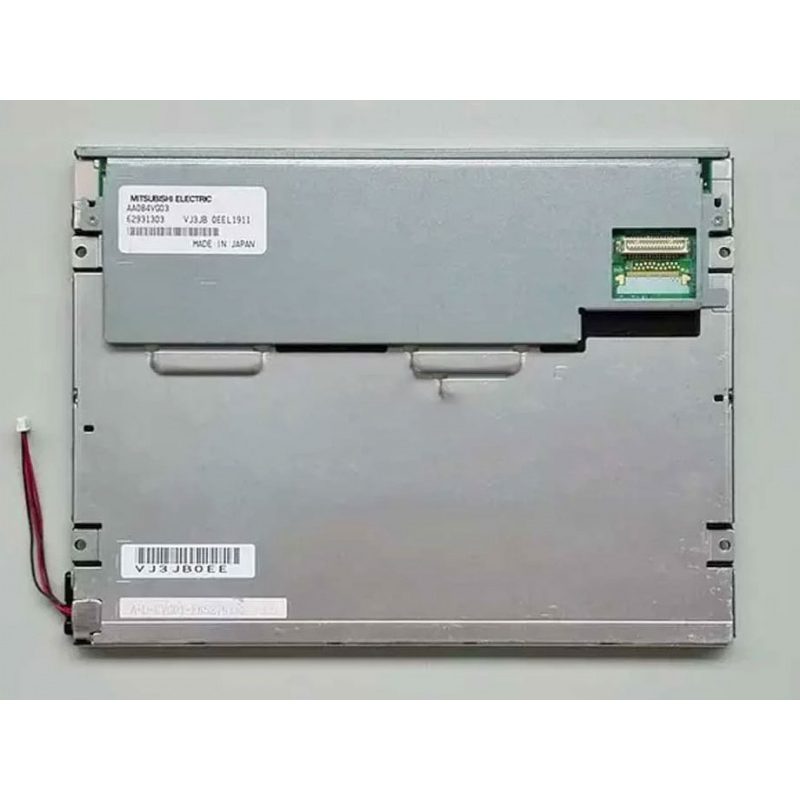
At its heart, the AA084VG03 is an 8.4-inch diagonal TFT-LCD (Thin-Film Transistor Liquid Crystal Display) module, renowned for delivering superior image quality compared to older passive matrix technologies. Its native resolution of 800 x 600 pixels (SVGA) provides a balanced canvas for detailed schematics, data visualization, and clear textual information without excessive pixel density that can strain readability in an industrial setting. The module typically incorporates a high-brightness backlight, often CCFL or advanced LED-based, ensuring viewability under the bright lighting conditions common in factories and control rooms.
Technologically, it leverages a standard RGB interface, making it compatible with a wide range of controller boards and graphic controllers used in industrial design. The robust mechanical construction is designed to withstand the vibrations, temperature fluctuations, and electromagnetic interference prevalent in industrial environments. Understanding these core specs—the size, resolution, brightness, and interface type—forms the foundational knowledge required to assess its suitability for a given application, setting the stage for deeper integration discussions.
The Mitsubishi Ecosystem: Seamless Integration and Compatibility
The designation "for Mitsubishi" is not merely a suggestion; it signifies engineered compatibility within Mitsubishi Electric's extensive portfolio of automation products. This module is frequently specified as a replacement or core component for Mitsubishi's own GOT (Graphic Operation Terminal) series HMIs and other proprietary operator interfaces. Its electrical, mechanical, and communication parameters are designed to align seamlessly with Mitsubishi's system architecture.
This pre-validated compatibility drastically reduces integration risks and development time for engineers. System integrators can confidently deploy the AA084VG03, knowing it will communicate effectively with Mitsubishi PLCs (Programmable Logic Controllers) like the MELSEC series, drives, and other factory automation components. This ecosystem advantage ensures reliable data exchange, consistent performance, and access to Mitsubishi's support and documentation framework, making it a strategic choice for maintaining or upgrading existing Mitsubishi-based systems.
Application Landscape: Where This Display Module Excels
The AA084VG03 finds its purpose in environments where durability and clarity are non-negotiable. Its primary domain is industrial automation, serving as the visual interface on factory floors for machine control, process monitoring, and production data display. It is integral to HMIs for injection molding machines, CNC controllers, packaging lines, and robotic workcells. Beyond discrete manufacturing, it is equally vital in process industries such as water treatment, chemical processing, and energy management systems.
Another significant application is within transportation and heavy machinery, providing operator displays in construction equipment, agricultural vehicles, and marine control systems. In these contexts, the module must resist shock, moisture, and wide temperature ranges. Its design caters to these challenges, making it a versatile solution for any scenario requiring a reliable, medium-sized display that bridges the gap between complex control logic and human operators.
Technical Advantages and Performance Characteristics
The value of the AA084VG03 extends beyond basic compatibility into distinct performance advantages. Its wide operating temperature range allows functionality in both chilled and high-ambient-temperature environments, a critical feature for unheated warehouses or enclosures near heat-generating machinery. The high contrast ratio and wide viewing angles ensure that information is legible from various operator positions, not just head-on.
From a signal integrity perspective, the module is built to minimize latency and ensure stable image rendering, which is crucial for real-time monitoring applications. Furthermore, its long-life backlight design reduces maintenance cycles and total cost of ownership. These characteristics collectively contribute to increased system uptime, reduced operator error, and a lower total cost of ownership over the lifespan of the equipment it serves.
Sourcing, Replacement, and Supply Chain Considerations
For maintenance engineers and OEMs, sourcing the AA084VG03 involves navigating the industrial electronics supply chain. While it is an original component for Mitsubishi systems, it is also available through authorized distributors and specialized industrial display suppliers. A key consideration is the distinction between brand-new, refurbished, and compatible alternative modules.
When used as a direct replacement in a legacy system, ensuring an exact form-factor, electrical, and interface match is critical to avoid costly panel modifications. Professionals must verify part number suffixes and revision codes. In today's global market, understanding lead times, verifying authenticity to avoid counterfeit parts, and securing reliable supply for long-term projects are essential aspects of the procurement process for this critical component.
Future-Proofing and Industry 4.0 Relevance
As industries evolve towards Industry 4.0 and the Industrial Internet of Things (IIoT), the role of the display module is also transforming. The AA084VG03, while a robust legacy component, represents a node in this evolution. Its capability to clearly present data is the first step. The future lies in how displays like this integrate with smarter systems—potentially connecting to cloud analytics dashboards, overlaying augmented reality (AR) maintenance instructions, or providing interactive diagnostics.
While the module itself may not contain IoT connectivity, it serves as the essential local visualization point for data generated by connected sensors and intelligent PLCs. Therefore, specifying a reliable, high-performance display like the AA084VG03 is a foundational step in building an HMI layer that can support future digital transformation initiatives, ensuring the operator interface remains a relevant and effective tool in a increasingly data-driven industrial landscape.
FAQs: AA084VG03 Display Module
1. What is the AA084VG03?It is an 8.4-inch TFT-LCD display module designed for integration into Mitsubishi industrial HMIs and control systems.
2. What is its screen resolution?The native resolution is 800 x 600 pixels (SVGA format).
3. Is this module compatible with non-Mitsubishi equipment?While technically possible with appropriate controllers, it is engineered for optimal compatibility within the Mitsubishi automation ecosystem.
4. What are typical applications for this display?It is used in factory machine HMIs, process control panels, and operator displays for heavy machinery and transportation.
5. Why is brightness an important specification?High brightness ensures readability in well-lit industrial environments, such as under factory lighting or sunlight.
6. Can I use it as a direct replacement for a failed display in my Mitsubishi HMI?Yes, it is commonly used as a direct replacement part for specific Mitsubishi GOT series models, but exact model matching is crucial.
7. What does "wide temperature range" mean?It indicates the module can operate reliably in both low and high ambient temperatures, typical of industrial settings.
8. Where can I source the AA084VG03?It can be sourced through authorized Mitsubishi distributors, industrial electronic component suppliers, and specialized display vendors.
9. Are there alternative or compatible modules available?Yes, some suppliers offer functionally compatible alternatives, but verification of mechanical and electrical specifications is essential.
10. How does this module relate to Industry 4.0?It serves as the critical local visualization point for data in smart factories, forming the HMI layer that interacts with IIoT systems.
Conclusion
The AA084VG03 8.4-inch display module is far more than a simple screen; it is a purpose-built industrial component that embodies reliability, clarity, and seamless integration. Through its specific design for the Mitsubishi ecosystem, it provides engineers and system integrators with a trusted solution for human-machine interfaces across a vast array of demanding applications, from the factory floor to the field.
Understanding its technical advantages, from environmental robustness to performance characteristics, allows for informed specification that enhances system uptime and operator effectiveness. As the bridge between complex data and human decision-making, selecting the right display module remains a critical step in industrial design. The AA084VG03, with its proven track record, continues to be a relevant and valuable component in building the resilient and intelligent industrial systems of today and tomorrow.





