













































- Industrial display
-
Industrial Products
- DC Servo Drive
- AC Servo Drive
- Industrial board
- Siemens
- Switch Sensor
- Proximity Switch
- Temperature Controller
- Protection Relay
- Fiber Optic Sensor
- Encoder
- Fan
- other
- Heidelberg
- MITSUBISHI
- FANUC
- Siemens adapter
- Fujitsu connector
- Motherboard
- Board
- Contactor
- Circuit
- OMRON
- Relay
- Motor Driver
- power supply
- Cable
- Transformer
- HMI Touch Glass
-
HMI Full Machine Whole unit
- OMRON HMI Touch Panel
- Siemens HMI Touch Panel
- Mitsubishi HMI Touch Panel
- Allen-Bradley automation HMI Touch Panel
- DELTA HMI Touch Panel
- Proface HMI Touch Panel
- KINCO DELTA HMI Touch Panel
- HITECH HMI Touch Panel
- WEINTEK HMI Touch Panel
- TECVIEW HMI Touch Panel
- WEINVIEW HMI Touch Panel
- PANASONIC HMI Touch Panel
- KYOCERA HMI Touch Panel
- SCHNEIDER HMI Touch Panel
- Module
- lcd inverter
- Membrane Keypad Switch
- Zhiyan Customized Touch Screens
- Frequency Inverter
- Servo Motor
- PLC
In the intricate world of industrial and embedded display solutions, specific components become the unsung heroes behind reliable human-machine interfaces. One such component is the AA084SB11, an 8.4-inch TFT-LCD module from Mitsubishi Electric. This article delves deep into this specific display module, moving beyond basic datasheet specifications to explore its technological foundations, inherent strengths, and ideal application landscapes. We will dissect what makes the AA084SB11 a persistent choice in an era of rapidly evolving display technology.
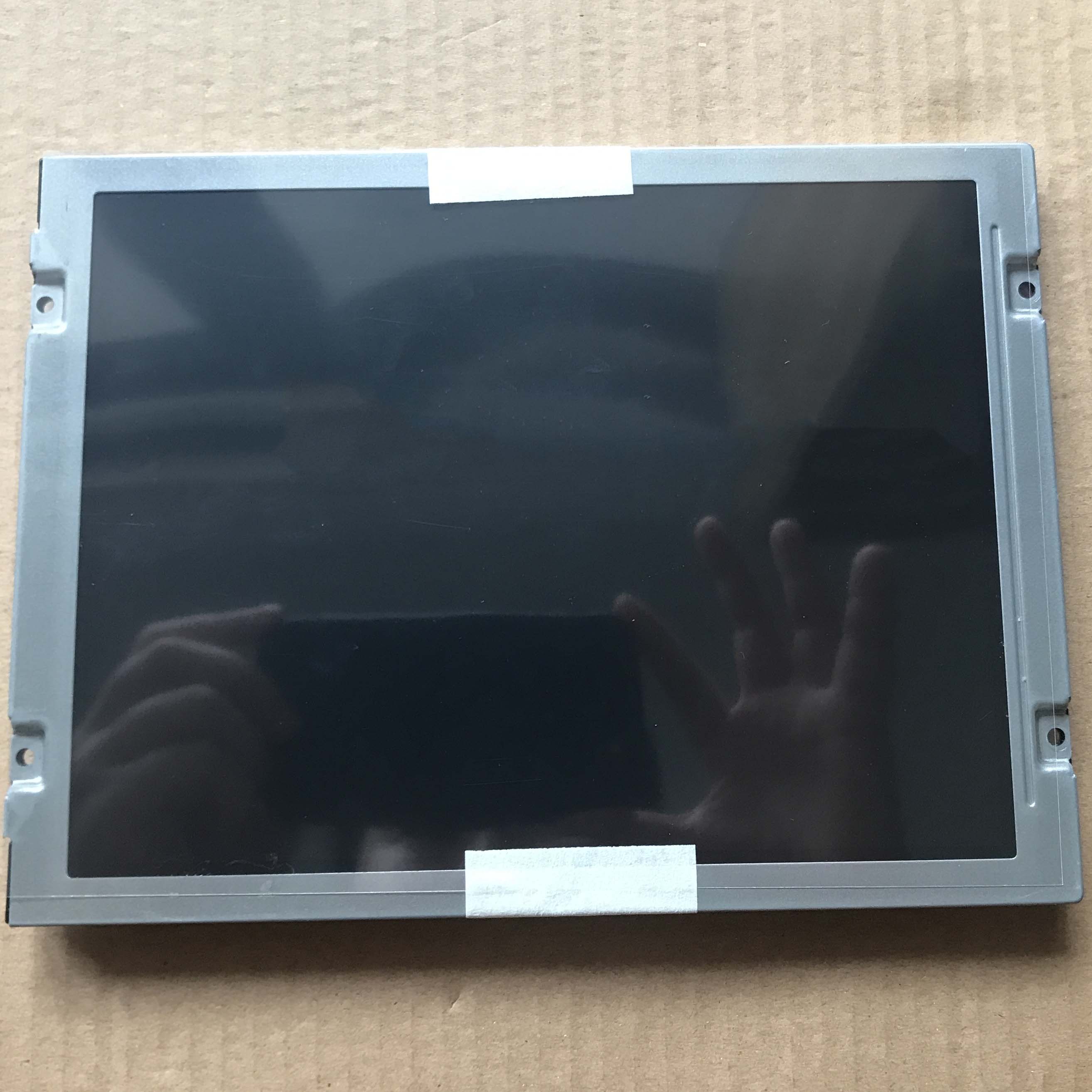
The core of our exploration is understanding why this particular module, with its SVGA (800x600) resolution and 119 PPI, continues to be specified for new designs. It represents a class of displays where longevity, stability, and performance under demanding conditions trump the need for ultra-high pixel density. This analysis is crucial for engineers, procurement specialists, and system integrators who must balance technical requirements with cost, reliability, and long-term availability in sectors where failure is not an option.
Deconstructing the AA084SB11: Core Technology and Specifications
The Mitsubishi AA084SB11 is built on amorphous Silicon (a-Si) Thin-Film Transistor (TFT) technology, a mature and highly reliable process. Its 8.4-inch diagonal active area presents an SVGA resolution of 800 horizontal pixels (by RGB stripe) by 600 vertical lines. This results in a pixel pitch of 0.213mm and a pixel density of 119 PPI (Pixels Per Inch). While this density is modest by consumer smartphone standards, it is perfectly suited for arm's-length viewing in industrial settings, providing clear, legible characters and graphics without unnecessary processing overhead.
The module incorporates a CCFL (Cold Cathode Fluorescent Lamp) backlight system, known for its uniform brightness and stable performance over a wide temperature range. The interface is typically LVDS (Low-Voltage Differential Signaling), ensuring robust data transmission with minimal electromagnetic interference. Key specifications include a wide operating temperature range, high brightness (typically 400 cd/m² or more), and a contrast ratio designed for readability in various lighting conditions. These foundational specs set the stage for its operational resilience.
The Enduring Advantages of Mature Display Architecture
In a market chasing the latest OLED or high-PPI IPS panels, the AA084SB11's value proposition lies in its proven architecture. The a-Si TFT process offers exceptional long-term stability and lower manufacturing costs for this screen size and resolution. Its SVGA resolution is a "sweet spot," supported by a vast legacy of software and hardware interfaces, simplifying system design and driver compatibility.
The use of CCFL backlighting, though less energy-efficient than modern LEDs, provides superior brightness uniformity and excellent performance across extreme temperature ranges, a critical factor in industrial or outdoor applications. Furthermore, modules like the AA084SB11 often benefit from extended product lifecycles and long-term supply commitments from manufacturers like Mitsubishi, which is paramount for products with multi-year development and deployment schedules. This maturity translates to predictable performance and reduced project risk.
Ideal Application Environments and Use Cases
The technical profile of the AA084SB11 directs it towards specific, demanding application sectors. It is a quintessential industrial display, commonly found in factory automation HMI panels, PLC operator interfaces, and test and measurement equipment. Its robustness makes it suitable for transportation systems, such as in-train information displays or vehicle monitoring terminals, where vibration and temperature fluctuations are common.
Medical equipment manufacturers value such modules for diagnostic devices or patient monitoring systems where reliability is critical. Additionally, point-of-sale systems, kiosks, and specialized instrumentation are typical homes for this display. In each case, the need is for a display that presents information clearly, functions reliably 24/7, and will be available for production and repair for many years, not one that offers the most vibrant colors or thinnest bezel.
Critical Integration Considerations for System Designers
Successfully integrating the AA084SB11 requires attention to several key factors. Electrical integration involves designing a stable power supply for both the logic and the CCFL backlight inverter, which requires high-voltage AC drive. Thermal management is crucial, as CCFLs generate heat; adequate heat sinking and ventilation must be part of the mechanical design.
Mechanically, designers must account for the module's dimensions, mounting hole patterns, and connector location. The interface, typically LVDS, requires careful PCB layout to maintain signal integrity. Furthermore, mitigating electromagnetic interference (EMI) from the inverter and ensuring optical bonding solutions for sunlight readability or enhanced durability are common considerations that move integration beyond a simple plug-and-play exercise.
Comparative Analysis: Navigating Modern Alternatives
When selecting a display today, engineers inevitably compare legacy modules like the AA084SB11 with newer alternatives. Modern TFTs often feature LED backlighting for lower power consumption and thinner profiles, and may offer higher resolutions like XGA (1024x768) or WXGA (1280x800) on similar-sized panels.
The choice hinges on project priorities. Newer modules offer efficiency and sharper images. However, the AA084SB11 counters with potentially lower unit cost for its spec, proven reliability data, superior temperature performance of CCFL, and the immense value of long-term supply stability. For a cost-sensitive, long-lifetime industrial product, the older, proven module can often be the lower-risk, more economical choice overall.
Sourcing, Lifecycle, and Future-Proofing Strategies
A primary challenge with specialized industrial components is managing their lifecycle. While Mitsubishi has a reputation for long-term support, designers must be proactive. Engaging with authorized distributors or franchise partners is essential to verify current stock, factory lead times, and forecasted end-of-life schedules.
Future-proofing strategies include: securing a lifetime buy of critical components for the product's expected production run; qualifying a second-source or pin-compatible alternative module early in the design phase; or designing a flexible display driver board that can accommodate multiple panel types with similar interfaces but different resolutions or sizes. This strategic procurement and design approach protects against unforeseen obsolescence.
Frequently Asked Questions (FAQs)
Q1: What does "LCM" stand for in AA084SB11?A1: LCM stands for "LCD Module," meaning it is a complete unit with the LCD panel, driver circuits, backlight, and often a metal frame.
Q2: Is the AA084SB11 a touch screen?A2: No, the AA084SB11 is a display-only LCM. Touch panels (resistive or capacitive) can be added as a separate front-end component.
Q3: Why use CCFL instead of LED backlighting?A3: CCFL offers excellent brightness uniformity and stable performance across very wide temperature ranges, which is critical in harsh industrial environments.
Q4: What is the typical interface for this module?A4: It typically uses an LVDS (Low-Voltage Differential Signaling) interface for robust, low-noise data transmission.
Q5: Is this display suitable for outdoor use?A5: With high brightness (400+ cd/m²) and potentially with an optical bonding kit to reduce glare, it can be used in shaded outdoor or vehicle-mounted applications.
Q6: What is the main advantage of the 119 PPI resolution?A6: It provides excellent legibility for text and graphics at a typical viewing distance without requiring excessive graphics processing power, simplifying system design.
Q7: How do I drive the CCFL backlight?A7: You need an external CCFL inverter circuit that converts DC power to high-frequency AC to illuminate the fluorescent lamps.
Q8: Is this module still in production?A8: You must check with Mitsubishi Electric or authorized distributors for the current product status, as lifecycle varies.
Q9: Can it display full-motion video?A9: Yes, its response time and refresh rate are sufficient for basic video playback, though it is optimized for static or slow-changing industrial graphics.
Q10: What is a key alternative to consider?A10: Modern 8-inch class TFTs with LED backlighting and XGA resolution (1024x768) are common alternatives, offering higher sharpness and lower power.
Conclusion
The Mitsubishi AA084SB11 8.4-inch TFT-LCD module exemplifies how mature, well-engineered technology continues to deliver immense value in specialized fields. Its combination of a-Si TFT construction, SVGA resolution, and CCFL backlighting is not an outdated specification but a deliberate set of features that ensure reliability, longevity, and performance under stress. For applications in industrial automation, transportation, and medical devices, these attributes often outweigh the benefits of newer, more consumer-oriented display technologies.
Selecting such a component is a strategic decision that extends beyond the bill of materials. It involves a deep understanding of the operational environment, total lifecycle costs, and supply chain security. The AA084SB11, therefore, is more than just a display; it is a reliable partner for building systems where failure is not an option, proving that in the world of industrial engineering, proven performance frequently trumps fleeting innovation.





